
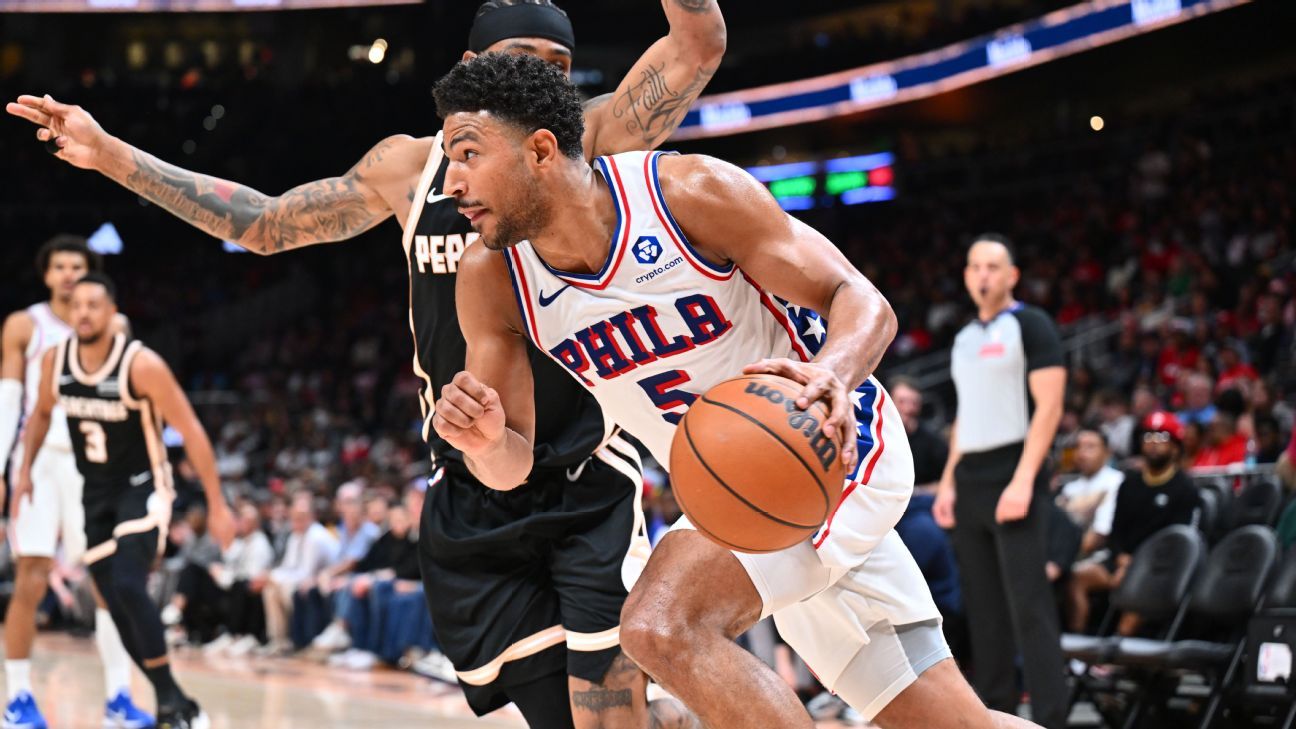
EmailPrintOpen Extended ReactionsCongrats, fantasy basketball managers! You made it to the playoffs, and once we get to the playoffs, anything can happen.As fantasy moves from its regular season to the playoffs, here are some tips to aid those looking for every bit of an edge. Of course, we cannot know for sure which players are going to suit up and what their statistics will be, but we can give our respective teams a better chance to succeed.What worked during the regular season, just leaving all the best options active, might not work in March.Championship flags fly forever, so here we go!Pump up the volumeMany things matter in the fantasy playoffs -- and we shall get to them -- but taking advantage of the NBA schedule is critical. Most teams play three or four games per week, but not all, and this might force some difficult decisions for your team. Here is a general outlook of the league slate pointing out irregularities for the next month.Week of March 9: 5 games (76ers). 2 games (Pelicans).Week of March 16: 5 games (Suns, Wizards).Week of March 23: 2 games (Timberwolves, Suns).Week of March 30: 2 games (Nuggets, Trail Blazers).Week of April 6: All teams play 3 and 4 games.The Philadelphia 76ers play five games during the week of March 9, while the New Orleans Pelicans play only two. Sixers SG Quentin Grimes, mostly a team reserve averaging 24.6 fPPG and rostered in only 22.6% of ESPN leagues, is likely to score a whole lot more fantasy points that week -- assuming he plays all five games -- than the top Pelicans, from PF Zion Williamson to SF/SG Trey Murphy III and SG/PG Dejounte Murray. It might not seem fair, but those are the rules. What a bad time for a team's two-game week!Volume is key in fantasy, and this would be a larger problem in a weekly format, when one sets their lineup before the Monday games and wonders later in the week why they are so far behind in counting stats. This might be why. The daily move aspect allows an aggressive manager to leverage games. Nobody is saying you should drop these Pelicans, especially in a two-week playoff, but it is far easier to pile on the fantasy points with more games than your foe. There are teams with limited games during the second half of March. Add Phoenix Suns for playoff Week 2 such as PG Collin Gillespie and SF Royce O'Neale and ... then drop them for Week 3? Sure!Know the rules and regulationsESPN's standard league playoff rules are simple and clear. The top four teams qualify for the playoffs, with the Nos. 1 and 4 seeds facing off, and the Nos. 2 and 3 seeds, each for two weeks and with daily roster maneuvering permitted. Then the winners meet for the two-week championship. In ESPN points leagues, all the numbers players provide -- points, rebounds, blocks, 3-pointers, etc. -- go into one final number. Score the most points. Of course, not every league is like this, so make sure you know your league rules.You would be surprised how many fantasy managers advance to the playoffs and still are not aware of the most basic rules, whether about league scoring, transaction limits or deadlines, and then hound the poor commissioner with complaints. ESPN's standard is a points league. Roto/category formats are far different. A fantasy manager lacking blocked shots, for example, could opt to punt the category, since the goal there is to simply win more categories than your opponent. Many daily leagues have weekly transaction limits, too.Regardless, before any roster moves are made, we urge you to check out your league rules, even if you think you are an expert on them. Then check them again. You don't want to find out later in the week that you planned things incorrectly -- or did not plan at all -- and your opponent made all the right moves, ones you could have engineered.Study what NBA teams are doing ... and might still doNow is the time to take more chances and target upside. Study what NBA teams are doing with their rotations and act. Many assume the top contenders enjoy stable lineups, but that is not always the case. The Oklahoma City Thunder, leading the West, might not push star Shai Gilgeous-Alexander when not 100% healthy. C Isaiah Hartenstein (calf) is not healthy. When Thunder C Jaylin Williams gets minutes, he rocks. However, his minutes are quite inconsistent. Nobody is dropping the defending league MVP Gilgeous-Alexander, but analyzing when Williams, for example, will get big minutes, can be a big difference-maker.Bad teams score fantasy points, too, so even though more than a few of the relevant Sacramento Kings have been shut down for this season, someone must suit up. Someone like typical role player Precious Achiuwa, for example, has become quite a fantasy stalwart. Check out ESPN's most added/dropped lists for names of players trending in either direction, and they come from both good and bad teams. Be aggressive with lineups, maxing out on games, and that might mean some odd player swaps. Chicago Bulls PF Guerschon Yabusele might make far more of a difference than his former 76ers teammate and perpetually injured Joel Embiid in your fantasy league.Aggressively make every roster spot countESPN managers in standard leagues enjoy three bench spots and a single injured reserve (IR) spot. Recycling through players without transaction limits makes the most sense during the fantasy playoffs, if permitted. Managers should look to rely on healthy players guaranteed (as best we can guess) to pile on minutes, for active and bench duty. When in doubt between two free agents for that night, look at future days. Perhaps one of them has a game scheduled for the next night, or three out of four days. That can break the proverbial tie when it comes to challenging decision-making.Embiid is indeed IR-eligible, but if it appears he will not be aiding his team or yours over the next fortnight -- and it sure does -- you might have to move on from his roster spot. Golden State Warriors PG Stephen Curry last played in an NBA game in January. If it looks like he might not do so again in March, you might need to move on. There are several players who might return this season, and with IR eligibility, who might be worth stashing for future value, such as Suns C Mark Williams (foot), Kings C Dylan Cardwell (ankle) and Denver Nuggets SF/PF Cameron Johnson (ankle).Look ahead but ... not too farPerhaps you are the type of fantasy manager who simply leaves the best players active and hopes for the best. It might have worked for months, but it might not work now. Embiid is an obvious difference-maker when he is on the court, but nobody knows when that will be. The 76ers appear to be playoff-bound, so they probably will not take chances with Embiid's health just to avoid the play-in tournament part. You might need the roster spot more than Embiid's occasional participation. Knowing when to move on from high-rostered players, whether they are hurt or just underperforming, is never easy, but if you must win this week to advance, do not worry about what Embiid might do in three weeks.Somewhat similarly, wise fantasy managers study the schedule to add players well in advance. This makes sense. What does not make sense is risking an early playoff loss just because you roster a fellow with a pleasant schedule the following week. Your team must qualify and advance to play next week first. If you have the semifinal win locked up, sure, make those moves prior to the championship round, but be careful, too.We all want to win and enjoy ourselves during the journey, but do so responsibly! Good luck!