Everton fans will HAMMER me for this Sean Dyche reveals what Liverpool fans told him during his relegation battle at Goodison Park

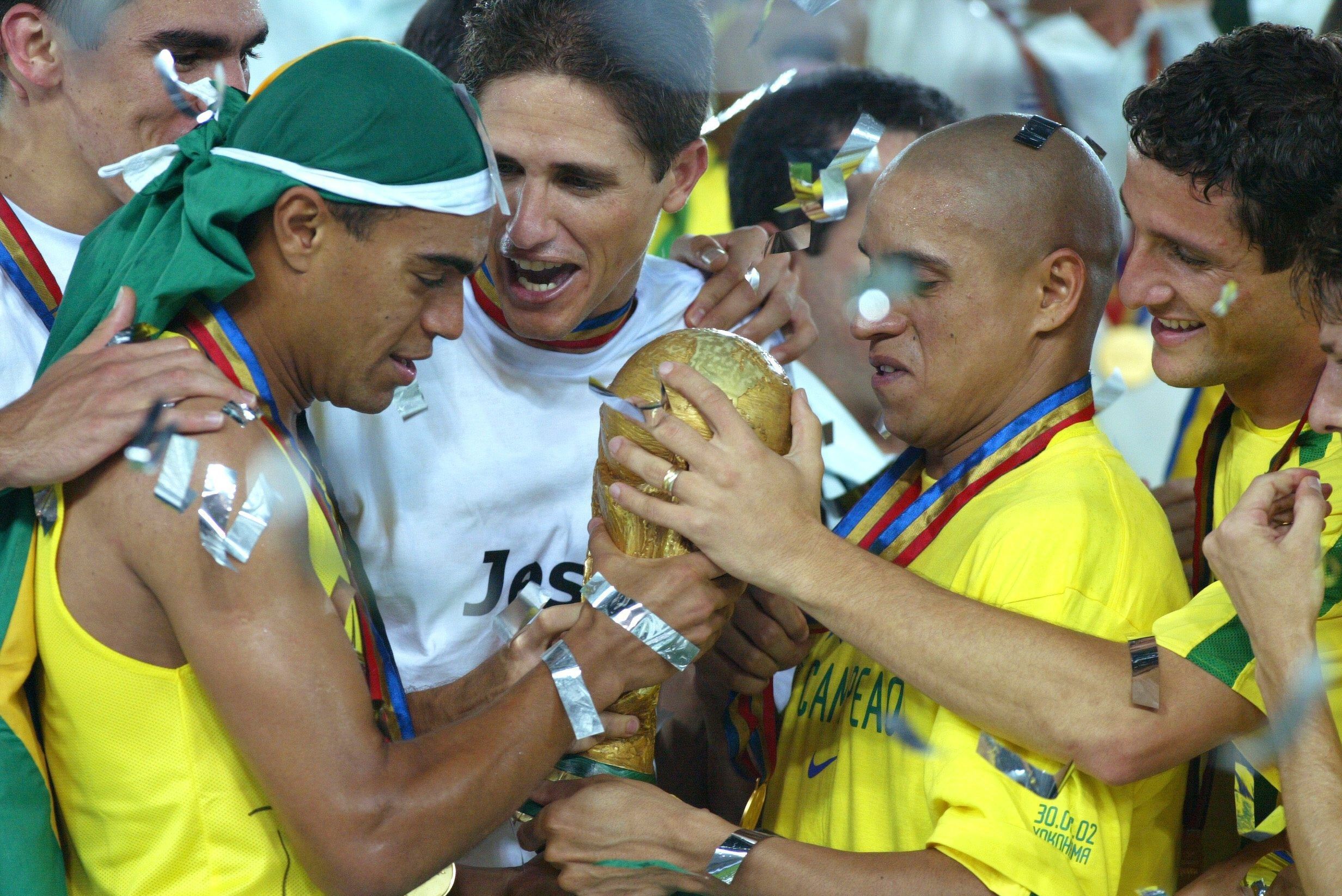

There aren't many individuals who can say they've played in two FIFA World Cup finals - but Denilson is one of them.
The �21.5 million Real Betis signing became the world's most expensive player in 1998, less than two months after the disappointment of defeat in the World Cup Final with Brazil.
O Seleao were beaten 3-0 by host nation France in the competition's finale with Denilson having featured in each game throughout the tournament.
Denilson's incredible story from humble beginnings to world champion
Four years later, Brazil arrived in South Korea and Japan in search of what proved to be their historic fifth and most recent World Cup triumph.
Less influential in 2002 than he had been four years prior, Denilson still managed to see out the last few minutes of Brazil's 2-0 win over Germany on the pitch as the South Americans were crowned world champions.
His route to the pinnacle of footballing achievement is as inspiring as it is remarkable. Denilson was not from a wealthy family and had to give everything to reach the heights he ultimately did as a player.
"Playing at Sao Paulo made me value my achievements even more, but the values I learned at home stayed with me everywhere," he tells FourFourTwo. "I was lucky that God gave me that gift and that the right people believed in me at the right time. One of those was the first-team boss, Tele Santana. He first watched me filling in during a reserve-team training session and liked what he had seen.
"I remember my legs shaking at the start when I first joined in with the senior players for training. But once the ball rolled, I forgot my nerves and just played with joy. Was I nervous? Of course! But as the session went on, it melted away. I did what I always did: played football with a smile. Luckily, Tele and his assistant Muricy Ramalho liked me. The following week, he called me back. From then on, every training session felt like a match and the staff began guiding me more seriously."
Before long, Denilson became a recognised first-team player despite his tender years. At 19, he was called up to the Brazilian national team for the first time by the legendary Mario Zagallo. To be recognised by his country was a reflection of the dedication Denilson had shown as a youth team player and during his senior breakthrough.
"After just five [senior training] sessions, I was living at the professional training centre. That was when everything changed. Id gone from sleeping in a room with 40 kids to sharing with just one team-mate, with a television in our room and meals available whenever we were hungry. That comfort was new, and I knew I couldnt waste the chance.
"Id wake up earlier than anyone, eat my breakfast and already be in my kit when the senior players came down. As skinny as I was at 16, I was ready to seize the opportunity. Tele intimidated me massively. He radiated authority, always serious, rarely smiling. Imagine a kid from Diadema stood side-by-side with the man he used to watch while working as a ballboy during the clubs Copa Libertadores matches. I felt a mix of fear, respect and admiration."
Sao Paulo legend Santana had overseen a period of overwhelming domestic and continental success during the early-1990s. His team won back-to-back Copa Libertadores titles, a Brazilian championship, two state championships and two Intercontinental Cups among others.
"He was extraordinary in how he taught. Tele cared about us off the pitch too. He would warn us youngsters not to splash out on cars before buying our parents a house. On the football side, he obsessed over the small details your body positioning, striking technique, the movement in specific plays and so on."
Denilson played 191 times for Sao Paulo, scoring 26 goals before sealing his big move to Europe with Real Betis. Santana, meanwhile, was forced to retire in 1996 after suffering a stroke but witnessed Denilson and Brazil lift the World Cup trophy in 2002, before his death in 2006.