
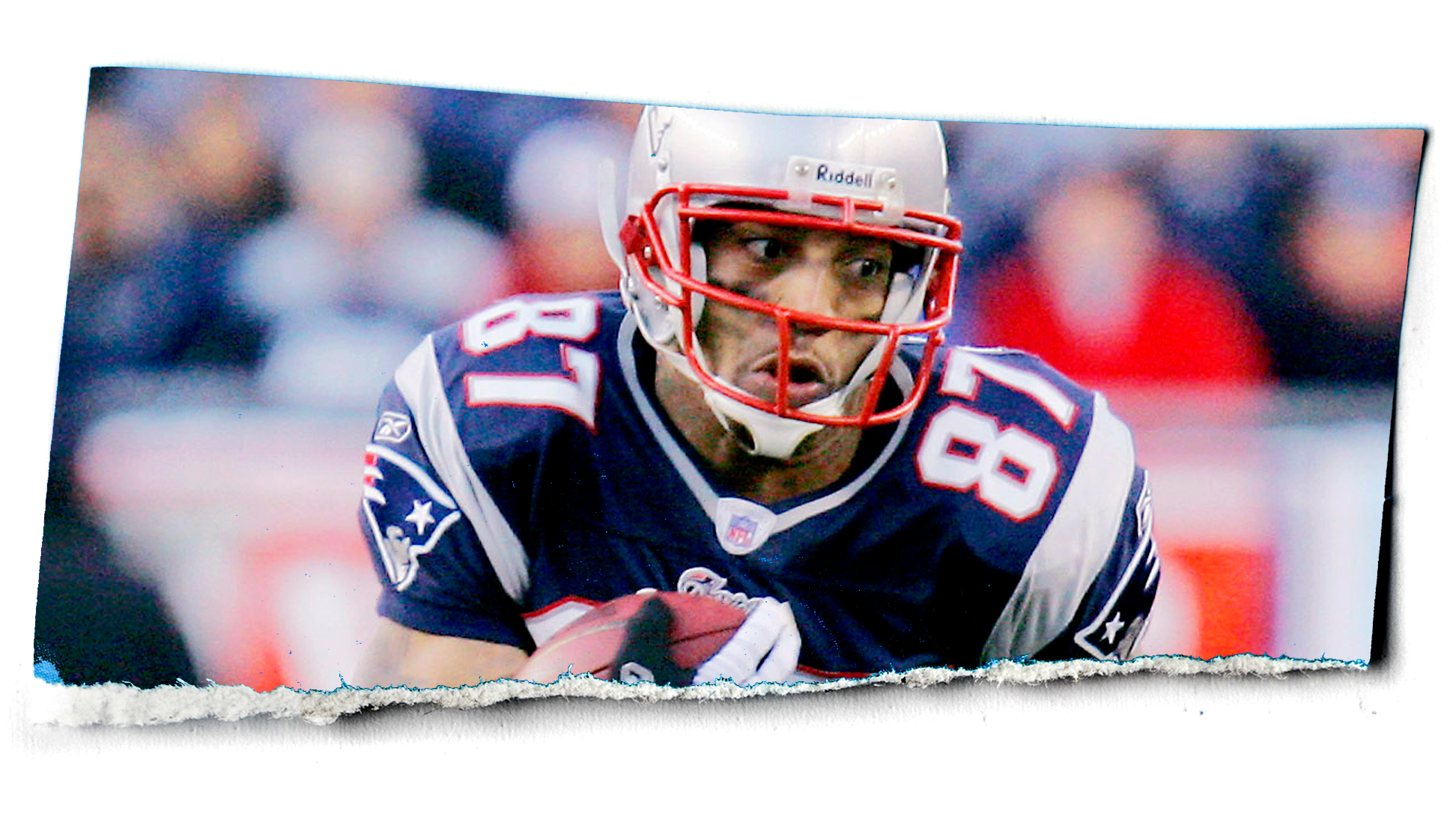
EmailPrintOpen Extended ReactionsTHIRTY-THREE SECONDS of black-and-white home security video capture the last moments of former NFL wide receiver Reche Caldwell's life, grainy images of two people walking out the door of a home in east Tampa. It has just started to rain on the night of June 6, 2020.One of the figures is Caldwell. He's carrying a tote bag and his cellphone while walking down the porch steps and onto the driveway to his car. The other figure is his girlfriend, Jennifer Graciano, still holding on to the door when she appears to notice the rain. She turns to go back inside for an umbrella. Before she does, Caldwell motions for her to unlock the car with the key fob in her hand.The video shows Caldwell on his phone while waiting for his girlfriend to return. A car passes behind him. Seconds later, the video goes dark. When it resumes several minutes later, Caldwell is lying on his back with bullet wounds in the leg and chest, his knees bent toward the sky and multiple first responders surrounding him.Caldwell died that night before reaching the hospital. His last words to Graciano, as he was loaded into an ambulance: "Tell everybody I love them." He was 41.Six years later, Caldwell's family members say their frustration is growing with the lack of progress in solving the murder. They say Tampa police have the murder weapon and fingerprint evidence, along with leads that include potential suspect names.But police haven't publicly identified any possible motive, let alone arrested anyone, in what authorities called a "targeted attack."Tampa Police and the State Attorney's office declined to speak to ESPN, saying the case is still open. The Hillsborough County Medical Examiner's office declined an ESPN records request.Family members say they don't know what's happening -- they haven't even heard from the lead detective in the case since July 2025."If you have the weapon, you have fingerprints ... what's the issue?" said Caldwell's daughter Recheyla. "I just want justice. That's all I want. I think that's owed to us."THERE WAS A TIME when sports fans couldn't stop talking about Reche Caldwell, for reasons good and bad.The Tampa phenom made headlines, starting in high school when he excelled in basketball, baseball and football. The Cincinnati Reds selected him in the 1998 MLB draft. But his passion was football, and he chose to commit to the University of Florida and Steve Spurrier's "Fun n' Gun" offense. He played for the Gators before the then-San Diego Chargers drafted him in the second round in 2002.But by the mid-2000s, Caldwell's professional career effectively collapsed after a disastrous performance during the fourth quarter of the January 2007 AFC Championship Game between the New England Patriots and the Indianapolis Colts. Playing for the Patriots, a wide-open Caldwell dropped a pass from quarterback Tom Brady that had touchdown potential. Instead, they settled for a field goal that gave the Patriots a narrow lead. The Patriots went on to lose 38-34.New England subsequently cut Caldwell. Washington signed him for the 2007 season. In 2008, the then-St. Louis Rams signed Caldwell but released him at the end of training camp. Suddenly, Caldwell found himself adrift at just 29 years old.He returned to Tampa, where his public downfall made national headlines. First came a misdemeanor arrest for domestic violence, then an arrest for running an illegal gambling operation, followed by a two-year stint in federal prison for attempted drug dealing. Finally, in the months leading up to his death, there was his guilty plea for healthcare reimbursement fraud.Younger brother Andre Caldwell, who also played wide receiver for the Florida Gators before winning a Super Bowl with the Denver Broncos, told ESPN his brother never "figured it out" after his pro career ended.After football, Caldwell tried his hand at music production, artist development and athletic training. But along the way he fell back in with some of his old neighborhood friends and some of his old bad habits, specifically gambling, his brother said."Too big, too fast. I laugh at my stuff too. What else can you do? I have to laugh. I really thought I was some kind of a criminal?" Caldwell told ESPN in 2016, referring to his failed unlawful enterprises. "The next thing I know I'm headed to prison, saying goodbye to my kids, wondering: What happened to me?"Andre Caldwell said he "hauled ass" to Atlanta when he retired from football after seeing "the direction [Reche] was going, with the people he was going with" from their old neighborhood. Andre went back to school after eight seasons in the NFL to learn how to produce and edit videos. He started a media management company he later shared with his brother. The family says a client deal connected with that business is one possible motive for Caldwell's killing.Caldwell kept gambling, even after prison, his family says. Then he got caught up in a healthcare fraud scheme involving more than a dozen former NFL players, including Washington running back Clinton Portis and former Kansas City Chiefs wide receiver Tamarick Vanover -- one of Caldwell's best friends. Portis and Vanover later pleaded guilty and served time in prison.When he died, Caldwell had been scheduled to appear at a federal sentencing hearing in a few days.SPEAKING TO ESPN, Graciano recalled her last moments with Caldwell before first responders arrived."They got me," Caldwell said to her as they waited for the ambulance. Graciano said she asked Caldwell who got him. He told her that he didn't know."Even if he knew, I don't know if he would tell me because ... you know how it's the street code," Graciano said. "I don't know if he saw who did it or he really didn't know or if he knew, he didn't want to tell me."When the grainy home security resumed recording, it captured Caldwell's last moments as he lay by the porch steps, waiting for the ambulance. Graciano said that after Caldwell was shot, he tried to climb up the porch steps to sit upright."I really thought he was going to make it because he was such a strong man," Graciano told ESPN. "Whoever did it was trying to kill him." By the time first responders arrived, Caldwell had lost a significant amount of blood. When he learned that Graciano couldn't ride with him to the hospital due to coronavirus restrictions, she said a sense of resignation fell over him. "He's like, 'all right,' but his face just dropped, his shoulders just went like that," she said as she slouched her shoulders downward in demonstration. That was when Caldwell gave his final message to his family.The family has several theories about who could have killed Caldwell, but several remaining mysteries and apparent loose ends by police have led them to more questions than answers.One theory involves Caldwell and his brother's management of a young local rapper named Roboy through the business they shared. Caldwell and Graciano were headed to see the rapper's performance that night at a Tampa night club when the shooting occurred.Roboy had enemies, which the family speculates might have helped put a target on Caldwell, who weeks earlier tried to mediate peace between the sides. Then there was Caldwell's habit of storing his gambling winnings in coffee cans. He stored large amounts of cash in his home and with friends or acquaintances, according to his family. They think the mix of large amounts of cash and ongoing gambling connections could have played into his murder.But whoever killed Caldwell left behind thousands of dollars the former NFL player had in his pocket and the large gold chain that hung around his neck that night.It's part of the reason Deborah Caldwell, Reche's mother, remains convinced that "somebody was sent to do that job. They had a hit out on my son."Andre Caldwell focused his theories on the money his brother stored. "That's why I always think it was a bigger play, because there were some people that he trusted to give his money to -- his cash money."Vanover, Caldwell's close friend and a former Kansas City Chief, told ESPN he was in Tallahassee and on a FaceTime call with Caldwell that night, while he waited for Graciano to come back outside. The pair discussed that evening's plans, and Caldwell showed off his jewelry and the cash he had with him, which the friends called "honey buns."Vanover said he heard a commotion during the call, followed by multiple gunshots. Vanover said he kept calling out, but Caldwell didn't respond. Eventually, Vanover said, he hung up and tried to call Graciano but couldn't get through.Detectives spoke with Vanover shortly after the shooting and said they would need to travel to Tallahassee for a more detailed interview, Vanover said. He was, after all, the closest police had to a witness.But Vanover said he never heard from the investigators again.When the family gathered in the days after the shooting, Andre Caldwell said he turned to his wife and pointed out that the only ones "we know didn't do it" were the ones there in the house. The only others present were Deborah Caldwell and her husband, Donald Reche Caldwell Sr.One of the family's lingering questions is why the two security cameras at the home failed to record the murder.Graciano told ESPN one of the cameras faced the driveway where Caldwell was shot, and the second camera was attached to the side of the house facing another direction. Neither captured the exact moment of the attack.Graciano says she contacted the installers of the ADT security system to try to get answers and was told that too much sudden movement can cause a recording to stop. She says she was never given another explanation.A press representative for ADT did not provide comment to ESPN and instead directed a reporter to the company website.But those weren't the only cameras that night. Video from a nearby convenience store shows two men apparently following Caldwell earlier that day, according to his family. The family also says they were told by police that they found a getaway car, parts of a gun and fingerprints. In the days after the shooting, the family was optimistic that police would arrest a killer soon, but that never happened.AS THE DAYS BECAME MONTHS, there was no visible progress in the case. The first anniversary of Caldwell's death came and went without an arrest. Then the second, third, fourth and fifth. Tampa Police still have never publicly identified a suspect nor publicly confirmed they had interviewed any people of interest.After six years, life moves on, memories fade, details grow hazy, and police attention turns to other crimes. In Tampa, as is the case nationally, only about half of murders are solved.As the sixth anniversary approaches, Deborah Caldwell says the family rarely hears from Detective Mike Kelly, the person in charge of Caldwell's case. Kelly did not respond to multiple ESPN requests for comment.The last time Kelly called the family was in July 2025, Deborah Caldwell said. She keeps detailed notes of every conversation she has with authorities, which she showed to ESPN. At that time, Kelly told her police still need "someone to talk" in order to make an arrest, she said. They needed a witness."Who's really going to tell on themselves?" Deborah said. "I don't believe that someone will talk because they are afraid."Andrew Warren, the Hillsborough County State's Attorney at the time of Caldwell's death, said he remembers getting briefed on the crime when it happened but did not receive much more information after that.He says that even with physical evidence, prosecutors can be reluctant to file charges if they don't have a witness to bring home a conviction. Those witnesses may not come forward for multiple reasons that include fear of retaliation, a "no-snitching culture," and "deep-seated mistrust" of police, Warren said."When witnesses disappear or aren't willing to come forward, then cases fall apart even before they can be put together," he said.Deborah Caldwell said police told her they have a suspect in mind but there is conflicting fingerprint and DNA evidence. They gave her the name of the young man they believe killed her son.Deborah, who had a decadeslong career with the Florida Department of Juvenile Justice, said she encountered the very man identified to her by police while she was working there. He had been in and out of the system for years, she said, and is the same man involved in the dispute with Roboy, the young musician her son represented -- the same man her son had met with to negotiate a truce.She said police also told her the man is currently serving a prison term for 13 counts, including sexual battery, kidnapping and gun-related offenses. His sentences likely would keep him in prison for many decades to come."That's still not enough for me," said Deborah of the near life term for the man suspected of killing her son. "I just want some closure. I want some closure. I know there's no reason [for his death] that is going to be good enough. No reason. But I need that."