
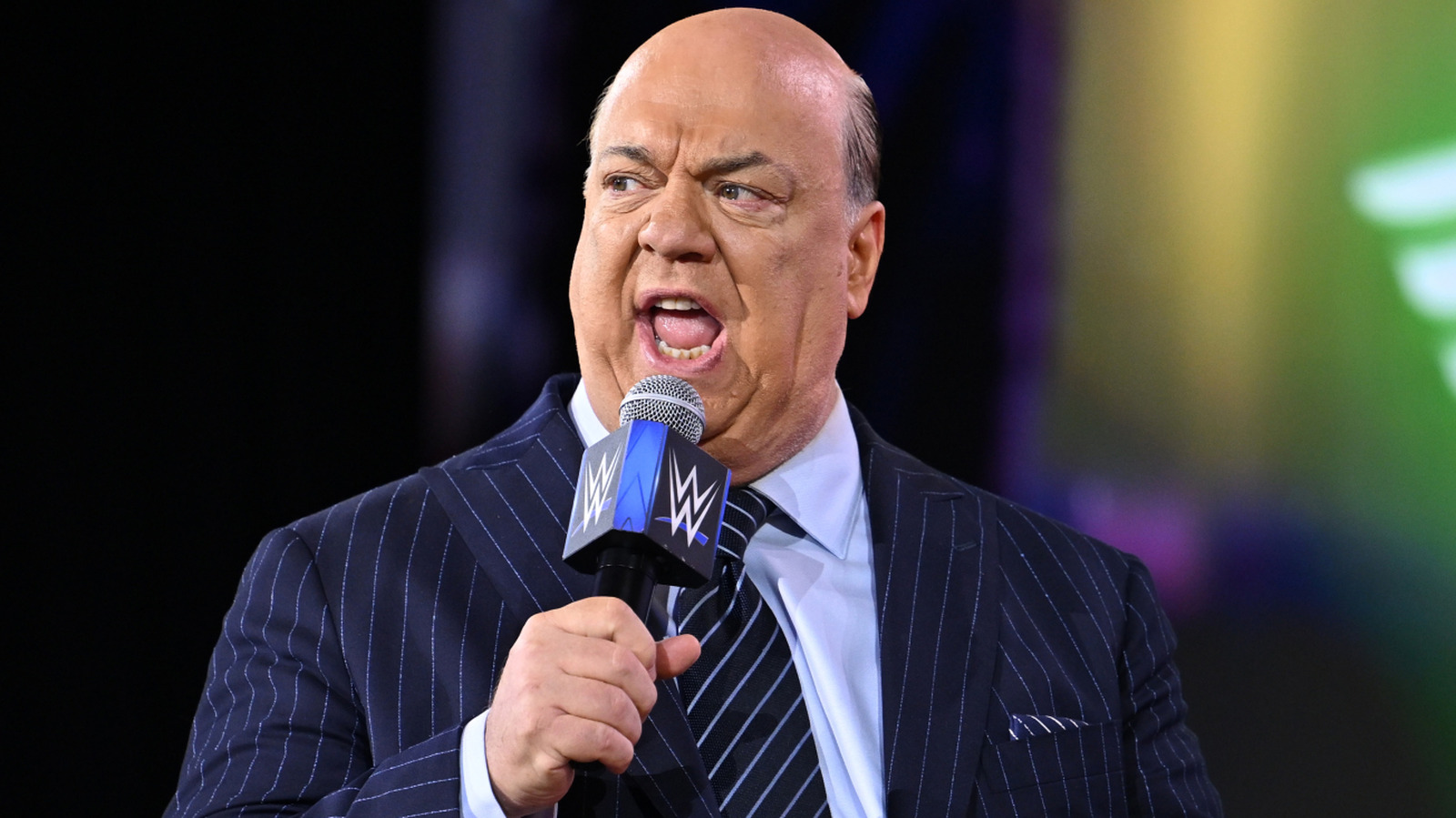
In September 1993, the man WCW fans knew as Paul E. Dangerously would begin booking in a small independent promotion named Eastern Championship Wrestling. While no one knew it at the time, Heyman taking control of the booking in this small Philadelphia-based promotion would be the first domino to fall in a series of events that would lead to the creation of one of the most beloved, controversial, and memorable wrestling companies in history, Extreme Championship Wrestling, ECW.During a recent episode of "In Depth" with Graham Bensinger, Heyman recalled the process of leaving WCW and winding up in control of ECW's creative direction, which all started with a disagreement with the late Bill Watts over pay. "I got fired from WCW and I didn't want to ever get fired again,"Heyman said. "[WCW] brought in an executive to reshape the company named Bill Watts, and he wanted to cut everybody's contracts and I wasn't going to take the pay cut, and I rebelled against it and I ended up on the outs. I was really p***** off and I was 28 years old and I said 'Oh I'm done with the wrestling business. I'm out.'"Heyman fully believed that he was finished with wrestling after his WCW firing, even confirming that he was set to sign a deal that would have seen him host a radio show in New York directly against iconic radio personality Howard Stern. However, after being offered a booking position by Jim Crockett Jr., who would use Heyman's previous comments of bookers in the early 1990s being out of ideas and behind the times against him, Heyman backed out of a career in radio broadcasting and took Crockett up on his offer. It was only when one of Heyman's mentors fell on hard times that the move to ECW was complete.
Before Paul Heyman joined ECW in September 1993, "Hot Stuff"Eddie Gilbert was the booker for the promotion. Gilbert had a number of personal issues that didn't get in the way of his ECW commitments, or his relationship with ECW owner Tod Gordon, but those issues would eventually catch up to him."Eddie had hit a point in his life," Heyman said. "He had just gone through his second divorce, he had terrible pain from a broken neck that he suffered in a car wreck from years earlier. He was in very bad shape based on pain pills and he was hitting rock bottom, and his relationship with the owner of the company fell apart the week of the show and the owner asked me to step in and take over the book."With Heyman now in full control of a promotion, he was free to implement the ideas he had been holding on to for years. He wanted to target the 18-34 male demographic, bring wrestling up to date from a relevance point of view, while also being culturally relevant by keeping his finger on the pulse of both mainstream and underground news.Over the next 18 months, Heyman would gradually take complete control of ECW from Tod Gordon while slowly chipping away at the promotion's debt. He explained that he poured every cent he had into ECW until it folded in 2001, as well as a lot of his parent's money as well, though looking back on it a quarter of a century after ECW ceased operations, Heyman lives to this day with zero regrets. "Even the lowest day was a great day,"Heyman said. "I realized 'Okay, you're filing for personal bankruptcy.' I'm starting from zero, I'm alive, I'm healthy, I've got my wits about me..."Please credit "In Depth with Graham Bensinger" when using quotes from this article, and give a H/T to Wrestling Inc. for the transcription.