
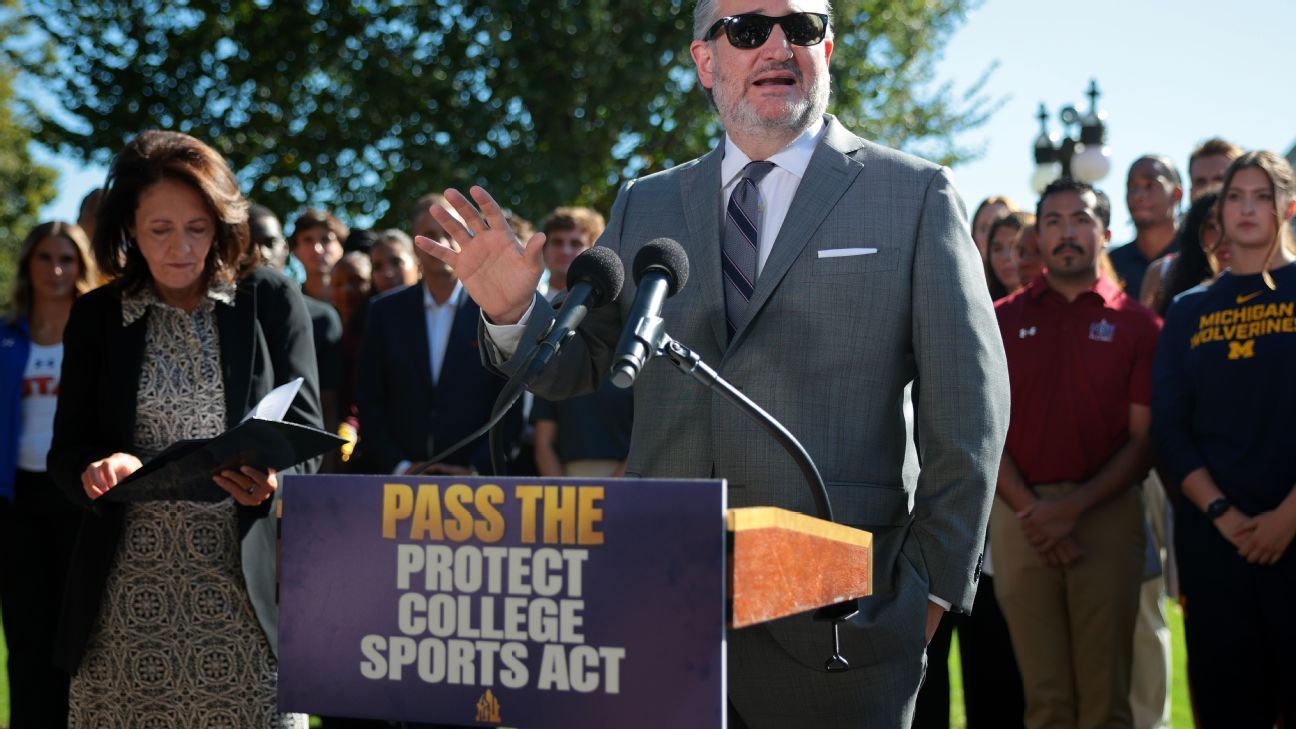
EmailPrintOpen Extended ReactionsFederal lawmakers published a revised version of the Protect College Sports Act on Friday as the U.S. House of Representatives prepare to push for a vote on the bill during the first week of December.The revised text rolls backs some of the proposed restrictions that would make it harder for Power 4 conferences to poach members from one another and expand in the future. Rather than capping the size of Power 4 conferences at 20 schools -- the limit approved in a Senate vote in late September -- the new bill would allow leagues to add up to 22 teams. The higher number comes after several current ACC schools and lawmakers from their states raised objections to the 20-school limit.Earlier this week, House Majority Leader Steve Scalise released a statement along with Reps. Brett Guthrie and Tim Walberg that said the House planned to bring a bill with "narrow" changes to the floor early next month. The revised bill would also need to go back to Senate for approval if passed by the House. Both chambers would need to agree on a bill by Jan. 3 to avoid starting the process from the beginning when a new Congress is seated.The late surge of momentum for the bill has been aided by President Donald Trump, who voiced his support for it during comments to reporters Friday."What's happening is they have no [salary] cap, they have no anything," Trump said. "They have no antitrust protection. ...If you took the NFL without a cap or if you took any of it, basketball, they wouldn't have a league. So you have colleges now are going out in free agency, these guys don't know what they're doing. I care about the sport. I also care about protecting women. Every women's sport is being abandoned."The PCSA would provide the NCAA with a limited antitrust exemption to enforce rules about how long athletes can play college sports, how often they can transfer and how much their schools can pay them. The bill's supporters say it would help preserve women's sports and Olympic sports on college campuses by reining in the current spending arms race now that college athletes can be paid directly by their schools.The industry currently operates with a soft cap that limits each school to spending roughly $21 million on player payments this year. However, many schools have found loopholes to channel tens of millions of additional dollars to their athletes through third-party endorsement deals.The new bill would increase that amount to nearly $50 million while attempting to close those loopholes. It does not attempt to curtail spending on coaching salaries or other large expense items on most athletic department budgets. Despite the concern for the future of women's sports, the NCAA says the number of women's teams and roster spots have steadily increased since athletes start making money five years ago.Sen. Maria Cantwell, who co-authored the bill with Sen. Ted Cruz, said earlier this year that part of her goal was to keep the Big Ten and SEC -- the industry's two richest and more powerful leagues -- from "dictat[ing] to the rest of America what's going to happen to 500,000 athletes."However, those two leagues withheld their public support for the bill until August when senators agreed to add provisions that more than double the amount schools are allowed to pay their players.The proposed limits on how many schools can join a conference were designed to quell fears that the Big Ten and SEC might invite a handful of additional schools to their conferences before splitting off to form their own "super league." The Big Ten currently has 18 members and the SEC has 16.Leaders from Florida State, Clemson, Miami and North Carolina sent a letter to House members in early October urging them to expand the number of team that could move conferences.The revised text released Friday also eliminates a provision that would have forced a school changing conferences to spend three years without a league before joining their new conference.The bill will still have to overcome several other objections to garner enough votes in the House. Some Republicans are disappointed that the bill does not ban athletes from being deemed employees of their schools. The Congressional Black Caucus, a powerful voting bloc on the Democratic side of the aisle, has consistently opposed the bill because they said athletes did not have a significant voice in shaping it. House Republicans will also have to rally several members who lost their seats in November's election to return to Capitol Hill during the final weeks of a lame duck session in order to have enough votes to support the bill.The House rules committee said Friday they plan to take the bill up for consideration as early as Nov. 30 when Congress returns from the Thanksgiving holiday, and set a deadline for any additional amendments to be submitted by Nov. 25.