
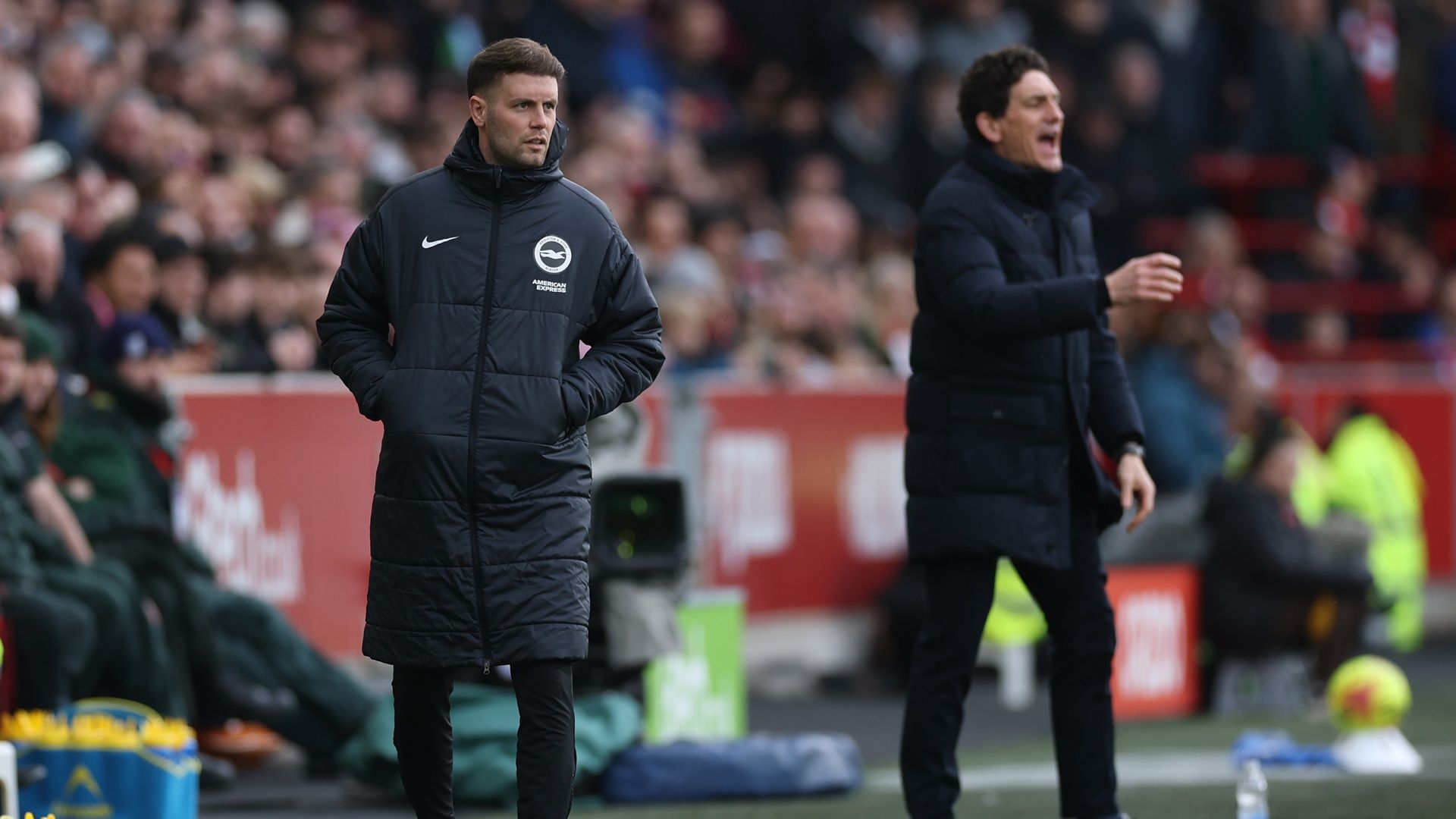
Copy linkFacebookXPinterestEmailShare this article 0Join the conversationFollow usAdd us as a preferred source on GoogleNewsletterSubscribe to our newsletterSpare a thought, as Brighton and Brentford meet on Sunday, for the rest of the Premier League, forced to watch on as the footballing world swoons over those pesky poster boys.Just look at them, with their fancy algorithms and flawless recruitment, making it all look so easy. Cant they mess up just one managerial appointment? Must they hoover up all the midfield talent from Mali?It is hard not to be impressed by the pairs accomplishments. Brighton and Brentford were both in League One when their current owners took control. Under Tony Bloom and Matthew Benham, boyhood fans turned professional gamblers, Brighton and Brentford have risen to the upper echelons of the Premier League, earning admirers aplenty along the way. In this season of flux, they could challenge for the Champions League places - or perhaps even more."Declines that appear impossible beforehand can come to seem inevitable afterwards"Brighton and Brentford have become part of the top-flight furniture. It is easy to assume they will continue bloodying noses and showing up richer rivals for years to come.Yet the high-flying duo would not have to look too hard for success stories gone wrong: the Championship and League One are littered with clubs once hailed as Premier League models whose fortunes subsequently unravelled. You may like Why Newcastle, Everton, Crystal Palace and others must be wary Model vs Medals: Why Brighton and Crystal Palace are quietly jealous of each other Here's why Ipswich Town can avoid becoming a yo-yo club Wimbledon consistently punched above their weight in the 1990s, finishing in the top nine in three out of four seasons without even having a stadium to call their own. Bolton Wanderers enjoyed two seasons in Europe in the 2000s, and came within three points of qualifying for the Champions League in the middle of that decade.The 2010s brought the rise of Southampton and Swansea City, who were mixing it with the big boys not long after promotion. Then there was Leicester City, champions in 2015/16, FA Cup winners in 2020/21, and European semi-finalists in 2021/22.Get FourFourTwo NewsletterThe best features, fun and footballing quizzes, straight to your inbox every week.Contact me with news and offers from other Future brandsReceive email from us on behalf of our trusted partners or sponsorsBy submitting your information you agree to the Terms & Conditions and Privacy Policy and are aged 16 or over.None of those teams are currently in the Premier League. Leicester and Wimbledon are languishing in League One, where Bolton recently spent five consecutive campaigns, while Swansea have been stuck in the Championship for eight years. Charlton Athletic, another side once heralded as a shining light for middle powers, have not had a seat at the top table for almost two decades.It is tempting to assume Brighton and Brentford are run too well to suffer a similar fate. Certain factors do suggest they have more staying power than the beacons of old. But declines that appear impossible beforehand can come to seem inevitable afterwards. Brighton and Brentford should not take anything for granted.They have already avoided one common pitfall. Bolton and Charltons achievements were tied to a single manager: Sam Allardyce and Alan Curbishley, respectively. When they left, the operation fell apart. Charlton were relegated the season after Curbishleys resignation. Bolton survived for longer, but they failed to finish in the top half post-Allardyce. What to read next Promoted Premier League teams are so much better now - thanks to a simple stylistic tweak Fabian Hurzeler deserves more credit but he's stuck living in Roberto De Zerbi's Brighton shadow Hull City are playing Premier League Monopoly - it can only go extremely well or catastrophically Swansea and Southampton did a better job of sustaining success across managerial regimes. Swanseas ascent began under Brendan Rodgers, before they won a trophy under Michael Laudrup and finished eighth with Garry Monk in the dugout. Southampton secured top-eight finishes under Mauricio Pochettino, Ronald Koeman and Claude Puel.However, one bad appointment can start a downward turn. Puel never fully convinced at Southampton and his successor, Mauricio Pellegrino, really struggled. Swansea became too short-termist, with none of Francesco Guidolin, Bob Bradley, Paul Clement or Carlos Carvajal lasting long.Wimbledons decline had several causes, chief among them the absence of a permanent home. But while the appointment was defensible at the time, Egil Olsen could not maintain the standards set by Joe Kinnear. The former Norway boss favoured the sort of direct football for which Wimbledon were famous, but the dressing room did not take to a former communist who walked to training and wore wellies on the touchline. Olsen was too eccentric even for the Crazy Gang.The Wimbledon example highlights another potential hazard. It is important to have an identity, but adhering too rigidly to it is risky. Given they were in the top flight for 14 years, Wimbledon could have varied their style earlier. Yet there is a different lesson to learn from Swansea and Southampton, who lost their way after moving too far away from the principles that initially brought them success.Continually making smart decisions in the transfer market is not easy. Allardyces Bolton paired overseas stars (Jay-Jay Okocha, Nicolas Anelka) with experienced British professionals (Gary Speed, Kevin Davies) to good effect, but that model left with the manager. Southampton (Virgil van Dijk, Sadio Mane, Dusan Tadic) and Swansea (Michu, Wilfried Bony, Gylfi Sigurdsson) unearthed more gems than most, but eventually the well ran dry.As for Leicester, they were always going to struggle to find another Riyad Mahrez or NGolo Kante lurking in the French second tier. In the end, they were undone by the belief that they belonged among the leagues leading lights. Leicester allowed their wage bill to run out of control, setting the wheels in motion for a demise that brought back-to-back relegations.Brighton and Brentford have already avoided many of those mistakes. Brighton have thrived under Graham Potter, Roberto De Zerbi and now Fabian Hurzeler. They have evolved their style at the right times, shifting from the pragmatism of Chris Hughton to the possession play of Potter and De Zerbi, to which Hurzeler has added a higher press this term.Thomas Franks exit could have been fatal for Brentford, but they instead moved seamlessly to Keith Andrews. They remain a physical team who like to get the ball forward quickly, but Andrews has added his own ideas to the mix without ripping up the formula that got the Bees here in the first place.There are no indications that Brighton and Brentfords data-led recruitment models are about to fail them, although it is possible that other clubs will eventually close the gap. And while it has not happened so far, Brighton and Brentford are not immune from making a poor managerial pick. Only a few months ago, many Brighton fans wanted Hurzeler out, fearing they were destined for decline with the German at the helm.The manager is often called the most important person at a football club, but that is not the case at Brighton or Brentford. As long as Bloom and Benham remain in place, supporters of both sides can be confident of their continued progress. Leicesters fall from grace had much to do with the tragic death of owner Vichai Srivaddhanaprabha. Gao Jisheng did not invest in Southampton the way their fans hoped, while the takeover of an American consortium at Swansea was contested from the start.Virtually every club in England can learn something from Brighton and Brentford, who are more than the sum of their parts at every level. But football has a habit of turning todays trailblazers into tomorrow's cautionary tales. For Brighton and Brentford, the challenge now is to make being a model club more than a passing phase.TOPICSBrightonBrighton and Hove AlbionBrentfordPremier LeagueGreg LeaSocial Links NavigationGreg Lea is a freelance football journalist who's filled in wherever FourFourTwo needs him since 2014. He became a Crystal Palace fan after watching a 1-0 loss to Port Vale in 1998, and once got on the scoresheet in a primary school game against Wilfried Zaha's Whitehorse Manor (an own goal in an 8-0 defeat).