
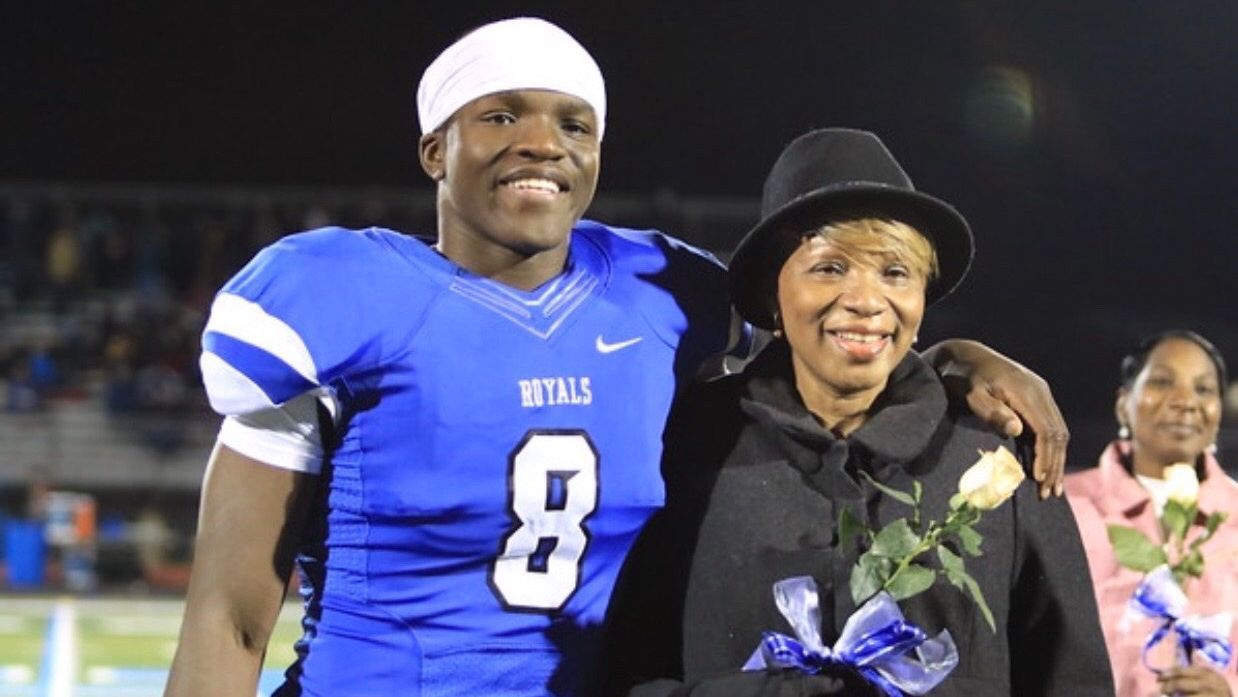
EmailPrintOpen Extended ReactionsCINCINNATI -- Before the chaos of each game unfolds, Cincinnati Bengals defensive end Boye Mafe has a conversation that centers him in a special place.He closes his eyes and starts talking to his mother, Bola, who died of pancreatic cancer in 2018. And in those moments, Mafe lays out his vision for what's about to unfold.I know you're watching over me. I want to put on a show for you. I love you and this is what I'm going to do for you.Then he'll wrap up the message by using American Sign Language to say "I love you" before he continues the rest of his pregame routine. Mafe does the same after each sack.But it's about more than signs. Everything Mafe does is about what he signals. From those messages to Bola, to his pregame outfits, to how he plays, it's all about honoring the systems and structures that built him into one of the NFL's leading pass rushers and a Super Bowl champion."I try not to let circumstances dictate who I am," Mafe told ESPN. "At the end of the day, I am who I am and I want to be true to who I am."That doesn't come easily. Mafe, the son of proud Nigerians, grapples with a phenomenon that is common among those with generational ties to other places -- the more time passes, the harder it is to stay connected to those roots.But all it takes is one glance on game day to see just how strong those ties are.How Boye Mafe's mother impacted her communityTo fully understand why Mafe signs to his late mother requires understanding his upbringing in the western suburbs of Minneapolis.Mafe and his siblings often communicate via American Sign Language. Starting with his older sister, Tayo, they all decided to study it in high school as their alternative language. And over the years the practice has stuck, even during games. Once, Tayo recalled signing to Mafe when he suffered an injury at Minnesota. He quickly signaled back that it wasn't anything serious.Of all Mafe's six siblings, he is the one who spent the most time in their mother's seamstress shop on 1110 Lowery Avenue in North Minneapolis. There, Bola did more than mend clothes. She served as a cultural hub for many, not just Nigerians or those with Yoruba roots.And she invested in the community. She volunteered at a battered women's shelter, made vests for Mafe's entire church choir and often let her customers have some extended credit."She had a lot of patience because sometimes people couldn't pay and she was like, 'Oh, pay me later,'" said Angie Onayiga, one of Bola's longtime friends. "She still gave them the clothes, sold things for them."When Bola was diagnosed with cancer while Boye was in high school, the bond between mother and son deepened. Boye and his brother Domi did everything they could to make sure Bola was as comfortable as possible as the disease progressed.How she fought the disease made a lasting impact on Boye."Not one day I see her cry or one day I see her down sad or [say] woe is me," Boye said. "She always found the light and made joy in any moment she could."I try to bring that into my life."And he needed those lessons as he got deeper into his NFL career.Why Boye Mafe was a better fit for the BengalsThose who have spent time around Mafe know where his temperament comes from."My mom didn't waste words," Tayo said. "He's like that. He just has this quieter confidence. When he walks in a room, you just know it. And my mom had that."But that confidence was tested during the end of his run with the Seattle Seahawks, who selected him in the second round of the 2022 draft out of Minnesota.In Seattle, there was a consensus about what Mafe brought to the Seahawks -- a high-motor player, an energetic pass rusher and someone who could develop into a hybrid edge player who could also drop into pass coverage when needed.In 2023, his second season in the NFL, Mafe started in all 16 of his appearances and totaled a career-high nine sacks. But over the next two seasons, those numbers dwindled, as did the amount of time he spent on the field.He recalled a particular three-game stretch during one of those seasons when he was "in the dumps" about not playing well. Then he remembered what he learned from his mom."I had to remind myself I am who I am," Mafe said. "And I thought about how she would do it and what she would do in those situations. And you always got to look at the glass half full."And when I started looking at the glass half full in a lot of situations, it makes getting through tough times happen, and tough times also will pass."This offseason, the Bengals had a glaring need at edge rusher. Trey Hendrickson, an All-Pro defensive end who totaled 61 sacks in five seasons with Cincinnati, left in free agency and signed with the Baltimore Ravens. Joseph Ossai landed a big contract with the New York Jets, making pass rush an even bigger need.Mafe fit exactly what the Bengals were looking for."The talent was always there," said Bengals assistant Sean Desai, who was in Seattle when the Seahawks drafted Mafe. "And it was an opportunity for him, I feel like, to come to a place and get a fresh start in terms of being a full-time player."Through five games this season, Mafe is playing a career-high 74% of his team's defensive snaps. He is one of three Bengals players who each have a team-high three sacks and is seventh in the NFL in pass rush win rate, per ESPN Analytics and NFL Next Gen Stats."He seems to me like a guy that's free-spirited, in terms of just enjoying the journey, and he plays with great energy on game day," Bengals defensive coordinator Al Golden said. "He's getting better technically at all the things that we're asking him to do, which is awesome to see. And we just need him to keep growing."How Boye Mafe stays true to his family's heritageEvery time Mafe takes the field, he carries a piece of his family's culture. His father, Adewale, is in Nigeria and recently celebrated his 70th birthday with a gathering of roughly 500 friends and family, including Boye.Mafe sports a decal of the Nigerian flag -- next to a U.S. flag -- on the back of his helmet, honoring a place he knows firsthand.Like four of his siblings, Mafe -- who was born in Minnesota -- spent eighth grade at a boarding school in Nigeria, a move that Bola and Adewale Mafe made to immerse their children in their culture and give them a true feel of where they came from.His mother shaped how Mafe represented that, too. Growing up, he had several pieces of traditional Nigerian garb made by Bola.On certain game days this season, Mafe will wear an agbada, the long, flowing robe predominantly worn by Yoruba people. Mafe still has some of the fabrics that were in Bola's shop on Lowery Avenue and will sometimes have his current tailor use them in new designs.Instilling that sense of culture has been paramount to their family dynamic, even as the generations grow older."[Their parents have] always been involved in organizations that maintain the culture," said Tayo, who also started a Nigerian organization of her own. "They've always put us around [it] and made sure that we knew their culture."But they're also very open, knowing that we are here in the diaspora and that it's like you are living in two cultures."Mafe has remained true to those principles and to the people who raised him. With each sign to his mother during game days and so many other aspects of his life, he is determined to signal to the world why he is who he is."At the end of the day, it's something that's demonstrative and you can see," Mafe said. "It's one thing for me to say and talk to her, but it's another thing for me to show."