How to watch Coventry City vs Brighton for FREE: Live streams as Sky Blues aim to kick-start Premier League campaign

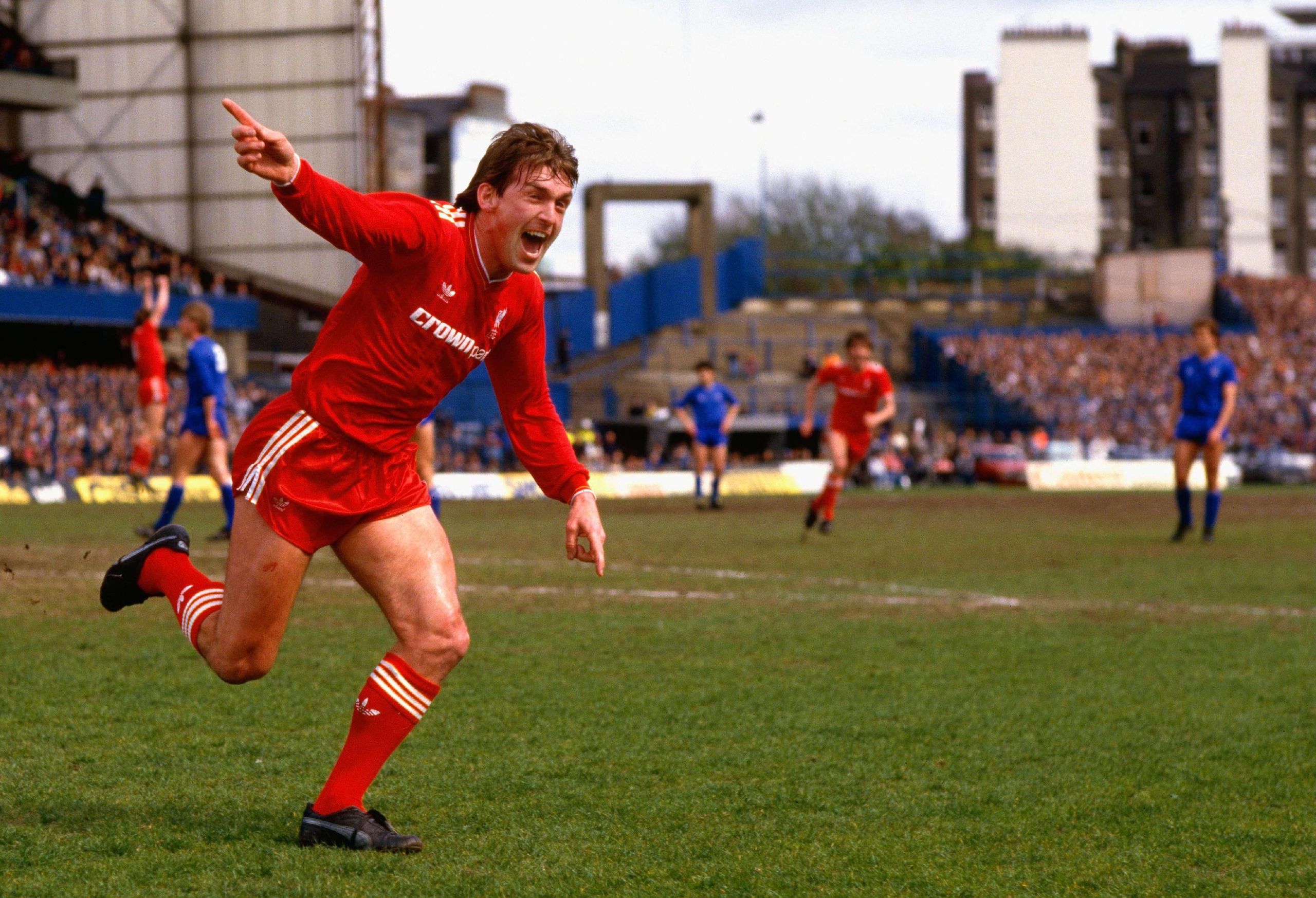
Copy linkFacebookXPinterestEmailShare this article 0Join the conversationFollow usAdd us as a preferred source on GoogleNewsletterSubscribe to our newsletterGrowing up in Glasgow during the 1950s, just a few square feet of grass could feel like Hampden Park. Not far from his family home in the impoverished neighbourhood of Milton, a young Kenny Dalglish would spend countless hours kicking a football around one such tiny patch with his father Bill.An engineer by trade, Bill would take his son to his two places of worship at weekends the Protestant church and Ibrox. When Kenny was 14, his family moved home, to his great delight, into the shadow of the latter. My dad took me to Rangers from an early age that never caused me any bother later on, you have to support someone when youre a kid, Dalglish tells FourFourTwo, looking back on his childhood. This year a documentary about his life was released, created by Asif Kapadia, the maker of documentary films Senna, Amy and Diego Maradona.Dalglishs kickabouts as a youngster paid off. By the time hed left school to work as an apprentice joiner, he was being touted as a rising talent in Scottish football. Turning out at weekends for Glasgow United, scouts from West Ham and Liverpool visited. His next stop lay in his home city but not at the stadium he could see from his bedroom window.One day we played Celtics young boys, Dalglish remembers. Among those watching was their first-team manager, Jock Stein. He liked the wee No.4 thankfully, that was me.Steins assistant, Sean Fallon, paid a visit to the Dalglish family home and, surrounded by Rangers memorabilia all over the walls, asked Bill and wife Cathy if their son would be interested in joining the Catholic juggernauts. I told my dad, I thought youd have wanted me to play for Rangers, Kenny would later recall. He said, Son, the best place for you right now is at Celtic. You may like Kevin Keegan: how Liverpool, Hamburg, Southampton and Newcastle fell Head Over Heels In Love with King Kev "Sir Alex Ferguson crossed a line, and therein lies the difference between me and him, thats how he won 13 league titles and I won none" Kevin Keegan on Newcastle United's 1995/96 Premier League challenge 30 years on from the 'Love it' rant Jan Molby on three of his legendary Liverpool teammates It wasnt hard to see why. Only a few weeks later, Steins side were crowned European champions in Lisbon. I can remember watching that game, says Dalglish. Jock became the first British manager to win the European Cup, and he did it all with a group of players that came from a 25-mile radius around the city. Those scenes and the celebrations in Glasgow sparked a lifelong ambition to get my hands on a European Cup. This was the club I was joining.Pick the ultimate 4-4-2 line-up from players in FourFourTwo's definitive Top 100 ListDalglish soon emerged as part of a talented crop of youngsters at Celtic which also included Lou Macari, George Connelly and Danny McGrain dubbed The Quality Street Gang. Jock had the desire to come over regularly and coach some of the younger players, myself included, Dalglish recalls. What he did for us was fantastic. The education he gave us, the desire to get us through and make us better footballers, it just spoke volumes for the man.Get FourFourTwo NewsletterThe best features, fun and footballing quizzes, straight to your inbox every week.Contact me with news and offers from other Future brandsReceive email from us on behalf of our trusted partners or sponsorsBy submitting your information you agree to the Terms & Conditions and Privacy Policy and are aged 16 or over.Soon, Dalglish and the other young prodigies began training with the likes of Jimmy Johnstone, Billy McNeill and the rest of the Lisbon Lions. Those heroes of mine were who we went to train with, says Dalglish. They were so humble and helpful. It was a fantastic team, and I mean as people as well as a brilliant group of footballers.Dalglish moulded from a midfielder into a deep-lying forward by Stein made his first-team debut aged 17 in 1968, but it wasnt until the 1971-72 season that he became a regular. His first competitive goal came at the start of that season a penalty that secured a 2-0 victory over Rangers at Ibrox, the club hed grown up supporting. That was the first of his 29 goals in 53 first-team appearances that season, as Steins side won their seventh straight league title. After being handed his first Scotland caps by boss Tommy Docherty in 1971, Dalglish showed his breakout campaign had been no fluke by hitting 39 goals in the following season. Hed quickly become the star of Scottish football, dazzling crowds with his footwork and vision, despite rough treatment from opposition players on muddy pitches.You learn to look after yourself, says Dalglish, when asked if rivals ever tried to kick him off the park. I dont know how a team-mate is supposed to look after you, youll have to do that yourself. It was a more physical game than it is now, but I still feel fortunate to have played when things were slightly better. I played after George Bests era you see the treatment that he used to get. Football has moved on a lot now, but its always been a competitive sport. Youre going to get challenged sometimes people mistime things. What to read next Why did Kevin Keegan scrap the Newcastle United reserve team in the mid 90s? One of the great man's most controversial moments revisited Scottish football club sporting director has had arguably the maddest career in history The late Kevin Keegan exclusive, on the upsides and downsides of his spell in Germany Dalglish soon won his third league title, although Steins team lost out to Atletico Madrid in a European Cup semi in 1974, following a first-leg stalemate at Celtic Park that saw three Spaniards sent off for violent challenges. They were a disgrace that night, an absolute disgrace, recalls Dalglish. The most brutal game I ever played in. Their manager believed that style could take them to the final. Hed pick two different teams a more defensive one for away games and a more attacking one for home games. They went on to lose the final 4-0 [against Bayern Munich] after a replay. Seeing that was satisfying. Despite being named Celtic captain in 1975, their increasing struggles in Europe meant Dalglish grew restless. I was desperate to get my hands on a European Cup and felt I needed a new challenge, he says. After winning a league and cup double in 1977, I told the manager that I wanted to leave. He reluctantly accepted that.Im still hugely grateful to Celtic. People may say, Well, Kenny wanted to move away, but thats where it all began for me. Ill forever be indebted to them. Especially to Jock, who did so much for me, but also for Celtic. He said, Have it your way, you wee bastard, I might know somebody that would be happy to meet you.That man was Bob Paisley. After hitting 173 goals in 338 appearances, Dalglish was heading to Liverpool.Bah Hamburg!On Merseyside, the Reds were dealing with the loss of their own talismanic forward Kevin Keegan had departed Anfield for Hamburg immediately after lifting the 1977 European Cup. Again, Dalglish was joining the kings of Europe. Ive been told to go out and get the best, and Kenny is what I see as the best, Paisley said of his �440,000 British record signing.For Liverpools new No.7, the feeling was mutual. He was a great man, Bob, Dalglish recalls. Hed been right through the club, from player, to physio, to coach, to manager. He reminded me of Jock in that he was very close to his players and very knowledgeable about the game. He was brilliant and so humble, he never gave himself enough credit. People often wondered if Liverpool had some kind of secret to success, even before I joined them. Well, if there was a secret, nobody was going to be told it.In November, Liverpool came up against Hamburg, the winners of the European Cup Winners Cup, in the first leg of the Super Cup. That tie meant a head-to-head with Keegan. I spoke to Kevin before that game he and his family were staying in the same hotel, the Scot recalls. It was very amiable. Hed made a similar decision to me he wanted to go off and play in Europe, and I wanted to play in England. I knew I was replacing an absolute superstar and he had that aura. But the only thing that I had to do was be myself not try to replace or emulate Kevin, but be me.After a 1-1 draw in Germany, Dalglish rounded off the scoring as Liverpool smashed their guests 6-0 in the return leg at Anfield, on a night that midfielder Terry McDermott hit a hat-trick. We had a good chat after that game as well, Dalglish recalls. He wished me luck and I did the same with him. We were always friendly, Kevin and I. Hes a great man. Despite that resounding win, Paisley knew more was needed if Liverpool were to secure further silverware in the latter half of the season. Another young Scot, centre-back Alan Hansen, had been signed from Partick Thistle at the end of the previous campaign, with Graeme Souness brought in from Middlesbrough midway through Dalglishs first season at the club. The trifecta of recruits would affectionately come to be known as the Scottish Mafia around the club, as they spent endless time socialising with one another away from the pitch.Alan signed first, then I arrived in August and Graeme joined us in the January, Dalglish remembers. The dressing room was a fantastic place for us to be, in terms of camaraderie and our relationship, and that would play a huge role in the success wed go on to have at Liverpool together.The trio wouldnt be the last Scots signed by Paisley, either. Stevie Nicol joined in 1981 I think the intelligence of the dressing room fell back a wee bit! laughs Dalglish affectionately. His brain matter was a bit different from the rest of us. But it was no coincidence we were so successful with that dressing room. Dalglishs first term at Anfield finished without domestic pots Brian Cloughs Nottingham Forest pipping them to the First Division title but his move down south would be immediately justified in European competition. Liverpool ousted Dynamo Dresden, Benfica and Borussia Monchengladbach to tee up a Wembley showpiece against Club Brugge in the 1978 European Cup Final.During the match, Dalglish noted that opposition goalkeeper Birger Jensen had a habit of going to ground early to smother shots. I knew what I had to do, hed later recall. No point hitting it along the floor. Id need to chip it. His chance came in the 64th minute, when Souness chested down a ball on the edge of a crowded Brugge box and slipped a pass through to Dalglish, who gently dinked a finish over Jensen into the far corner from a tight angle. There was no reply from their rivals. At the age of 27, hed finally emulated the Lisbon Lions. Every time you win a trophy, its a great achievement, he reflects now. But to win European trophies is even more special. Celtic had done it back in 1967, but Id never achieved it. Going to Liverpool had given me the best possible chance of doing that.The Scot got his hands on an English crown the following season with his 21 league goals essential in delivering the title and earning him the Football Writers Associations Footballer of the Year award. He had the perfect touch and control to find a team-mate, Souness later said of Dalglish. Kenny was just the perfect player.Liverpool successfully defended their title in 1980, before beating Real Madrid to win another European Cup a year later. A magical night, recalls Dalglish of the Paris celebrations. The following campaign marked the breakthrough of a player whod take Dalglishs game to the next level a young Welsh striker called Ian Rush. Rushie was the one I found most compatible with myself, and he brought the best out in me, Dalglish looks back. I used to say to him, You get in a position dont get anxious, Ill find you.Dalglishs instructions worked a treat, as Rush would score 30 goals across all competitions, delivering another league title. When they teamed up to make Liverpool champions once more the following season, Dalglish won another Football Writers Association award only Tom Finney, Danny Blanchflower and Stanley Matthews had previously claimed the honour twice. The Scot finished second in the Ballon dOr too, behind only Michel Platini.By that stage, Kennymania was at its peak, as superstars from all walks of life lined up to offer him praise. I dont have any idols in music, but I do in football, the former Beatle Paul McCartney said. Kenny Dalglish is pretty good.For Liverpools reluctant hero, the adulation and the awards belonged to those around him. Well, that just goes to show you that even great men like Paul dont know what theyre talking about sometimes, laughs Dalglish. Ive always said I wouldnt have been successful had it not been for the two brilliant football clubs that I was lucky enough to play for. Any of the praise I received really belongs to the brilliant team-mates, managers, coaches, supporters and everyone else around me or behind me. I never got carried away with any of that.The 1983-84 campaign would be Dalglishs first without Paisley at the Liverpool helm, as he retired after winning 20 trophies in nine years as manager. Bob and Big Jock were similar in terms of the number of trophies they won, Dalglish says. I was very lucky in that my career spanned across two of the most successful managers in the history of British football. Bob won six league titles in nine years. If you throw in three European Cups as well, what he achieved is enormously impressive. Paisleys assistant Joe Fagan kept up the success, as Liverpool claimed the First Division and another European Cup crown, toppling Roma on penalties in their own Stadio Olimpico backyard. I think the best European Cup win was that one, Dalglish reflects. Scoring the winner in the first one was special, but it didnt really matter to me who scored those goals. Success is the most demanding thing, but also the most enjoyable. Those European trophies mean an awful lot to me, but so does every trophy we won together.A Roy of the Rovers momentFor Fagan, the success wouldnt last. The 1984-85 campaign ended without silverware, as an ageing team finished second to neighbours Everton, before the European Cup final with Juventus ended in tragedy a crush killed 39 spectators, amid fan violence at the crumbling Heysel Stadium in Brussels.Both teams wanted the game to be postponed, only for officials to order it go ahead. Juventus won in a subdued affair. They should have called it off, but they never did, lamented Dalglish years later. Youre never the same after witnessing something like that. We were asked to play and we played. We lost, but not as much as some people. Fagan stepped down, with Liverpool again looking to promote internally. This time it wasnt an assistant who would get the job, but the 34-year-old Dalglish named player-manager. Well, it was a surprise, he says. The way that I saw it, I was just going to give my best, and if my best transpired not to be good enough, then Id hold my hands up and say, This isnt for me its not fair on the club, so get somebody else in.Reluctant to field himself, Dalglish started just two of his sides opening eight league games and found it tough to adapt. My biggest challenge, I found, was coming out of that dressing room dynamic Id been a part of for so long and picking a team, he says. That meant leaving players out that youd befriended. I hated making decisions that affected them adversely.Dalglish felt forced to create clearer boundaries with his players. One of my favourite things about being a footballer was that camaraderie in the dressing room, he explains. But suddenly, you become the manager and feel things clam up when you enter the room. If they were in there having a laugh and a joke when I walked in, Id show them some respect and let them know that Id be back in five minutes, because I knew how important it was for the lads to have that time together sharing some jokes without the manager being about. But it was very tough not to feel a part of that any more.The new boss began to rely on the advice and influence of an old mentor. Bob Paisley still held a position upstairs, Dalglish says. He was a great help to me. Hed sometimes ask me if he could have a word with so-and-so, before the game or whatever. I didnt mind that, because he was 100 per cent behind me. He was doing things that were useful. He was helpful.Things on the field werent yet clicking, though Liverpool were sat eight points behind Everton with 11 games left to go. Ahead of a home clash with QPR in March, Dalglish made a crucial decision.We were struggling with injuries and form, he says. So I thought it was time I start picking myself. I didnt have much choice in the matter, to be honest.He set up two as the Reds triumphed 4-1, before assisting three times in a 6-0 victory over Oxford. With Dalglish playing regularly, Liverpool went unbeaten for the remainder of the season drawing only once, when Dalglish didnt play to reel in Everton. It all came down to the last match of the campaign victory away at Chelsea would see Liverpool crowned champions once again.Some stories feel too outlandish to be real too far-fetched even for a Roy of the Rovers comic strip but Dalglishs 23rd-minute winner at Stamford Bridge is one of those fantastical moments. I know that I made a contribution and Im proud of that, but there were so many other people who were doing their bit, too, he says, modest as ever. Everyone played their part and that was how we were so successful. A week on, Dalglish started himself again as Liverpool beat Everton in the FA Cup final.The following months would mark the last of Dalglishs 102 appearances for Scotland, during which he netted 30 times. No player has ever surpassed either number he shares the scoring record with Denis Law. We made four World Cups in a row, which isnt bad for a country of five million people, recalls Dalglish, who appeared at the 1974, 1978 and 1982 editions, all group-stage exits, before helping his country qualify for the 1986 World Cup, only to miss the tournament through injury. Wed have wanted to have done even better, but we were a really good team.Back at club level, when Liverpool went without a trophy in 1987 and Rush left for Juventus, Dalglish knew that hed have to rebuild. We needed some new faces, he remembers. I had to get a replacement centre-forward and we needed a few more as well.That year saw the arrival of John Aldridge in January, followed by John Barnes, Peter Beardsley and finally Ray Houghton. Aldridge proved brilliant for us, says Dalglish of a player who struck 29 times in his first full Anfield season. You talk about me coming in to replace Kevin Keegan. Well, John replaced Ian Rush that was no easy task. But what a season he had. He was fantastic when he came in. But if youve got somebody up there, you have to feed him you need the creative players to make their contribution. John Barnes was nothing short of a pleasure to watch and wee Peter was fantastic as well. So creative and hard-working. The new-look side won the 1987-88 title at a canter.The day everything changedWhat happened at Hillsborough in April 1989 would affect Dalglish deeply, when a total of 97 people would eventually lose their lives as a result of the crush that occurred at the start of Liverpools FA Cup semi-final against Nottingham Forest. As the awful events unfolded and panic spread, cameras repeatedly turned on Dalglish, frantically awaiting news of his son Paul, who was among the crowd. The youngster would return safely to his parents. Other mothers and fathers werent as fortunate.In the days that followed, Dalglish, still just 38 at the time, was thrust into the spotlight of a grieving community. He led his players through hospitals and homes, meeting with mourning families and coma-bound patients, personally attending funerals and offering his unwavering support. All of a sudden Kenny wasnt a football manager or player any more, he became a social worker for the families, said Margaret Aspinall, who lost her 18-year-old son James during the tragedy. It must have been so difficult to have the bereaved families coming in to talk to him, but he gave them all a great deal of comfort, which shows the calibre of the man. If I need something I can still phone him now and hell do anything to help the families, even to this day.There was no way we were going to step back and not be as helpful as we possibly could be, said Dalglish. For me, as a person, that was simply what I needed to do.Five weeks after the tragedy, Liverpool defeated Everton 3-2 to win the FA Cup, but Heysel and Hillsborough had taken a huge toll on the Scot. He led Liverpool to a final title in 1990, before resigning in February 1991. Its a decision many people will find difficult to understand, a decision that only I could have made, Dalglish said at the time. It would have been wrong to mislead people that everything was fine with me.Many thought his time in football had ended, but eight months later, he was ready for a new challenge, returning to the dugout as manager of second-tier Blackburn, just taken over by wealthy supporter Jack Walker. I wasnt trying to prove myself, but I was very fortunate that I was asked to become manager at a time when Jack was throwing his heart into the job, as well as his finances, says Dalglish. His finances and his support were both 100 per cent genuine. He was born and bred Blackburn.Dalglish guided Rovers to the play-offs, where they overcame Leicester 1-0 at Wembley. The spending immediately went up a notch Blackburn broke the British transfer record to sign a young Alan Shearer from Southampton for �3.6 million that summer. We spent Jacks money quite well, if you gauge it in terms of success, Dalglish reflects. We got promoted in that first season, then we finished fourth in our first year back in the top flight.Rovers improved again in 1993-94, finishing second behind Manchester United. The following summer, they broke the British transfer record for a second time, signing Chris Sutton from Norwich for �5m. Forming the famous SAS strike partnership with Shearer, the duo scored 49 Premier League goals that season to put Blackburn in control of the title race going into the final day.Fittingly for Dalglish, his side would face Liverpool at Anfield. Blackburn lost 2-1, but Manchester Uniteds failure to win against West Ham meant they were champions. With the triumph, Dalglish had become just the fourth manager to win the English title with two different clubs, after Brian Clough (Derby and Nottingham Forest), Herbert Chapman (Huddersfield and Arsenal), and Tom Watson (Sunderland and Liverpool).Jack was the person most responsible for everything that Blackburn achieved, Dalglish insists. We hardly blinked our eyes in the second tier, then suddenly we were champions of England. It was all done over a period of just a few years. It was done because Jack was 100 per cent genuine and very generous. All of the players that came in were a credit to themselves. They could have just taken the money, taken it easy and we would have achieved nothing. But fortunately, they were a credit to themselves and the town of Blackburn.That was arguably Dalglishs last great hurrah in British football. After Blackburn, he had a mixed spell as Newcastle boss, then returned to Celtic as director of football operations and had a stint as interim manager. He was parachuted back in as Liverpool boss in 2011 and led the club to a League Cup triumph the following year, although the Reds were in a much different place to his first spell at the wheel.Sir Kenneth Mathieson Dalglish was knighted in 2018 for his services to football, charity and the city of Liverpool, particularly his work in the aftermath of Hillsborough. Dalglish believes he owes a far greater debt to Liverpudlians than they owe to him. The more we get to know the people of the city, the stronger our connection becomes, even still, he smiles. Its nearly 50 years weve been here now. Weve always been made to feel welcome. Our children grew up here and loved it theyll always appreciate the way they were looked after by the people of Liverpool. Its a great city and its just got even better.Looking back over his unparalleled career, King Kenny remains his humble self. No individual brilliance has ever won a trophy on its own, he muses. Football is a team game and Id rather have been a small part of a great team than a great player myself. Im just very proud to have represented two of the most successful clubs in history. Then you catch that unmistakable twinkle in his eye. I didnt half enjoy myself, though, he adds. And thats the most important thing.TOPICSLiverpoolCelticBlackburn RoversNewcastle UnitedPremier LeagueEd McCambridgeSocial Links NavigationStaff WriterEd is a staff writer at FourFourTwo, working across the magazine and website. A German speaker, hes been working as a football reporter in Berlin since 2015, predominantly covering the Bundesliga and Germany's national team. Favourite FFT features include an exclusive interview with Jude Bellingham following the youngsters move to Borussia Dortmund in 2020, a history of the Berlin Derby since the fall of the Wall and a celebration of Kevin Keegans playing career.