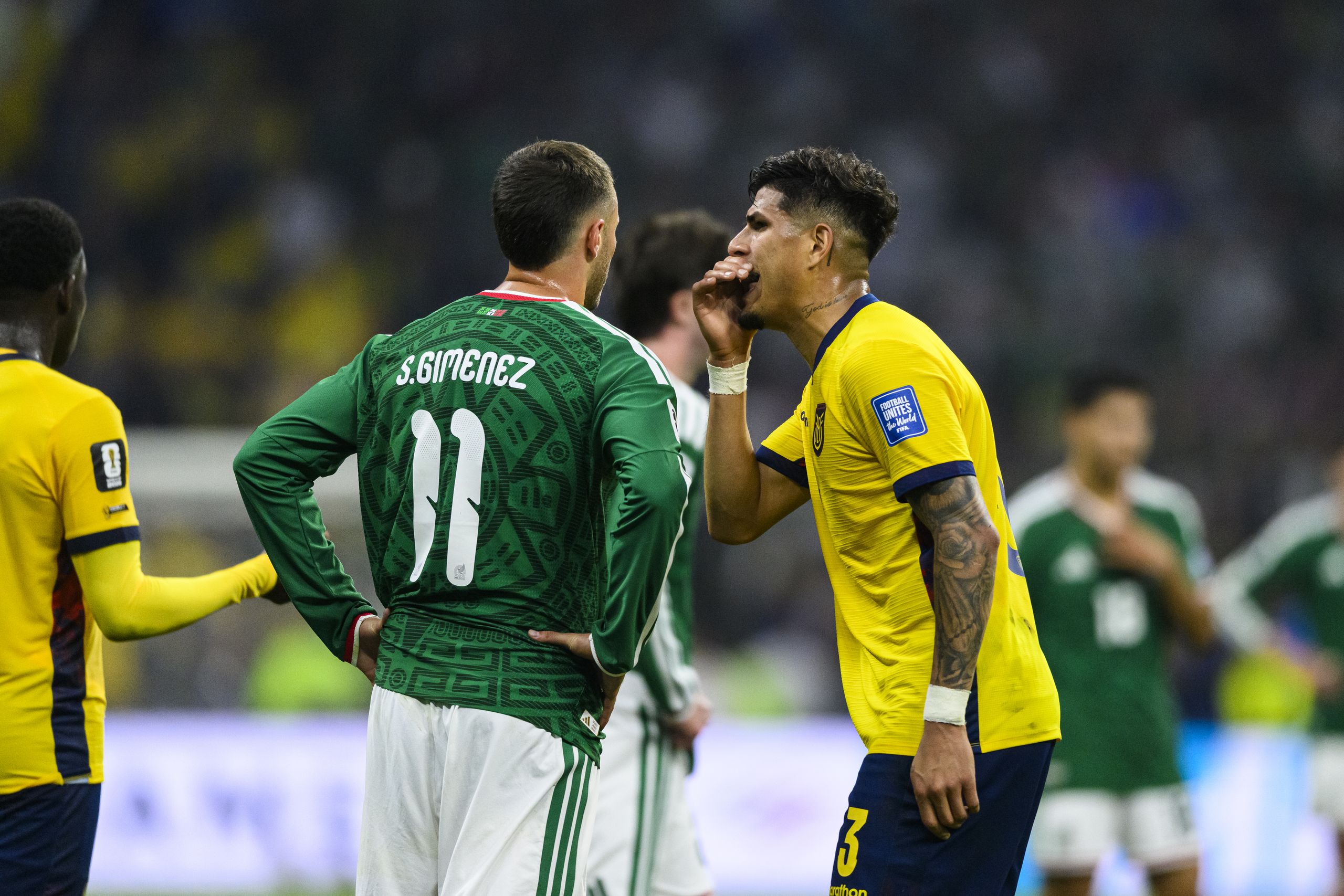
Copy linkFacebookXPinterestEmailShare this article 0Join the conversationFollow usAdd us as a preferred source on GoogleNewsletterSubscribe to our newsletterThe 2026 World Cup, now over halfway passed, has seen its fair share of drama, but mouth-covering dismissals reign supreme.These peculiar sending-offs have virtually no footballing precedent, and it has now occurred twice in North America.The biggest tournament in football introduced a series of fresh rules prior to this edition, but why exactly was it deemed necessary to dismiss players who cover the mouth?Sent off for covering the mouth: The Prestianni Law explainedFirstly, the rule has been named after its creator, more precisely, the player who incited an event that the rule aims to avoid.Gianluca Prestianni is a Benfica winger who, earlier in February, was alleged to have used racially abusive language towards Real Madrid forward Vinicius Junior. You may like Why Jude Bellingham and England were not penalised by new World Cup red card rule Explaining the new kick-off trend at the 2026 World Cup Why there could be more cards than ever before at World Cup 2026 As a result, FIFA president Gianni Infantino championed the new law to come into effect, which prevents players from covering their mouths while potentially uttering abusive language.The law aims to avoid the scenario that occurred earlier this year, with Vinicius alleging that Prestianni used such language, and the Benfica man pleading otherwise.Get FourFourTwo NewsletterThe best features, fun and footballing quizzes, straight to your inbox every week.Contact me with news and offers from other Future brandsReceive email from us on behalf of our trusted partners or sponsorsBy submitting your information you agree to the Terms & Conditions and Privacy Policy and are aged 16 or over.Being sent off is the ultimate incentive to not cover the mouth in such charged situations, and if such a situation occurs, nobody can be exonerated by the defence that nobody saw it being said.That way, players who use abusive language of any kind during a heated discussion will be in view of the cameras, and their fellow professionals, while saying it.The law only applies to situations that are applicable: when it is clear that a player is verbally confronting another in a heated moment. What to read next Argentina star banned from World Cup opener by FIFA What is the mistaken identity rule that debuted during USA vs Paraguay? Every new FIFA rule at the 2026 World Cup: Goalkeeper timeout ban, five-second countdowns and VAR offsides what's changed The law does not apply when players aren't in such confrontational discussions, and are covering the mouth for other purposes.An example is discussing tactics between team-mates, such as debating who will take a free-kick.In that case, a player is able to cover the mouth to prevent their opponent from hearing or seeing the contents of their discussion.Piero Hincapie of Ecuador, in yesterday evening's game vs Mexico, and Miguel Almiron of Paraguay, are the two players at the 2026 World Cup who have been dismissed for the offence.The law is a deterrent for abusive language being used, and the player in question will be subject to further punishment if they indeed used it, as well as a one-game suspension.Kedar BayleySocial Links NavigationFreelance WriterKedar Bayley is a trained journalist specialising in culture reporting. As a fan of Liverpool FC,he writes on the Reds often. Knowledgable about all things sports, cinema and television,you can find his words in Screen International, FourFourTwo, Manchester Evening News and more.