
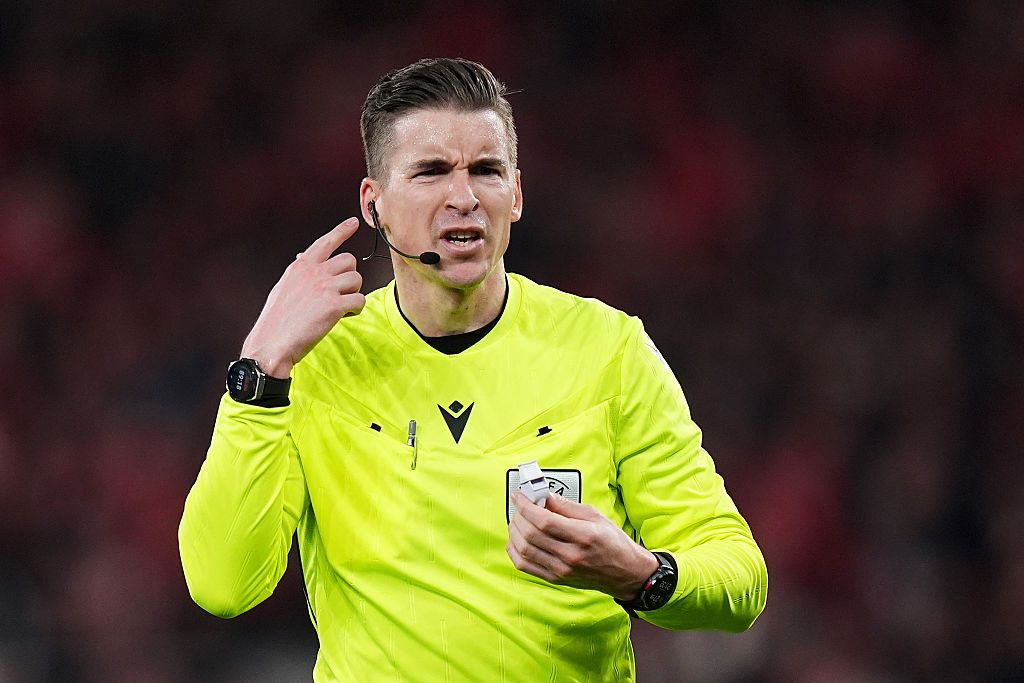
Copy linkFacebookXPinterestEmailShare this article 0Join the conversationFollow usAdd us as a preferred source on GoogleNewsletterSubscribe to our newsletterThe World Cup is always a spearhead for innovation in football's law-making and this summer's global showpiece will have more updated rules than most.World Cup 2026 will begin at Estadio Azteca on June 11 and end with the final at MetLife Stadium on July 19. In those matches and the 102 World Cup fixtures in between, the tournaments 1,248 players will be subject to a suite of tweaks to the Laws of the Game.52 referees, 88 assistant referees and 30 video match officials will oversee the biggest World Cup ever with the additional challenge of needing to stay on top of a whole raft of timekeeping rules that might be best administered by wearing four or five watches on each wrist.It's 2026, so many of the new and updated measures have to do with ensuring VAR has as much influence as possible over matters where many supporters would argue it has no business.Many, but not all. Here are the new rules to look out for at World Cup 2026. You may like What are the VAR rules at the World Cup 2026? Why there could be more cards than ever before at World Cup 2026 World Cup 2026 calendar: Central Daylight Time VAR changes for World Cup 2026VAR can now intervene to overturn incorrectly awarded corner kicks.Originally limited to ruling on goals and an ever-growing, arbitrary period of time before them, video assistant referees at World Cup 2026 will have the ability to say yay or nay on the matter of corners and goal kicks.Get FourFourTwo NewsletterThe best features, fun and footballing quizzes, straight to your inbox every week.Contact me with news and offers from other Future brandsReceive email from us on behalf of our trusted partners or sponsorsBy submitting your information you agree to the Terms & Conditions and Privacy Policy and are aged 16 or over.The oar will only be stuck in to correct clear and obvious errors and must not be allowed to delay the restart. You'll forgive our scepticism on that one.VAR can now recommend second yellow cards for review.A red card is a red card, at least in the context of the match in which it's awarded. VAR can review potential straight red cards and recommend they're overturned when they're incorrectly awarded, but players wrongly dismissed for two bookable offences had no recourse. What to read next World Cup 2026: Every referee at the tournament World Cup 2026 calendar: Pacific Daylight Time Why 2026 FIFA World Cup could be the hottest ever That changes now. The VAR crew cannot recommend yellow cards but the option to call for a review when a second yellow has been shown by the match referee is now available to them. Mistaken identity now comes into play here too.VAR can get involved before a set piece is taken.In a change in no way resulting from an overblown moral panic about fouls at corner kicks, VAR can now intervene and recommend disciplinary action before the ball is in play.This is a straightforward expansion of its powers. Where violent conduct was involved, VAR already had a say at dead balls. Now, on paper at least, all options are on the table. Don't expect to see a penalty given before the whistle is blown, mind.Assistant referees will be notified of offsides in real-time.Thanks to new technology that will be used for the first time at World Cup 2026, the late offside flag conundrum should be eased.Instead of allowing the play to continue even when they know a player was in an offside position, assistants will now receive an audio notification through semi-automated offside technology. When the offside offence is 10cm or more i.e, pretty clear up goes the flag.Tackling time-wasting and timeouts at World Cup 2026The scourge of time-wasting is another of football's great modern pressure points and the game's law-makers have sought to codify some of the measures designed to tackle it.We've already seen one of them in action in a World Cup 2026 warm-up match between Japan and Iceland.Substituted players must leave the field within 10 seconds.If that deadline is missed, the player replacing them will be held back off the pitch for a period of one minute. Iceland fell foul of this rule against Japan, who managed to score the only goal of their friendly while that minute's delay took place. Isn't that fun?Goal kicks and throw-ins must be taken within five seconds.The average football match has around 30 goal kicks and throw-ins, which means 30 opportunities to lose possession from a dead ball (giving away a corner, in the case of goal kicks) by not taking it quickly enough. We're absolutely certain this will be policed uniformly across the expected 3,000+ goal kicks and throw-ins at World Cup 2026.Injured goalkeepers have lost some of their potency.In every football match at every level and in every corner of the world, conveniently timed goalkeeper injuries are used to send a team over to the technical area for a mid-game tactical briefing.Seeing players heading over towards the touchline before the goalkeeper goes down is a bit of a giveaway, so the law-makers have acted. Those tactical debriefs are now banned, so traditional time-wasting and disrupting the flow of a match will be the only benefits for the time being.Changes to injury treatment rules at World Cup 2026With the obvious exceptions goalkeepers, players about to take a penalty, players with head injuries or concussions there is now an increased mandatory period of one minute on the sidelines for players who receive treatment on the pitch.If a foul has been awarded and an opponent yellow- or red-carded, the injured player will still not be required to leave the pitch.Red cards for players who cover their mouthsPlayers nattering to one another with their mouths covered by their hand or shirt has long been an irritant for some reason, but the real issue unfortunately came to pass in the Champions League this season.In a confrontation with Vinicius Jr of Real Madrid, Benfica's Gianluca Prestianni was accused of making a racist remark. The offence was impossible to prove because Prestianni had covered his mouth. In the end, he was sanctioned for homophobic conduct instead.Following FIFA president Gianni Infantino's intervention, players covering their mouths during verbal confrontations at World Cup 2026 will be shown the red card.TOPICSWorld CupWorld Cup 2026Chris NeeChris is a Warwickshire-based freelance football writer specialising in West Midlands football, the Premier League, the EFL and the J.League. He is the author of the High Protein Beef Paste football newsletter and owner of Aston Villa Review. He supports Coventry Sphinx.