
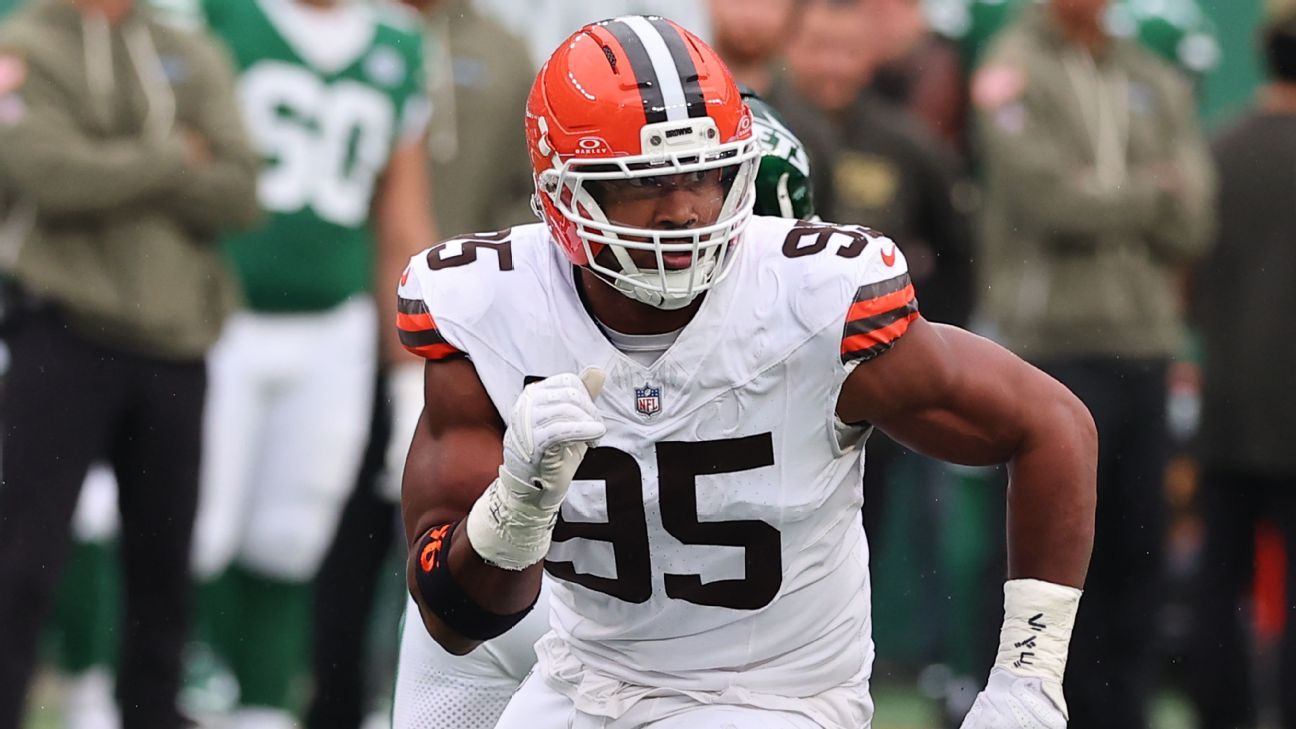
EmailPrintOpen Extended ReactionsThe main transaction window of the 2026 NFL offseason is over, with free agency and the draft long behind us. But teams are still leaning on trades to improve their rosters between now and Week 1. And we're grading the biggest swaps around the league, putting each deal into perspective for teams.The post-June 1 deals started with a bang. The Browns are trading edge rusher Myles Garrett to the Rams for multiple draft picks -- including a 2027 first-rounder -- and edge rusher Jared Verse. Does this mean the all-in Rams are Super Bowl-bound? Did they overpay in a massive return for Cleveland?To determine each grade, I am looking at multiple factors, including on-field impact, salary cap implications, compensation, player value/age and the context of a team's short- and long-term outlooks. How large is the effect of this decision, and how sure are we that it's a good or bad choice? How does this affect a team's chance to win the Super Bowl, this season or in the future?Let's get into our grades on the Garrett deal for Los Angeles and Cleveland, and check back throughout training camp and the preseason for more trade evaluations.See more:Tracking trades over the summerGrades from earlier in the offseasonBrowns trade Edge Garrett to the RamsDate: June 1Rams get: Edge Myles GarrettBrowns get: Edge Jared Verse, 2027 first-round pick, 2028 second-round pick, 2029 third-round pickRams grade: C-Browns grade: AThe Super Bowl favorite Rams just dealt for the reigning Defensive Player of the Year, coming off a season in which he broke the single-season sack record ... and yet it should be Browns fans celebrating this trade.It's a mighty acquisition for Los Angeles, but it's a massive return for Cleveland -- more than should have reasonably been expected, even for Garrett. Verse himself is probably worth more than a first-round pick, so the compensation here with no picks from the Browns and three from the Rams is really heavy.Let's start the conversation with Garrett, because there's no question that his success is truly absurd. He was a first-team All-Pro in five of the past six seasons, recorded at least 12.0 sacks in each of the past six seasons, won Defensive Player of the Year two out of the past three seasons, ranks second to only Micah Parsons in both pass rush win rate and pass rush wins over the past four years, and -- last but not least -- recorded 23.0 sacks in 2025. Garrett is 30 and has not shown any signs of slowing down. But his age is no doubt a negative. Time comes for us all, even superstars. It's just a matter of when.In 2026, there's no doubt Garrett makes the Rams' defense -- which already upgraded with Trent McDuffie and Jaylen Watson at cornerback this offseason -- even better. The Rams were true Super Bowl contenders last season and the Super Bowl favorites for 2026 even before the Garrett acquisition. DraftKings Sportsbook made the Rams +800 to win the Super Bowl prior to the deal and moved the line to +600 afterward. Those few percentage points might feel small, but there are very few non-quarterback moves that can shift Super Bowl lines that much.Critical to this trade grade is the evaluation of Verse, who might go overlooked in this deal but absolutely should not. Verse -- who won Defensive Rookie of the Year in 2025 -- has 12.0 sacks and a 15.3% pass rush win rate at edge (62nd percentile) over his two seasons in the league. That pass rushing undersells his impact, though, because he is one of the best run-stopping edges in the league. In fact, he ranks second in run stop win rate at edge behind only Maxx Crosby in that span.The contracts are also extremely important here. The Browns and Garrett modified the timing of his option bonus payments earlier this offseason, which means the Rams are going to pay a significant amount to Garrett. He'll make $31.5 million from Los Angeles in 2026 and $41.7 million in 2027. He's slated to make $24.8 million, $40 million and $40 million in 2028, 2029 and 2030, respectively. However, the dip in 2028 means Garrett could feasibly try to re-negotiate at that point.Verse, meanwhile, is just entering his third pro season. The Browns are acquiring him with two years of inexpensive team control -- plus a fifth-year option -- remaining. He isn't even eligible for an extension yet.The contrast is significant. While the Rams will pay Garrett $73.2 million over the next two years, Verse will cost $5 million over the same span. Of course, that price is a value for Garrett, and he would absolutely go for more than that on the open market. But in terms of surplus value, the gap for Verse -- between what the free agent market would bear and what he's actually paid -- is larger. And yet, the Rams had to deal serious draft capital along with Verse to make this trade.For the Browns, it should have been easy to agree to this deal. I criticized Cleveland a year ago for not trading Garrett, and I still think that was correct (the Browns went nowhere despite Garrett breaking the sacks record). But what I didn't imagine was that they could still manage anywhere near this kind of return while also offloading this much of the money.The Browns are not contenders in 2026 and are probably a stretch to contend even in 2027. By the time they are prepared to make a run (read: have a quarterback), Garrett would have aged out of superstardom. This shifts his value into what could be their next contending window via Verse and the draft picks. It is worth noting that the 2027 first-round pick from the Rams is likely to be late in the first round.For the Rams, the appeal of adding Garrett is obvious. The trade increases their chances to win the Super Bowl this season -- and that is rightfully something to pay up for. However, I don't think this is the type of team building that will maximize the Rams' Super Bowl chances over the next several seasons. There is a drop-off from Garrett to Verse, but it's not like Los Angeles is filling a hole here. After just one season in the NFL, Verse ranked at No. 10 in Jeremy Fowler's 2025 survey of coaches, scouts and executives. Add in the massive pay disparity between the two players, and it makes it even harder to justify.I will also add that this trade makes the Rams selection of Ty Simpson at No. 13 overall look even more questionable. For a team that is clearly going all-in on 2026, reaching for Simpson instead of adding an immediate contributor is a tough sell. I say that even though Matthew Stafford is an injury risk, but that would make me want a veteran backup for him even more.The 2026 Rams are better today than they were yesterday. But the cost to the 2027-2030 Rams is too much to justify. And the Browns will reap the benefits.