
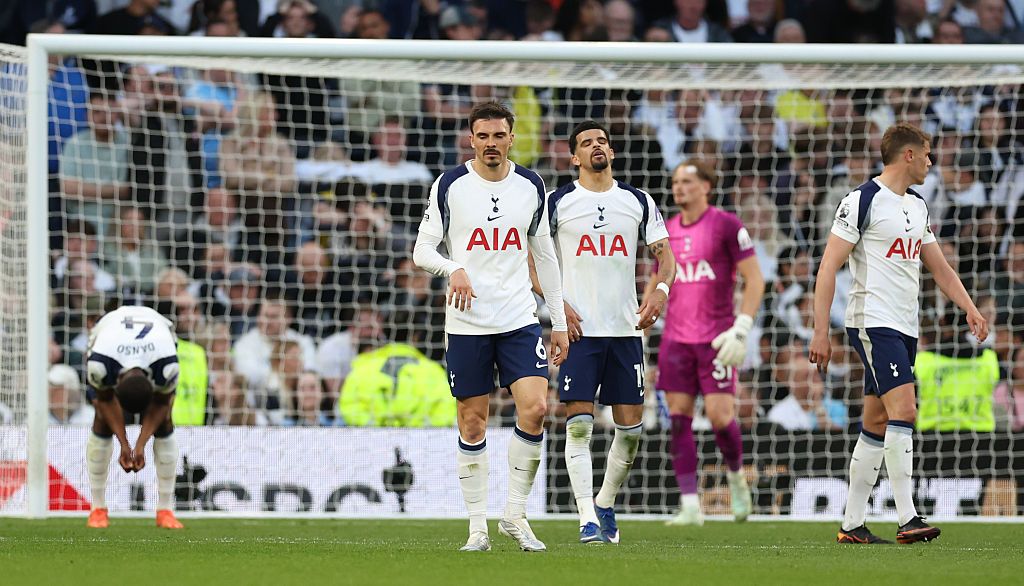
Copy linkFacebookXPinterestEmailShare this article 0Join the conversationFollow usAdd us as a preferred source on GoogleNewsletterFour Four TwoGet FourFourTwo NewsletterThe best features, fun and footballing quizzes, straight to your inbox every week.Become a Member in Seconds Unlock instant access to exclusive member features.Contact me with news and offers from other Future brandsReceive email from us on behalf of our trusted partners or sponsorsBy submitting your information you agree to the Terms & Conditions and Privacy Policy and are aged 16 or over.You are now subscribedYour newsletter sign-up was successfulWant to add more newsletters?Five times a weekFourFourTwo DailyFantastic football content straight to your inbox! From the latest transfer news, quizzes, videos, features and interviews with the biggest names in the game, plus lots more.Signup +Once a week...And its LIVE!Sign up to our FREE live football newsletter, tracking all of the biggest games available to watch on the device of your choice. Never miss a kick-off!Signup +Join the clubGet full access to premium articles, exclusive features and a growing list of member rewards.Explore An account already exists for this email address, please log in.Subscribe to our newsletterFrom 2003/04 to 2008/09, we lived firmly in the Big Four era. Arsenal, Chelsea, Manchester United and Liverpool had a near-monopoly on the four Champions League places, with just one exception: Everton beat Liverpool into fourth place in 2004/05.Manchester City and Tottenham joined the party to make it a Big Six from 2009/10 onwards. In the 13 seasons between then and 2021/22, those six teams made up the top six on six occasions.Five of them were in the top six a further five times. Liverpool finished outside the top six three times from 2010 to 2013. Manchester United finished seventh under David Moyes in 2013/14. Liverpool (eighth) and Chelsea (tenth) both had bad years in 2015/16 to help open the door for Leicesters title triumph. Arsenal finished eighth in 2019/20 and 2020/21, with Spurs one place ahead of them in the latter season.Get VIP Tottenham Hotspur tickets HERE with Seat UniqueTottenham Hotspur hospitality offers a diverse range of premium experiences, from vibrant social lounges to private boxes. Packages include premium padded seating in prime locations, exclusive lounge access pre- and post-match, gourmet dining, and a complimentary drinks package. Guests may also enjoy live entertainment and Spurs legend appearances.View DealThen came Saudi-owned Newcastle United and Aston Villa, who seemingly pushed us into the Big Eight era, as we here at FourFourTwo claimed in summer 2023. That was seemingly confirmed the following season: the top eight places were all filled by those eight teams.Only its not quite worked out that way.The Big Four era and - to only a slightly lesser extent - the Big Six era were both extremely entrenched.Even those aberrations in the 2010s were down to the elite clubs having a transitional period especially Liverpools wilderness years in the latter days of the Hicks and Gillett regime, when they were certainly not behaving or spending like an enormous club.Lets not get this wrong: Big Eight clubs have eaten up every top five place for what now looks like being five seasons in a row, with Manchester City, Arsenal and Liverpool joined on a rotating basis by Aston Villa, Chelsea, Manchester United, Newcastle and Tottenham.But at the same time, those clubs have lost the aura of invincibility that was enjoyed by the financially-backed elite over the past two decades. Simply put, you still need bags of money to succeed, but it is no longer a guarantee against failure to anything like the degree it once was.No Big Four or Big Six club ever finished far from their place in their respective eras. To repeat: Liverpool were the only Big Four club to ever finish as low as fifth. Chelsea were the only Big Six club to ever finish outside the top eight, coming tenth in 2015/16.But if the table stays as it is now, at least one Big Eight club will have finished in the bottom half of the table in three of the past four seasons. Chelsea came 12th in 2022/23. Manchester United and Tottenham came 15th and 17th respectively last season. Newcastle are now 14th and most remarkably, Spurs are on course for relegation.That has come in spite of the tighter PSR regulations that coincided with what is meant to be the Big Eight era. Those rules, which limit the losses clubs are able to make, should in theory have entrenched the richer clubs even further. Leicesters dramatic decline after years of recklessly overspending on wages shows the perils of trying to keep up with the Joneses.So what is happening? Why is it that money talked so loudly in the Big Four and Big Six eras that those clubs were virtually completely insulated against serious failure but now it is possible for some of the richest clubs in the country to find themselves battling it out in the lower reaches of the Premier League table?The answer, we think, is twofold. One is that the TV rights for the Premier League took a massive, massive hike in from 2016/17 onwards. That meant that the rich got richer and have continued to do so by having Champions League money on top but so did the rest of the division.Thats important, because when it comes to player recruitment in a global market, Premier League clubs are not only competing with each other: theyre up against big teams from other countries, too.Suddenly, even a fairly middling Premier League side could afford to pay more than almost any club in Italy, Germany or Spain bar the absolute powerhouses like Bayern Munich, Real Madrid and Barcelona.Wolves are the best early example of the effect that had. They finished seventh in 2018/19 and 2019/20, largely thanks to their ties to Jorge Mendes allowing them to sign some of Portugals hottest young stars even when they were still a Championship club gambling on getting promoted to the top tier.Even still, there was an upper limit. But what we have seen over the past few years is less about pure financial might: its been about the Premier Leagues middle-class clubs spending the last decade getting much smarter about how they spend their money.While some of the big eight have wasted their wealth on incoherent recruitment and inappropriate managerial appointments, there is a clutch of clubs who have excelled at getting the absolute most out of their squads.That's what Leicester got wrong: they thought the old order still reigned, and that spending a hell of a lot of money on wages would root them in the top third of the table for a long time to come. They have learned in a hurry that way of things does not hold true anymore.On the other side of the equation, its no major surprise who some of the biggest disruptors have been. In four seasons, Brighton have finished sixth, eight, and are currently sixth again. Brentford have been knocking at the door for a while now: they have finished ninth and tenth, and will be hoping to finish the season even stronger than their current ninth place. Both sides have long been noted for their brilliant recruitment and eye for a talented manager.Bournemouth are currently seventh, having finished ninth last season, with their departing manager Andoni Iraola expected to be in high demand this summer. So too is Crystal Palaces Oliver Glasner, who led the Eagles to their first major silverware by winning the FA Cup last season.We would be remiss not to mention Nottingham Forest last season, too though they have since drifted badly themselves amid much criticism of sporting director Edu, who joined the club last summer.That improvement in savviness has driven up the overall standard of the league, created an extremely congest Premier League mid-table - and has made it so that even a big club does not need to slip off the the pace too badly to find themselves falling very badly behind.There is, at least for now, a ceiling on just how disruptive those clubs can be.But Tottenham and Leicester tell us there is no longer any floor on just how bad things can get for the would-be elite.Get FourFourTwo NewsletterThe best features, fun and footballing quizzes, straight to your inbox every week.Contact me with news and offers from other Future brandsReceive email from us on behalf of our trusted partners or sponsorsBy submitting your information you agree to the Terms & Conditions and Privacy Policy and are aged 16 or over.TOPICSTottenham HotspurLeicester CitySteven ChickenSocial Links NavigationSteven Chicken has been working as a football writer since 2009, taking in stints with Football365 and the Huddersfield Examiner. Steven still covers Huddersfield Town home and away for his own publication,WeAreTerriers.com. Steven is a two-time nominee for Regional Journalist of the Year at the prestigious British Sports Journalism Awards, making the shortlist in 2020 and 2023.