
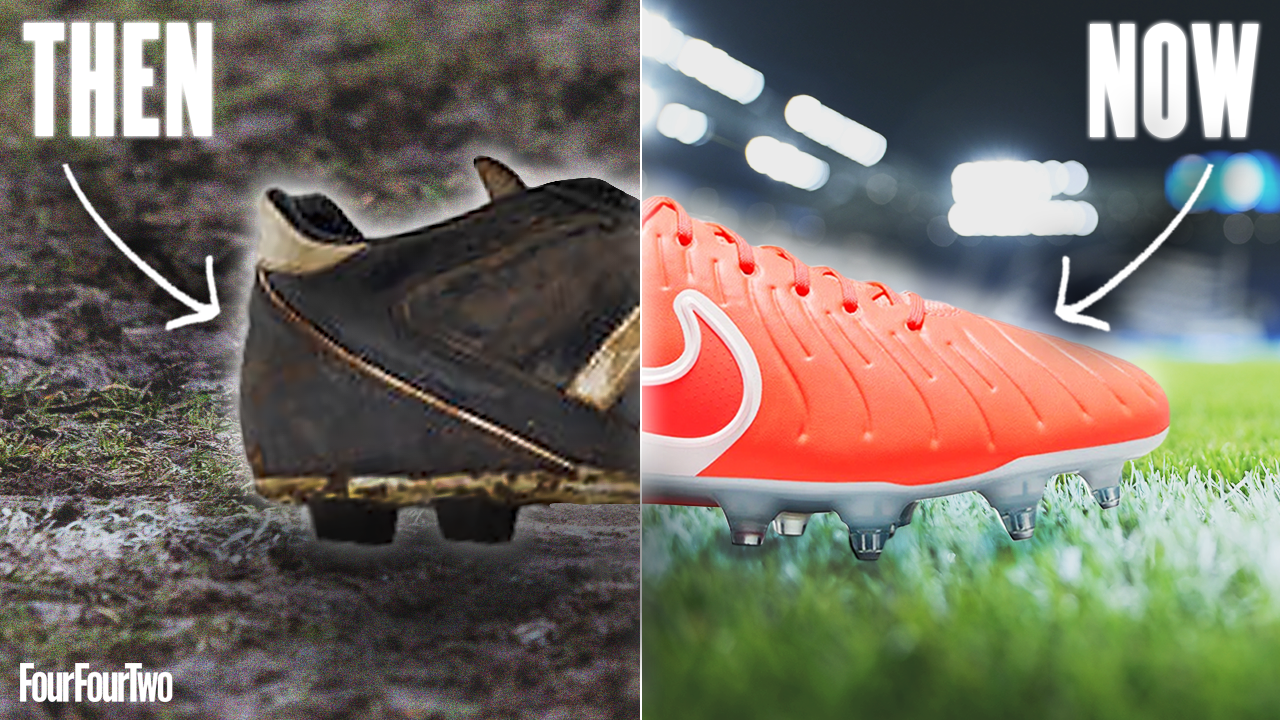

Leather has historically been the most popular material to make football boots out of, but why are brands increasingly using less of it or ditching it altogether?
Nike and Puma have stopped using natural leather altogether in recent years, with Mizuno announcing this year that they are to phase kangaroo leather out.
The motives seem to be a combination of factors from the environment and changes in law, to innovation and cost.
Technology/Performance
The best-selling football boot of all time is the Adidas Copa Mundial, a boot traditionally made in Germany from kangaroo leather. To many it is more than just a boot, but a symbol class, simplicity, tradition.
Models such as the Lotto Stadio and Puma King evoke similar feelings, and the icons of every generation until the 90s likely wore boots made of Kangaroo leather, whether it be the aforementioned or Adidas Predators or Nike Premiers. But times change and technology progresses and the first move away from leather was based primarily in innovation.
Even the most ardent lover of leather football boots would accept that it is a material that has the tendency to retain water and with the potential to overstretch both obviously undesirable for elite performance products such as football boots.
The response (in addition of course to better quality leather) was to build lighter, better performing materials, and arguably what developed was a material divide based largely on type of boots.
Boots built for speed, aimed at being as 'tech-forward' as possible, such as the Nike Mercurial and Adidas F50, were built with thin, lightweight materials and boots such as the Nike Tiempo or Adidas Predator, with less emphasis on these things, were able to continue being made from leather.
This was not a hard and fast rule, as iterations of both the Tiempo and the Predator were made from synthetics.
As the trend for lightweight boots continued and intensified, this distinction became less and less clear, and although the apparent race to create the lightest boot ever that brands seemed to be competing in around a decade ago is over, football boots are of course significantly lighter and less bulky than they were even 20 years ago, inevitably meaning leather is less utilised.
Technology has also allowed brands to develop materials that imitate the fit and feel of leather but without some of the downsides.
The Nike CTR 360 was extremely popular, even leading to a remake of the boot, and this features a Kanga Lite upper aimed at replicating the feeling of kangaroo leather.
To this day, there are people who dont even realise that the boot wasnt made from leather at all.
In recent years, some of these leather alternatives have gathered attention, with the silkywrap from Asics being a favourite of many, and Puma recently released a new Puma King with total touch+ upper material replacing the 'K-Better' introduced along with the announcement in 2023 that the brand was to leave leather behind entirely.
This month, Nike unveiled the Nike Tiempo Maestro at its HQ in Portland and the Tech Leather that makes up the upper has been extremely well received.
This is particularly significant off the back of some of the negative responses to the Tiempo Legend 10 the first since Nike decided to do away with leather around the same time as Puma.
If brands are able to engineer products with all of the upsides of leather but without the downsides, then there is no real reason to use leather. The question from many, of course, is whether these materials are actually able to replicate leather to an extent great enough to justify their existence and leathers exclusion.
Environmental and ethical concerns
Natural leather is, of course, an animal product. K-Leather has been branded largely to shy away from the fact that it is, in fact, kangaroo leather.
At a time when there is pressure on brands to act ethically and in a way that respects the environment, there is inevitably pushback on the use of a material that necessitates the death of animals.
Cynics may say that the concern with brands with the ethical element of anything is driven more by needing to be seen to have these as a priority than an actual concern, but either way, it makes a difference, and means that leather has been used less as its use has become harder to justify particularly in the face of pressure from activist groups.
We have also seen the emergence of brands that are concerned with these ethical questions, most notably Sokito.
The Sokito Devista Vegan was the first boot ever to be certified vegan, and the brand has followed up with the impressive Scudetta model.
Sokito boast an impressive and ever-growing list of investor athletes including the likes of Millie Bright and Ashley Westwood.
That the brand has been able to manufacture elite football boots not just without leather but without animal products at all only increases the scrutiny on bigger brands with bigger budgets, whose failure to do so then begins to look more like a deliberate choice.
This is something that will not have gone unnoticed by the bigger brands and will likely play a role in the development of football boot tech going forward.
Changes in Law
The pressure from activist groups and societal attitudes in general has a wide-reaching impact. Tied to the ethical concerns with the use of leather are changes in law that have undoubtedly played a role in the change in approach from brands, particularly in the last few years.
A law was introduced in California in 1971 outlawing the import and sale of kangaroo products, but a moratorium meant that animal products could be traded in the state from 2007 until the ban was reimposed in 2015. In 2020, the government of California admitted that it had been unable to fully enforce the ban, and there were calls from the Centre for a Humane Economy for a crackdown.
The US market is obviously massive, but the California market specifically is a significant one in the context of football boots, or 'cleats', being the largest single market in the world for football boots. Releasing models that simply cannot be sold in their biggest market is clearly an unattractive proposition for any brand, so for this to lead to a transition away from kangaroo leather is unsurprising.
There is also always the possibility, or indeed probability, that other states and nations may follow suit with similar legislation, making the incentive for brands to get ahead of the game in terms of alternatives all the greater. Lo and behold, the Kangaroo Protection Act 2025 has been proposed and would ban the import and sale of leather across the United States.
If this does eventually take effect, any football boot brand still reliant on kangaroo leather would immediately see a significant drop in market share the largest economy in the world would be a no-go zone for a large section of its products. This may have even played a role in Mizuno, arguably the biggest proponent of kangaroo leather in the market, announcing in a letter to the Centre for a Humane Society that they were to phase out the material and instead use more ethical alternatives earlier this year.
The picture that begins to develop is one where leather appears to be more hassle than it is worth for brands. Colourways of the Nike Tiempo Legend 9, the final leather generation in the iconic series, were frequently delayed sometimes releasing months after they were scheduled. It may just be simpler to not to use the material at all.
Adidass role in all of this is interesting. While Nike and Puma have left leather behind, Adidas continues to use leather, but in recent years has begun making football boots from calfskin leather rather than kangaroo leather. This decision is one that bridges two of the reasons we are seeing brands make these moves.
Much of the legislation both proposed and enacted centres on kangaroo leather specifically, so the use of calfskin leather allows the brand to continue to make boots in a similar fashion to that which people love but to neatly sidestep the changes in law. We even now see calfskin leather used on limited edition remakes of Adidas boots from yesteryear and on the Adidas Copa Mundial, but this subtle change has allowed Adidas to at least maintain the appearance of business as usual in the midst of significant change.
The cost factor
Substituting k-leather for calf leather also allows for the boots to be made more cheaply, so when sold at the same price represent a significant increase in margin. The leather used on models such as the modern Copa range and boots such as the Roteiro Predator 24 and Obsidian Strike Predator 25 are of a quality and softness that makes whether they are made from kangaroo or cow largely irrelevant.
The cost factor is also one that likely drives the push by brands to create their own bespoke leather alternatives rather than continuing to buy leather for their football boots. The transition away from leather also removes lower-cost leather boots from the market.
The New Balance 442 and Nike Premier were perhaps the best value leather football boots out there and have both recently been transitioned to synthetic uppers.
Gone for Good?
An interesting twist of sorts has arrived in the shape of the Puma King Platinum Pantera Negra, recently released to celebrate the legacy of Portuguese legend Eusebio. As mentioned, Puma took the step of moving away from using leather in 2023, but the recent special edition release is made from you guessed it leather, though calf rather than kangaroo.
This has made Pumas stance on the use of leather in football boots unclear and heightened anticipation of the recently released a remake of the iconic Ronaldinho Nike Tiempo Legend boots from 2005. Boot lovers looked on with intrigue to see whether this boot would be made from leather, just as the original and the 2015 remake that the boot is modelled on were.
The answer was no as the boot is made from a version of Nikes new tech leather signalling emphatically that Nike appear to be completely done with animal leather, even if Puma may not be. It is clear that going forward, we will continue to see fewer and fewer boots made from leather as all of these factors cost, societal attitudes, law, and technology combine to make the use of leather harder and harder to justify for brands as more than a niche offering.
In the end, it is of course primarily a business decision, so despite the pained cries of traditionalists up and down the country and indeed all over the world, leather will continue to be on the way out.
Comment below if you have any thoughts on this topic
TOPICS