
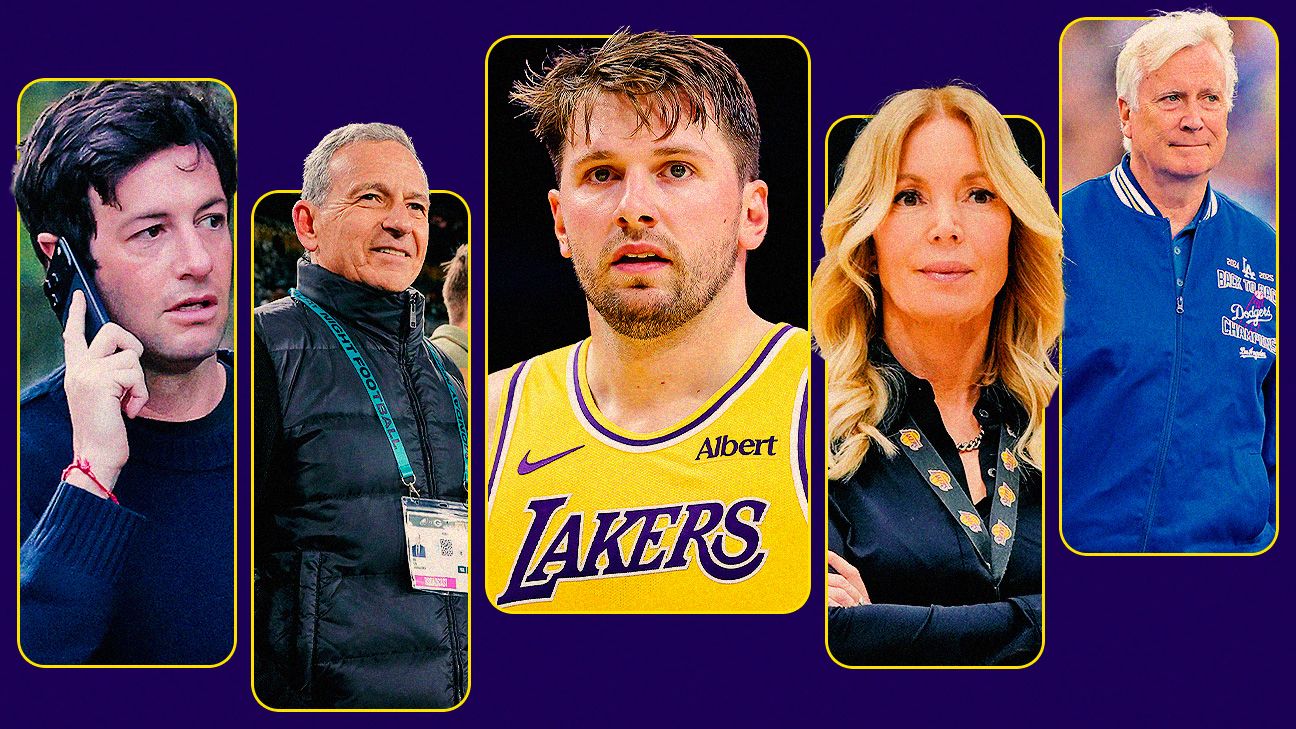
EmailPrintOpen Extended ReactionsBOB IGER WAS on his 213-foot sailing superyacht on Aug. 12, winding down a monthlong vacation in Europe following a historic, two-decade run as CEO of Disney.The biggest event of the day was supposed to be the first total solar eclipse over the continent in more than a century.Millions of tourists, including Iger, had booked vacations along the eclipse's path from Greenland to Southern Spain during the syzygy -- a word derived from Ancient Greek for "yoked together" -- which describes a rare astronomical event in which three or more celestial bodies align in a straight line.During a solar eclipse, the moon sits exactly between the sun and Earth, casting its shadow onto Earth. Some enjoy the rare view -- through special sunglasses.Others ascribe great meaning and magic to eclipses. As those tourists headed to viewing spots for the solar eclipse across Europe, Iger was in a wholly different syzygy with his longtime friend and business partner Josh Kushner and Los Angeles Lakers owner Mark Walter.The alignment of three financial heavy hitters was about to turn what should have been a once-in-a-generation event -- last year's record-breaking sale of the Lakers from the Buss family to Walter -- into the NBA's most shocking news -- again.Instead of getting into position to watch the solar eclipse, Iger was furiously working the phones from Italy to consummate a stunning event of his own -- a $12.5 billion sale of the Lakers seemingly out of nowhere, creating an eclipse unto itself across the worlds of sports and business.Little did anyone know that these secret, cross-continental talks were about to put the Lakers in significant transition yet again -- with new owners evaluating everything and everyone; squabbling former owners, again, jostling for power and money; and an overhauled roster finally built in the image of its superstar, Luka Doncic.Interviews with more than a dozen team insiders, league executives and others with intimate knowledge of the sale reveal how the deal, which was made over a furious 72 hours, upstaged an already-transformative offseason -- and reignited yet another unresolved round of messy public bickering among the six Buss siblings that still hangs uncomfortably over the beginning of this new season.JUST A YEAR ago, Lakers governor Jeanie Buss had shocked the sports world by negotiating a sale to Walter after 46 years of family ownership. Though that deal was eventually approved by all six siblings, it was not a clean process.According to several family sources, younger brothers Joey and Jesse Buss -- who, because of a "last-man standing" provision in Dr. Jerry Buss's family trust, were positioned to run the team one day after their older siblings died -- hadn't responded to the vote when the sale was initially announced.If the family was going to sell, Joey and Jesse wanted to be a part of the process. They had recently pitched to the other siblings a way to do that -- albeit, sources with knowledge of the discussions said, at a lower valuation than the $10 billion their older sister subsequently agreed to in the deal with Walter. The younger Buss brothers eventually joined their four older siblings in voting for the sale to Walter, but the process created animosity.Several siblings grumbled that Jeanie had not opened the bidding to outside buyers and had, instead, negotiated directly with Walter, multiple family sources said.Walter, who already owned 27% of the Lakers, had the right of first refusal on any eventual sale of the Buss family's remaining shares, but how did anyone know how much the team would've fetched without actually putting it on the open market?The relationship between Jeanie and her siblings disintegrated further when the Lakers, with Jeanie's approval, fired Janie, Joey and Jesse from their respective positions with the franchise within two months of closing on the sale.All three had expected they'd keep their roles for at least some time while Jeanie was still the controlling owner, multiple family sources said.The deal with Walter included contractual language to keep Jeanie in charge for the next five seasons but contained no such protections for any other family members.Janie told ESPN's Baxter Holmes last season that her sister's actions had made her feel disrespected, like a "crumpled-up piece of paper thrown into the trash." She cited the desires of their father, who had purchased the Lakers in 1979 and died in 2013."I don't think my dad would be happy with the way things just went down," Janie told Holmes. "Not at all."There was even more consternation, those sources said, when the Buss family members were suddenly charged more for hospitality and their tickets to Lakers games, shortly before the start of the playoffs as part of a larger restructuring of Lakers business practices.That familial tension simmered throughout last season -- and came to a boil once again this summer.FOR MUCH OF 2026, Iger and Kushner had been leading a group bidding for the potential Las Vegas NBA expansion franchise, which the NBA initially projected to go for $6-8 billion, according to industry and ownership sources.But those bids had blown by that threshold, those sources said, and were approaching the then-record $10 billion valuation of Walter's sale.Whichever group won the expansion bid would likely then need to spend what multiple sources estimated would be an additional $2 billion -- at least -- to build an arena in Las Vegas.The Kushner-Iger group had been regarded as one of the favorites to land the team. Iger has had a longtime business relationship with NBA commissioner Adam Silver, from Iger's days negotiating broadcast rights deals for ABC/ESPN with the NBA. In 2020, the two collaborated with the NBPA to create "the bubble" at the Walt Disney Resorts in Orlando, Florida, where the NBA finished its season amid the COVID-19 pandemic. Iger had also been a longtime season-ticket holder of the LA Clippers, although he notably canceled them last season over the team's treatment of Chris Paul, a close friend of Iger's, sources close to him said.Other finalists for the Las Vegas expansion franchise included groups headed by Walmart heiress Nancy Walton Laurie and her husband Bill Laurie; Las Vegas Golden Knights owner Bill Foley and former Phoenix Suns CEO Jerry Colangelo; and Canadian businessman Steve Apostolopoulos and former Milwaukee Bucks owner Marc Lasry.As the Aug. 10 deadline for bids approached, Kushner and Iger discussed their options.Over the past two decades, the 41-year-old Kushner had made a fortune building his private equity fund, Thrive Capital, with investments in technology companies such as Instagram, Spotify, Twitch, Stripe and OpenAI. This year, Kushner started a new fund, Thrive Eternal, as a hedge against artificial intelligence."These are assets with qualities that cannot be replicated by technology," Thrive Eternal says on its website. "Iconic franchises and cultural institutions rooted in tradition, identity, and shared experience. In a world shaped by abundant intelligence where creation scales and distribution fragments, we believe they will matter even more."An expansion team is not exactly an iconic brand or a legacy franchise. The Lakers, New York Knicks, Chicago Bulls and Boston Celtics are. None of those was known to be for sale, however. The Knicks had just won an NBA title. The Celtics and Lakers had recently been sold to new owners for record amounts. The Bulls were firmly in the hands of the Reinsdorf family, who have not shown any interest in selling.Still, Kushner and Iger kicked around the idea.Would any of the owners of those franchises take a phone call or listen to an offer? How much would it take to pique their interest?It was a bold, risky pivot to even make calls while they were in the throes of the expansion process. If word got out that they were considering moving away from the expansion franchise, would it risk their standing with the NBA?Whatever they did would need to be quick -- and quiet.WALTER WAS ON a ranch with spotty cell phone service on Aug. 9, when he got a call from a friend, asking whether he'd consider selling the Lakers, according to three sources with knowledge of his whereabouts and thinking.The first conversation was short. The Lakers weren't for sale, Walter told his friend, who relayed the message to Kushner and Iger. But the two businessmen had reason to persevere in their efforts.Two days earlier, on Aug. 7, they had called a well-connected financial industry source who was close enough to Walter to suggest he might be looking to restructure some of his business assets amid federal investigations of alleged fraud within his sprawling $365 billion financial empire, according to multiple sources with knowledge of the conversations.They figured it was worth dropping a line in the water, baiting the hook at a number that would make him think about it.The only catch was they needed an answer within 24 hours. There was no time for a long negotiation or intermediaries.Kushner made the next call to Walter, according to multiple sources with knowledge of the negotiation, and Kushner offered to buy Walter's shares at a $12.5 billion valuation -- a 25% increase in 14 months.It was the kind of staggering "Godfather offer" Walter had presented to Jeanie Buss when he convinced her to sell him the majority of her family's shares a year earlier.Walter decided to cut short his weekend trip and get to a place with better cell phone reception. They had his attention. By Monday, he had returned to his estate in White Oak, Florida.He called his wife, Kimbra, and daughter, Samantha, and asked what they thought of him selling the Lakers.He outlined the enormous return he'd make at this valuation -- nearly $4 billion because he had bought the first 27% of his Lakers shares at a $5 billion valuation in 2021 -- and the benefits that liquidity could provide him, given the remediation plans he had proposed to state insurance regulators.Neither his wife nor daughter had an issue with him selling the Lakers, those sources said. They had been involved with the Los Angeles Dodgers for 14 years, but their attachment to the Lakers was still new.After Walter's family signed off, the circle of people involved in the negotiations widened.Advisers on both sides were sworn to secrecy. There wasn't time for Kushner and Iger's group to do anything resembling due diligence. They were buying the brand, as is, with as quick a close as you'll ever see in a $12.5 billion deal.By the evening of Aug. 11 -- 72 hours after the idea had first been presented to him -- Walter had come to an agreement with Iger and Kushner.JEANIE BUSS LEARNED of Walter's agreement to sell his shares of the Lakers hours before ESPN reported the news on the morning of Aug. 12, according to multiple sources with knowledge of their conversations.She was stunned, according to sources close to her.This was not what she had planned for or expected when she reached out to Walter in 2021 to suggest he purchase Philip Anschutz's shares to become the largest minority shareholder in the franchise, and with it, hold the first right of refusal to buy the Buss family's shares for a controlling interest in the team.Walter and Buss had built a relationship over many years before he expressed an interest in buying into the Lakers.Over the decade he owned the Dodgers, Walter had actively built bridges between L.A.'s premier baseball team and its basketball team. Lakers legend Magic Johnson was part of Walter's ownership group. Dodgers players were often invited to and hosted at Lakers games, and vice versa. Walter often attended games with Buss, while Buss attended Dodgers games with Walter.At the time he bought Anschutz's shares, only people very close to the situation understood why it was so significant. Buss had essentially chosen Walter as her successor. Whenever she was ready to sell her family's controlling shares, he would have the inside track to buy them.Buss chose Walter, multiple sources close to her said, because of how he owned and operated the Dodgers and the positive reviews he had gotten from associates of hers, including Johnson, tennis legend Billie Jean King and longtime Dodgers executive Lon Rosen. She had compared him to her father, Dr. Jerry Buss, for his commitment to winning publicly and privately over the years.To those close to the situation, the question wasn't whether the Buss family would eventually sell to Walter but when. Older brothers Johnny and Jim had wanted to sell the team for years.Jeanie, her sister Janie and younger brothers Joey and Jesse still had roles with the team and wanted to stay on longer.In 2025, Walter came up with an offer he thought would make everyone happy: a $10 billion valuation -- generating approximately $800 million for each sibling -- and an agreement for Jeanie to stay on as controlling owner for five years, codified in writing as part of the agreement."Over the past decade, I have come to know Mark well -- first as a businessman, then as a friend and now as a colleague," Jeanie Buss said in a statement after the sale. "He has demonstrated time and time again his commitment to bringing championships to Los Angeles, and, on behalf of Lakers fans everywhere, I am beyond excited about what our future has in store."Buss even showed that paperwork to Doncic and his team, his manager Lara Beth Seager said, to reassure them that she would still have final say over his basketball future.Doncic had learned the hard way how an ownership change could affect him after his shocking trade from the Dallas Mavericks to the Lakers in February 2025.Former Mavericks owner Mark Cuban also thought he'd be allowed to stay on as head of basketball operations when he sold his controlling stake to the Adelson family in 2023. Cuban swore to Doncic that he wanted him to be a Maverick for life, but wasn't involved or included in the trade discussions that sent Doncic to L.A.This time, it was Jeanie who would learn the hard way -- that whatever relationship she had built with Walter and others would be superseded by the harsh realities of the modern business world.DESPITE THAT RELATIONSHIP, the man Jeanie chose as the next steward of the Lakers was not the rock-solid titan of the financial industry he appeared to be.Walter, the public would soon learn, was under multiple federal criminal investigations before his purchase of the Lakers became official at the end of October. According to the Wall Street Journal, the FBI on Sept. 18, 2025, conducted a raid of a private plane at Chicago's Midway Airport, where Walter had been traveling, and seized a laptop and mobile phone.Just 10 months later, Walter flipped the Lakers like a cold asset, not a crown-jewel, generational investment.After five decades of family ownership, Jeanie had relinquished control of her family's most prized possession to someone who had treated it no differently than any other line item in his massive portfolio."I mean, he made $2.5 billion in 10 months by flipping the Lakers like a spec house," one family confidant said. "But that wasn't supposed to be the deal. Jeanie picked him because he was going to own it like he's owned the Dodgers."Walter has not spoken publicly about the sale outside of an initial statement he released to ESPN.In late August, his company, The Walter Group, issued a statement asserting it had been subjected to "multipronged attacks" from "unnamed sources with self-serving interests."The statement said that TWG and its Group 1001 insurance companies had presented a plan to state insurance regulators to address regulatory concerns over a percentage of affiliated transactions it had misreported in its filings. TWG explained that the affiliated transactions in question are "common across the insurance industry" and "suggestions that TWG is looting insurers is defamatory and false."Investigators are still looking into the company's dealings as it makes changes in the way it operates. TWG Global announced in late August that it had swapped out $6.5 billion of its assets to replace the type of affiliated loans regulators had taken issue with. The dual sales of the Lakers and Walter's minority 12.8% stake in Premier League club Chelsea have raised additional capital, while also leading to an assortment of buyers inquiring about the availability of the Dodgers and Los Angeles Sparks.The company has emphatically denied that it is looking to sell its sports assets at "fire sale" prices to raise capital for its insurance operations. The sales of the Lakers and Chelsea came in at significant valuations -- a record in the case of the Lakers. However, sources with knowledge of the situation confirm a Bloomberg report that acknowledged there have been early-stage discussions about the Sparks at what would be a similarly massive valuation, estimated at $700 million.Inquiries for the Dodgers have thus far been rebuffed, those sources said.IGER LANDED BACK home in Los Angeles a few days after the sale agreement was reached. The first visitor he entertained at his house was Jeanie Buss, according to multiple sources with knowledge of the meeting.He had given public comments to the California Post immediately after news of the sale broke that the new ownership group intended to honor the agreement Buss had with Walter to stay on as controlling owner, but added, "if something changes, then it changes."Despite the public hedge, Iger reaffirmed his commitment to Jeanie to maintain a role after the sale closes when they met, those sources said. They have stayed in regular contact since then.Whether she'll be able to do so -- and what that role ultimately is -- depends on how the latest round of family discord is resolved.By the time Walter decided to sell his stake in the Lakers in mid-August, family sources said there had already been renewed calls among the siblings to sell the remaining 17.8% of the team that the family owned.The Lakers had fired four of her siblings already. Jim Buss, who was fired in 2017, noted to the group that there was little justification for keeping the family's remaining shares, other than nostalgia and Jeanie keeping her controlling-ownership power for four additional years, according to multiple family sources. He circulated a proposal he hoped would satisfy all parties.On the night of Aug. 10, two days before the sale, Lakers vice president of finance Joe McCormack called for a meeting of the Buss siblings to discuss a dissolution of the family trust and seek approval to lock down all family shares for four years under a new trust, according to ESPN's Dave McMenamin.When the family discussed McCormack's proposal on Aug. 11, no mention was made of Walter's impending sale to Kushner and Iger. The family woke up to the news of the massive sale the following morning like everyone else.On Aug. 17, ESPN's Shams Charania reported that Johnny, Jim, Janie, Joey and Jesse Buss had voted to sell the remaining family shares to Iger and Kushner, using "go-along" rights they had been given as part of the sale to Walter. (Technically, those rights can be only invoked once Walter officially notifies the family that he has signed a deal to sell, which hasn't happened yet.)Jeanie was the only family member who did not vote to sell. In fact, she did not even respond to the vote that had been called a week earlier.Later that day, her lawyer, Adam Streisand, sent a letter to the five siblings, challenging the legality of their vote based on a 2017 court order that required the two co-trustees, Janie and Joey, to always vote to ensure she remained the controlling owner of the team.The siblings immediately responded to Streisand's initial letter with a statement of their own, reaffirming their desire to sell. They contended they needed only a majority (four of six votes and two of three co-trustees) to enact that go-along provision, according to sources with knowledge of the siblings' position.Jeanie currently controls the Buss family trust, which owns 17.8% of the Lakers. NBA rules mandate that a controlling owner must own at least 15% of the team. An alternate governor must own at least 5%.Still, multiple family sources said there have been settlement talks between the two sides over the past two months.Each sibling stands to make an additional $371 million if the family sells the entirety of its shares via the go-along provision.The siblings could also try to find a buyer at a higher valuation, a possibility fueled by a pitch, which The Wall Street Journal obtained, to Thrive Eternal investors in which the company projected the Lakers valuation to be at least $30 billion within a decade.The dispute spilled back into the public on Oct. 7, when the five siblings formally filed a response to Jeanie's suit."Jimmy, Johnny, Janie, Joey and Jesse Buss, the five of six siblings who voted to sell the Trust's shares in the Lakers, today filed their formal opposition, demonstrating that Jeanie Buss's petition is legally and factually baseless," the siblings said in a statement issued to ESPN."While discussions among the siblings continue, their focus remains on facilitating the proposed transaction and the [Buss family] trust's participation in it, while ensuring that all beneficiaries, including Jeanie, are treated equally."Nine days later, the five siblings submitted, on behalf of Joey and Janie, an additional filing, this one challenging Jeanie and her previous petition that seeks to remove them as co-trustees and void the siblings' 5-1 vote to sell the family's remaining stake in the team.Through it all, the foundation of the dispute remains the same: whether the five siblings can sell their share of the team without Jeanie's approval.A court date is set for Dec. 8 if no settlement is reached.DONCIC WAS THE only person outside of the small circle of people close to Walter, Kushner and Iger who had any inkling how the sports world was about to dramatically change before Aug. 12.The last time he had gotten a text from Seager, his longtime manager, at an odd hour was in February 2025, when she reached him after midnight and told him he had been traded to the Lakers.This time, she had gotten a tip well after midnight at her home in Dallas that something big might be happening again. She texted Doncic, who was just waking up in Slovenia, alerting him to the possibility.All summer, they had been planning a five-day team bonding retreat in Doncic's home country for his new Lakers teammates. On the first night, they'd all eat at his favorite restaurant, Cubo, in his hometown of Ljubljana.Then, they'd play golf some 40 miles north on the perfectly manicured grounds of Royal Bled, sitting in a valley beneath the tree-lined peaks of the Alps. Another day was built around rowing lessons on Lake Bled, taught by Slovenian Olympian Jani Klemencic. Three high-speed boats, 15 Lakers, learning to row together.Then, in one early-morning text, all those plans seemed secondary.It was a stunning turn with no forewarning. Just a week earlier, Seager had met Jeanie and Rosen for dinner. Nothing had seemed amiss. At that point, Kushner had yet to engage Walter about the possibility of buying the Lakers.Doncic had developed a good relationship with Walter and Jeanie Buss in the 18 months since he had come to Los Angeles, meeting and texting with both of them regularly. Walter even took him and a group of teammates to a Backstreet Boys concert at The Sphere in Las Vegas last summer, after Doncic agreed to a three-year, $165 million contract extension with the Lakers.If the sale goes through and Kushner and Iger are approved by the NBA, and that is expected to happen by the end of the year or early next year, according to multiple sources close to the sale process, they'd be his fifth team owners across two franchises in the past three years.By the time Seager called Doncic to tell him the deal was done, he had already processed the initial shock."There's not much that can shock me anymore," Doncic told her.The next day, as he congratulated the new owners, he acknowledged the seismic move and posted on X:"I've gotten used to big changes over these last few years."