
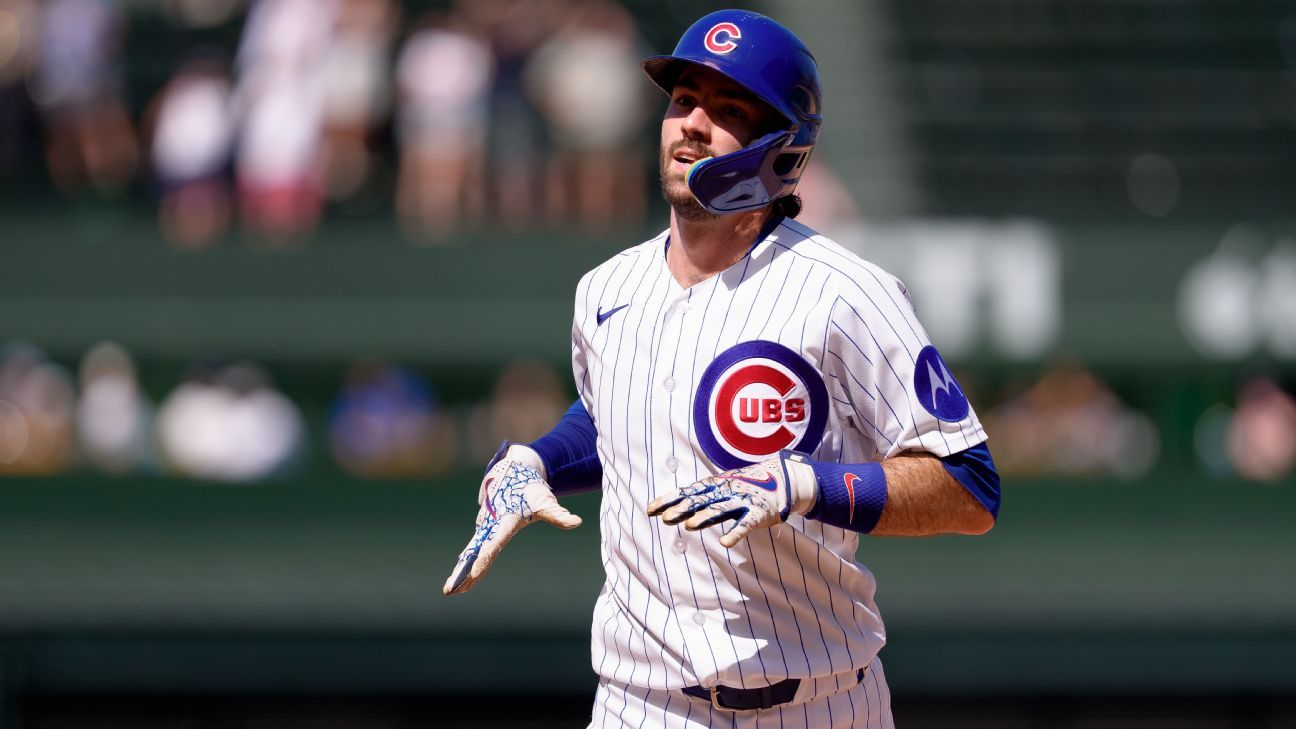
EmailPrintOpen Extended ReactionsYou'd be surprised by how quickly a fantasy baseball season goes by.The All-Star break arrives next week -- and that's far beyond the mathematical midpoint of the season, as 59% of all games will be in the books at that point, barring rainouts between now and then -- and the MLB trade deadline is a mere three weeks after that. Then, in the week following that, our standard fantasy baseball trade deadline arrives, at noon ET on Friday, Aug. 14.While this might seem like the perfect time to take a breather, championship-caliber fantasy managers are always seeking ways to improve. For example, now -- not in the minutes leading into the start of the traditional "second half" on Thursday, July 16 -- is the ideal time to fine-tune your roster for the second half and stretch run.In order to help you in that quest, I've analyzed the second-half schedules of all 30 teams, beginning with that July 16 night game and running through the Sunday, Sept. 28 finale, highlighting teams with the most and least advantageous paths. After all, the shorter the time span, the more the schedule itself has a bearing on fantasy production. Which teams have it the easiest and toughest? Let's find out.For these purposes, Forecaster hitting and pitching grades are used to generate the rankings, and hitters and pitchers are separated.Softest hitting schedules Arizona DiamondbacksHitter to get: Geraldo PerdomoThe Diamondbacks have the most-favorable hitting schedule, thanks to 40 of their final 66 games being scheduled in top-five hitters parks (including their own Chase Field), as well as 10 late-season games against rosters that might look decidedly thinner post-trade deadline (Boston Red Sox, Kansas City Royals, San Francisco Giants). In addition to Perdomo, a top-10 shortstop in fantasy points whose selectivity at the plate remains top-shelf even if his barrel and HR/FB rates have predictably regressed, the Diamondbacks have a number of realistic trade targets -- Corbin Carroll, Ketel Marte and Gabriel Moreno also come to mind. Cleveland GuardiansHitter to get: Travis BazzanaBe aware that the Guardians schedule gets ridiculously soft beginning with their three-game trip to Colorado's Coors Field Aug. 21-23. From that point forward, they play 18 of their final 34 against teams that rank in the bottom seven in team ERA -- and that's not even including other matchups against Detroit Tigers (four games), Baltimore Orioles (three) and Red Sox (three) staffs that could by then be trade-depleted. Bazzana, the No. 1 overall pick of the 2024 MLB draft, hasn't yet set the fantasy world ablaze, but he has more than held his own as the leadoff man of a seriously weak offense. When Jose Ramirez returns, this lineup could take off over the season's final weeks.The best hitting schedules: Diamondbacks, Seattle Mariners, Guardians, Tigers, Milwaukee Brewers, St. Louis Cardinals, Tampa Bay Rays, Washington NationalsToughest hitting schedules Chicago CubsHitter to trade: Dansby SwansonSwanson is in the midst of an outrageous hot streak, with nine home runs and 29 RBIs over his last 16 games, rates certain to regress independent of his schedule. But what stands out about the Cubs' second-half trek is 19 games out of 66 total against top-five teams in terms of team ERA, as well as only two home series against bottom-10 teams in ERA (one of which is their very first, against the Minnesota Twins July 17-19). Swanson for, say, the aforementioned Perdomo is a no-brainer swap. Cincinnati RedsHitter to trade: Sal StewartThe Reds have the toughest overall remaining schedule, but having five more road than home games during the second half works to the detriment of their hitters -- especially since the Great American Ball Park has seen both a top-six HR rate and isolated power among the 30 primary ballparks this season. The Reds also have yet to face the Los Angeles Dodgers (seven games), Brewers (six) or Mariners (three), all ranking among the top five in baseball in team ERA. Stewart's rookie year has been excellent thus far, but he's not without weakness, including a bit too much "swing-and-miss" in his game and adjustments to be made against breaking balls.Incidentally, anyone seeking to trade away Reds hitters might prefer to wait beyond the team's series at Coors Field to open the second half (three games, July 17-19).The worst hitting schedules: Cubs, Pittsburgh Pirates, Giants, Reds, Athletics, San Diego Padres, Colorado Rockies, Philadelphia PhilliesSoftest pitching schedules Houston AstrosPitcher to get: Hunter BrownAre you curious about the route for the Astros to reach the postseason, perhaps even as AL West champions rather than as a wild card? By the start of the second half, they'll be done with every one of the top eight teams in terms of runs scored per game except for the Atlanta Braves (three games, Sept. 18-20) and, when using Forecaster offensive grades, they'd have only 12 remaining games total against top-10 opponents (and that's assuming Aaron Judge rejoins the New York Yankees by their Aug. 25-27 series). Brown's shoulder issue and recently shaky returns might have him valued relatively low by his fantasy managers. Cleveland GuardiansPitcher to get: Gavin WilliamsThe Guardians have the easiest overall remaining schedule and it's not particularly close. The Forecaster grades theirs as being worth nearly two full wins more than the next-closest team -- and that's before considering their talent on hand, which has registered MLB's ninth-best team ERA. Williams is hardly the only Guardians pitcher worth a trade inquiry, but after failing to make it into the sixth in any of his last five turns, his market might be softening. By the way, speaking to the team-excellence angle -- one that makes Cade Smith, Parker Messick, Tanner Bibee and Joey Cantillo worthy trade targets as well -- the Guardians have had a 3.65 second-half team ERA over the past five seasons, third best in baseball.The best pitching schedules: Astros, Rockies, Guardians, Athletics, Royals, Dodgers, Twins, PiratesToughest pitching schedules Cincinnati RedsPitcher to trade: Chase BurnsTo be clear up front, I love Burns and would require a hefty haul in exchange for him in trade. But the fact remains that he's a two-pitch pitcher reliant upon elite velocity and spin, and he's already at an innings total (97 2/3, entering Wednesday's start) close to his 2024 (100, in college) or 2025 (109 1/3, combined between the majors and minors), meaning fatigue could begin to factor in over the coming weeks. It would be worth steering him through that risk if the Reds schedule were better, but 29 remaining games against top-eight scoring offenses represents a tough trek. Atlanta BravesPitcher to trade: Chris SaleHad Bryce Elder's ERA not ballooned by nearly a run and a half over his past three starts -- hope you already moved him -- he'd have remained one of my most obvious trade recommendations. Sale, meanwhile, has eye-popping stats but has been subject to the Braves' maddening rotational whims, which has become increasingly frustrating as far as fantasy lineup management. He hasn't pitched a game on four days of rest since early April. He has had six days of rest (or more) in four of his last six outings. And he's now 37 years old with a track record of limited innings. In addition, Sale's Braves play 24 of their final 67 games against top-10 Forecaster graded offenses.The worst pitching schedules: Reds, Braves, Brewers, Cardinals, Chicago White Sox, Tigers, Cubs, Red Sox