
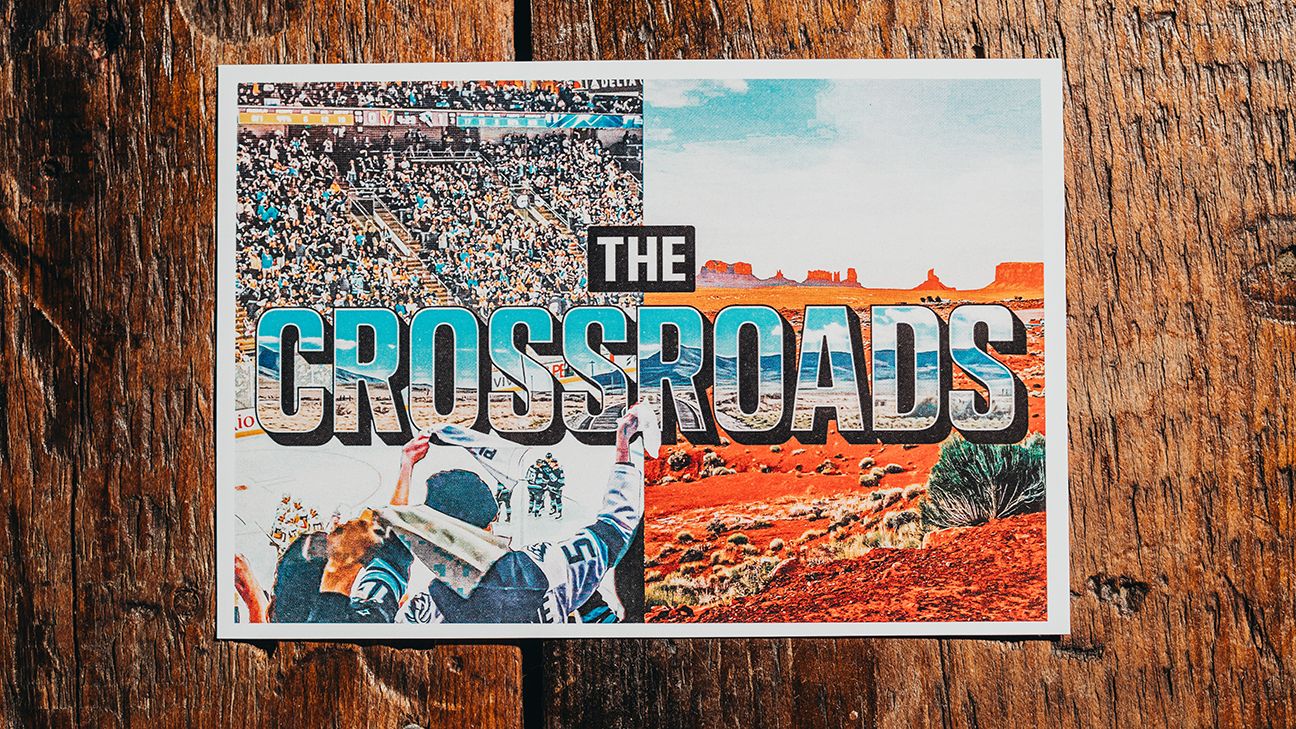
EmailPrintOpen Extended ReactionsPromontory, Utah6:21 p.m.Clear. Wind from the southwest. Not far from the banks of the Great Salt Lake, long before it started drying up, two money men made a bet.The Union Pacific and Central Pacific railroads had spent years racing against each other, their crews attempting world records for track laid in a day. When Central Pacific's construction boss, Charles Crocker, bragged that his men could lay 10 miles in a day, Union Pacific's Thomas Durant bet him $10,000 that they couldn't.At daybreak on April 28, 1869, a train whistle sounded, and off they went. Sweat and steam, muscle and metal. A San Francisco Evening Bulletin correspondent described "a thin line of 1,000 men" advancing across the desert.The crew was mostly Chinese laborers and Irish rail handlers, each of whom lifted more than 100 tons of iron before nightfall. Men placed 600-pound rails, then made room for straighteners and levelers. When the spikers stepped forward, introducing hammer to spike, iron to iron, the clang carried for miles.By the end of the day, Central Pacific had laid 10 miles and 56 feet of track. A world record. Crocker won his bet.Twelve days later, on May 10, the two lines met at Promontory Summit, about 65 miles as the crow flies northwest of Salt Lake City, and the United States told itself it was connected. Four years after the Civil War ended, the transcontinental railroad joined the country ocean to ocean, iron laid across a land that's still deciding who gets to call themselves American.All these decades later, I'm standing at the junction point. It's just me and a jackrabbit tucked in a sagebrush. This seemed like the right place to start a trip about connection. A breeze carries birdsong and the hum of a jet passing overhead, Albuquerque to Seattle, covering in seconds what took years to build.I know the names Charles Crocker and Thomas Durant because then as now, the money men make sure history remembers them. Crocker and Durant oversaw the railroads, and, therefore, the crews. At Promontory, someone produced a golden spike to mark the occasion.A dignitary swung and missed. A laborer finished the job.Then someone arranged a photograph, and most of the workers -- including all of the Chinese laborers -- were pushed out of the frame. Thirteen years later, Congress passed the Chinese Exclusion Act.The dignitaries took the credit. Most of the men who had done the joining were already being forgotten.Site of the Bear River Massacre, 5 miles north of Preston, Idaho10:27 a.m.Windy and cold. The young Navajo man wears sunglasses and a baseball cap, trying to blend in. Around his neck is a beaded rosette medallion that he does not fully understand. A Shoshone elder made it and offered it to him, so Aidan Klopfenstein put it on, grabbed his spade and went to work.He steps carefully through the tall grass. A week earlier, this crew planted willow and cottonwoods here. Their roots are still fragile."Here's one," he says, spotting a tiny cottonwood, "right next to a bad one."A sparrow chirps as Klopfenstein drives his shovel into the earth. He drops to one knee and pulls a plant from the ground."Russian olive," he says.This means nothing to me. It looks like a tiny tree, maybe 18 inches tall, with a woody stem and pale green leaves that smell vaguely of thyme. Klopfenstein explains that Russian olives are invasive, yes, but they are also relentless thieves. Each tree is capable of taking dozens of gallons of water from the ground in a day and giving none of it back.Farmers brought them here a century ago as windbreaks, living walls to protect the land from erosion. But the seeds were hardy. Birds carried them. Rivers did, too. Soon, they were moving down every corridor in the West, crowding out the cottonwoods and willows.Long before that, this elbow of the Bear River was a Shoshone winter campground. Hundreds came when the cold set in, warming themselves in a hot spring that still bubbles a few hundred yards away. Around an oxbow, where the river froze hard, they hit a buckskin ball across the ice with curved wooden sticks.They called the game shinny. Some historians trace hockey's roots to games like this, played by Indigenous people across North America long before Europeans arrived.Then, on a frigid morning in January 1863, soldiers crossed the ridge. For three years, Mormon farmers had been settling in the Cache Valley, claiming its land and diverting its water, pushing the Northwestern Shoshone toward starvation. When the tribe struck back, raiding travelers along the overland trails, territory officials called in the Army. Col. Patrick Edward Connor marched 200 volunteers north and declared that he would take no prisoners.Connor's group killed at least 250 Shoshone men, women and children. Some estimates say twice that many. The Shoshone ran out of ammunition within an hour; the soldiers kept firing. Nobody was buried.Years later, crews grading the transcontinental railroad worked across this same country, where the Bear River runs south toward the Great Salt Lake. They turned up human remains in the soil.Water carried what it always has: the dreams of the living and the bones of the dead.Brad Parry knows this because his people have always known. Archaeologists later confirmed it with ground-penetrating radar. Twelve feet beneath the soil, Parry says, beneath the weeds and willows and Russian olive, is an unmarked cemetery.Parry, vice chairman of the Northwestern Band of the Shoshone, is the great-great-grandson of people who survived by playing dead or hiding among the willows. He is 48 and has spent the past several years trying to put back some of what was taken.The Shoshone had to buy back land that was taken from them, ranched and grazed and overgrown. They renamed it Wuda Ogwa, their ancestors' words for Bear River. They installed pipes, ran pumps, cleared land, planted what once grew here and removed what did not. They believe this is the only way to bring back the river, the lake, maybe even the land as it once was."This isn't for us," Parry says. "It's for our ancestors. For the next generations."He looks across the ground."You just hope you're doing it right," he says. "You hope the people you work with know what they're doing."One of those people isn't from here. He is not Shoshone. He is not one of them.Aidan Klopfenstein is Navajo, here through an environmental firm the Shoshone tribe hired to help with the restoration. Near an incised creek, he pulls another weed. Poison hemlock. He works alone while the Shoshone volunteers move in clusters.He keeps moving, scanning the ground, digging.Around his neck, the medallion catches the light.Delta Center, Salt Lake City8:03 p.m.Clear, with a first-quarter moon. Dylan Guenther fires a rocket past Vegas Golden Knights goaltender Carter Hart, and an instant later, this place erupts.More than 111 decibels. About the same as a jet engine 30 yards away, or a chainsaw next to your face.It startles me, even though I'm expecting it. This is the Utah Mammoth's first home playoff game, and already, early in the first period, the Mammoth are up 1-0 and on a power play. I download a decibel meter on my phone and let it run.After two decades covering sports, somewhere along the way I stopped believing what so many say: that they still bring us together and might be the last shared thing we have left. The message might be comforting, but that doesn't mean it's true. We're more connected than ever but also lonelier than ever, and I had suspected that sports were just another way we numb ourselves.So, ESPN sent me west to figure it out and ask the question: Do sports still connect us? Does anything? I had rented a pickup truck and started at Promontory, standing on Shoshone land where a game called shinny was once played on the frozen Bear River. Now, I am in an arena in Salt Lake City, waiting for a modern game to make me feel what I mostly understand in theory.My friend Todd Rogers, a social psychologist at Harvard, told me a while back that when people watch a game together, the shared emotional impact can become so intense that their heart rates synchronize. Especially during high-stakes moments -- a goal-line stand, overtime, a power play -- a crowd of strangers can become almost a single organism.I believed him intellectually. But that's something I hadn't felt in a long time.When Guenther receives the puck, everyone in front of me is standing, so I can't see a damn thing. A second after he reaches back and shoots, I hear it.I feel it. In this moment, the reporter to my right isn't a stranger, so I tap him on the shoulder and show him the decibel meter: 111.8. Dangerously loud, the app warns. In a building two blocks from Temple Square, a few miles from the Great Salt Lake, thousands of people I have never met and might never see again are feeling the same overwhelming thing.A few minutes later, I see a text on my phone. It's from Brad Parry, the Shoshone tribal leader I had met hours earlier at Wuda Ogwa."Shinny," the text reads.He had bought a ticket just before game time and was sitting in Section 20. He sends me a selfie: Mammoth jersey, beaded rosette medallion with a bison on it. I send him a screenshot of the decibel meter and tell him what I felt."You're bonded to us now," he writes.Intermountain Indian School siteEagle Village development, Brigham City, Utah9:31 a.m.Sunny and clear. The school is gone. What's left is a field, bordered by a senior living center, a storage facility and townhouses. Beyond the rooflines, a golf course.Nine interpretive signs, the type of weatherproof placards found at historic sites, ring the lot. Old photographs and text attached to metal posts. They tell you that the Intermountain Indian School opened here in 1950, that it was the largest federal boarding school in the country, that thousands of Navajo children passed through."A new life," the school's superintendent said Jan. 11, 1950, when 234 of them arrived in Brigham City.There's nothing on the signs about the weeklong bus rides or the children crying on board. Nothing about the weekly haircuts, or teachers punishing kids if they spoke their own languages instead of English.Almost immediately, the school began using the tools of assimilation. Students wore uniforms and learned carpentry. They prayed in a Christian chapel. They played sports, another lesson in loyalty to school over tribe.The school closed in 1984. Dorms and classrooms were razed. Murals and artifacts were destroyed or lost. The site is mostly empty now.An "I" for Intermountain is painted on rocks on a nearby mountain, and when it fades, alumni hike up and repaint it.I walk the perimeter reading each sign, feeling the inadequacy of public memory: the things that feel safe enough to get named, softened or left to the wind. One sign mentions basketball. It says nothing about the school's second season, when boys coach Hal Reeder started 0-9 and nearly quit before taking his team to play undefeated Logan High. Somewhere on this ground, in a gym that is long gone, Intermountain pulled the upset 66-61.The kids were so excited, Reeder later said, that he thought the gym might cave in.It didn't. He left the scoreboard on for two weeks.Union Station, Ogden, Utah8:32 p.m.Cloudy, hiding a waxing gibbous moon.The railroad reached Ogden two months before the golden spike, after Brigham Young gave Union Pacific five acres of land. Young wanted the line routed through Salt Lake City, where he could better control what (and who) came through. But going through the capital would've forced a long build to the south of the Great Salt Lake. So, the railroad's chief engineer suggested going north, which was shorter and cheaper. Young called the decision an insult, but he lent Mormon work crews to help build it.So, the trains came here instead.Off stepped workers from every background -- Irish, Chinese, Italian, Japanese, Mexican. Ogden's population quadrupled between 1870 and 1890. Prostitutes and gamblers followed. Saloons ignored Utah's blue laws. With the rest of the state dry, 25th Street stayed thirsty.Locals say Ogden was too wild for Al Capone.A century later, my friend Bradley and I walk the sidewalks after sunset, peeking through art gallery windows, popping into a used book shop, stepping into a dive bar beneath a neon sign of a frosty mug of Pabst Blue Ribbon. Two skateboarders whirr down Grant Avenue, and a couple holds hands and pushes a stroller past the town amphitheater. Bradley and I end up at the Prairie Schooner, a crowded family steakhouse with sand floors, two fires and taxidermied raccoons playing poker. Every table is decorated like a covered wagon.The railroad connected America. It also made it weird.We can't stop laughing.Weber State University, Ogden11:24 a.m.Clear.The railroad brought people to Ogden, but the city's institutions didn't always make room.It's graduation day at Weber State, and school administrators introduce me to Javier Chavez. His story is the kind schools love to tell about themselves: a runner from Mexico who arrived speaking no English but became one of the best athletes in school history. He built a life in Ogden, raised children who climbed even higher and now stands as proof that a university can change a life.All of that is true. That doesn't make it complete.The campus is 4,685 feet above sea level, up the hill from the rest of town. From these foothills, I can see the railyards and neighborhoods and schools.Javier still runs up here, slower now at 76, into the trails where the air thins and the snow lingers, though not as it once did. The city falls away, and it's all breath and dirt and the sound of his feet hitting the ground. He learned about his new home by running, noticing where the houses get bigger and where they don't, where the streets widen and narrow. Down the hill, people look like him. Back toward Weber State, they mostly don't.Over lunch at Javier's, one of several locations of a Mexican restaurant chain he owns, he tells me it's harder to feel the city's diversity while driving. But "when we are running," he says, "we are watching."He got here 50 years ago, not long after he was a national champion in Mexico and, he says, missed the Olympics by two-tenths of a second. Half a century since he boarded a plane for his new home. BYU had been the plan, he says, but the school changed its mind. Another door opened at Weber State."I cry," he says. "Why? Why?"A few months ago, a Weber State administrator, Mark Halverson, sat across from the school president and asked a version of the same question: Why doesn't the school look like the city? Ogden is about 30% Latino. Weber State's student body is about half that. Last year, facing pressure from state law, the university folded its DEI programs and merged cultural centers into a broader student support office.The state legislature was coming for those programs anyway, Halverson says, the university's vice president of administrative services. So, Weber moved first."We look like we bent the knee very early on," he says.The strategy, as he calls it, was to keep serving students without drawing fire and to retain staff before outside pressure forced cuts and layoffs. Even now, the school is pursuing Hispanic-Serving Institution status, but even if it's granted, Weber State might call it something else."We don't want to put our head up," Halverson says, "and get whacked."I ask Javier about this, but he waves me off. He'd rather not discuss politics. He is welcomed up and down the hill, in a city that sustains him and at a school that keeps his achievements on the wall.He finishes his carne asada, pauses, says he wants more kids from Ogden to climb that hill. The elevation gain is only 471 feet. But for some, that can feel like scaling a mighty, mighty mountain."You just try. Try, try, try, try," he says. "If I did it, why not?"The Great Saltair, Magna, UtahNoon.Light rain.When the Saltair opened in 1893 on pilings above the Great Salt Lake, it had a boardwalk, a dance hall and a roller coaster. One sign called the lake the Dead Sea of America. With up to 27% salinity, the hundreds of thousands of swimmers who visited each summer couldn't sink."You float like a cork," it promised.The other resorts vanished decades ago. The Saltair remains.It's raining when I get there. Empty. Ghostly.I walk toward the water. Seagulls circle above, calling into the emptiness. I walk 100 yards, then 200. I keep going because I can't quite believe the lake is that far away. My shoes sink into the mud, deeper the farther I go.Where I'm standing, the water used to be 11 feet deep. Over my head.Now, I'd need to walk another half a mile to reach it.Salt Lake 2002 Olympic and Paralympic Cauldron Park, Rice-Eccles Stadium.The University of Utah. Salt Lake City12:40 p.m.Cloudy but clearing. Breezy. In 2002, Adair Klopfenstein took his 3-year-old son to an Olympic hockey game. Some preliminary match that Aidan wouldn't remember. Team USA was too expensive.But Adair wanted his son to feel it: the noise, the flags, the sudden sense that Utah's capital and its people were connected, at last, to the rest of the world.By the time Aidan was in kindergarten, the rush had begun. Half a million new residents moved to Utah between 2000 and 2010, many drawn by mountains they had seen on television, ski resorts that some years got 700 inches of snow. Another half a million came in the decade after that. Subdivisions climbed foothills. Housing developments were cut into buttes. Office parks spread across the valley and down Interstate 15.New Utahns had slopes to ski, golf courses to play, lawns to water -- all tucked into the narrow Wasatch Front.To Aidan, it was a feeling that the place was getting bigger, faster, less familiar.Each summer, he rode south with his father. Adair had separated from Aidan's mother the year before the Olympics, and the year after that, Adair moved back to the reservation to teach high school and coach wrestling and football. Father and son traveled past the Great Salt Lake, still vast and strange and white with salt at the edges, watching something disappear so slowly that they didn't notice.On Navajo Nation, Adair taught his son ceremonies, Din Bizaad and the names and uses of medicinal plants: sagebrush to soothe a sore throat, cottonwood sap for tea, willow stem tips for an eyewash."City Indian," the other Navajo boys called Aidan. He had light skin and soft hands and his grandfather's German name, which meant he wasn't a perfect fit there, either.Then, he returned to Salt Lake City for the school year, played viola in the orchestra, snowboarded at Brighton on Saturdays and prayed at the LDS church on Sundays. There, he learned about Nephites and Lamanites, the latter, the Book of Mormon said, were cursed with dark skin for sinning."Good to know," Aidan recalls thinking years later.He quit the church at 16, he says.By the time Aidan was at Utah State, studying the science of restoration, the lake had lost nearly three-quarters of its water. Streams that once fed it -- the Bear River, the Weber, the Jordan -- were being diverted upstream. At the same time Utah was thriving, growing toward 3.5 million people, the forces that had drawn so many here were slowly draining the place they had come to love.The exposed lakebed was releasing arsenic and mercury into the air. Brine shrimp, which fed migratory birds here for thousands of years, were dying. A lake that had helped create the microclimate the world saw in 2002 was disappearing into the ground it sat on.One state lawmaker called it "an environmental nuclear bomb."Adair and his son never saw the Olympic cauldron. Too many people, Adair says. Too far from the energy of the hockey rink and the concerts that he wanted his toddler to feel.I walk around commemorative signs in a small park attached to a corner of the Utah Utes' football stadium, reading the words pride and triumph and spirit. I'm thinking about Aidan and his dad, yes, but also about what monuments are built for, and what they leave out.There's nothing here about what came next.The cauldron has been lit only a few times since the 2002 closing ceremony, including when Utah was awarded the 2034 Winter Games. Salt Lake City will host again. The mountains will be there. The snow is less certain.Though that depends on whom you ask. By the time the Games start, Utah Gov. Spencer Cox has said, the Great Salt Lake will be full again. Parry, who has spent years trying to return water to the Bear River, sits on a local Olympic committee alongside entrepreneurs whose industries have accelerated Utah's growth.When I asked him days earlier if he had heard the governor's promise, he shrugged."I hope he's right," he said.Marriott CenterBrigham Young University, Provo, Utah2:04 p.m.Rain. When AJ Dybantsa announced he was done with college basketball, he was already home. Not one of his adopted homes. His actual one, near Boston.Sixteen months earlier, Dybantsa had announced he was going to BYU, a school founded by a prophet who believed athletic and spiritual development were inseparable, a place where sports had long been folded into something larger: faith, mission, discipline, community and permanence.Dybantsa was part of a newer practice.He was 6-foot-9, with a 7-foot wingspan and the versatility and athleticism of a future NBA star. BYU had not reached the Elite Eight since 1981. The new world of college sports had arrived in Provo as it had everywhere else, and BYU, like everyone else, joined the action."You're not going to outbid us," Paul Liljenquist, a Silicon Slopes executive and major BYU booster, said in 2025.For one season, it worked, or seemed to. The arena was filled. The program got loud. For a winter, the Cougars mattered nationally. A school and fanbase that had spoken the language of loyalty and belonging had its own version of a modern bargain: money for hope, hope for noise, noise for the feeling that something lasting might be happening.Then it just ... ended. If the Mammoth game reminded me that sports can still make people feel together, Provo reminded me how often that feeling is rented.After 35 games and a first-round loss in the NCAA tournament, Dybantsa went home, soon to be a top NBA draft pick. I'm standing outside the arena, looking for any suggestion that Dybantsa had ever played here. I don't see one. There are no signs with his face. No championship or Final Four banner. Not even a tournament win.Just a building, the rain and a mountain with no snow above Provo.White Pocket, Vermilion Cliffs National MonumentMarble Canyon, Ariz.1:43 p.m.Mostly sunny.Detour day. After seven hours in the Frontier the day before, I need to move my legs. So I let Shane, an experienced hiking guide, take the wheel. Every aggressive swerve up the deep sand path makes me glad I did.A year ago, Shane left Los Angeles and moved to Kanab, Utah, the gateway to some of the most spectacular sandstone formations in the Southwest. His kids were grown. His marriage was dissolving. He needed something fresh.We pass charred juniper on the way to the trailhead. Eventually, the sand gives way to something else entirely: bleached white sandstone swirling into red and orange, the formations melting and folding over themselves like a bowl of ice cream left in the sun.There are two couples on the tour, both in their 70s, moving carefully and deliberately, helping each other up and down the steeper sections. I scramble to the top of the first mound I find and stand there for no reason other than that I can.Then, I bound to the next one. And the next.I hop across pockets of rock, feel my shoes grip the ancient surface, move my legs in ways seven days in a truck had convinced me I had forgotten. Shane keeps apologizing for not moving faster. I keep telling him I'm fine.I'm better than fine.I am not a reporter. I am not a man with stiff joints and a deadline. I'm a person with strong legs who somehow ended up on 150-million-year-old sandstone on a Monday afternoon, and it turns out I had forgotten what this feels like: the ease of moving fast, the body doing what it was built to do, the sky so large above you that your problems don't fill the space anymore.The weight of the week lifts. Not gone. Just set down for a while.Shane says this place renewed his faith in God. He says it's impossible to stand here and not believe in something bigger. He's not preaching. He's just telling me what happened to him.I look out at the formations rolling away in every direction, white and red and ancient and unhurried, and I understand what he means before my brain can explain why.Tears fill my eyes, and I let them.Then, Shane pulls a thick ham and cheese sandwich from his backpack and hands it to me without ceremony. We sit on the edge of a cliff and eat lunch, two men in the middle of nowhere, watching light and shadow move across rock.Back in Kanab, I celebrate with Pizza Hut, the food of my ancestors.Goulding's LodgeNavajo Nation. Monument Valley, Utah7:56 p.m.Sunset, then dark. Waxing gibbous. The pickup and I have a complicated relationship. Eleven hundred miles of sand and highway will do that. Many shared silences, a few treasured memories, still a few good miles ahead.When my editor Susie texts to ask if I've named the Nissan Frontier, one thought comes to mind.This old battle axe?She has kept me safe, I tell Susie. And she has delivered me to Goulding's, where, from my room's veranda, the iconic sandstone Mitten Buttes jut into the sky.I know this view. I've seen it on postcards and in old westerns. My wife and I brought Lilah, our then-3-year-old daughter, here in 2020, our escape from COVID-19 lockdowns. We rented an orange Jeep, built a fire at our Airbnb and watched her jump on a janky trampoline.Some things you return to knowing more than you once did, and that changes what you see.Just below the horizon line, if you let your eyes drop from the buttes, are the trailers and plywood shacks of the people who live here. The poverty isn't hidden the way it is in most places tourists go. It isn't pushed out of the frame. It's right there, in the same photograph as one of the most spectacular landscapes on earth.I feel awe and guilt and things I cannot name, the discomfort of being a visitor in a place where beauty and hardship occupy the same picture.I sketch the buttes anyway, rock jutting into the sky. Two stray dogs wander by, and after so many days driving alone, I talk to them for a while. I set up a time-lapse and let it run while the sky moves through its full range: bright to golden to purple to dark.Compressed to 21 seconds, the clouds make it look as if the sky is breathing.I watch it three times before going to bed.The Nash Center, Monument Valley High SchoolNavajo Nation. Kayenta, Ariz.1:33 p.m.Sunny.Robert Nash remembers what happened when his sisters left. They got on buses to boarding school, and when they came home, they weren't the same. That was half a century ago, but he still remembers how careful and quiet they became, afraid to speak Din Bizaad after months of getting their knuckles rapped and their mouths washed out with soap."Just something that was done," Nash tells me over the phone.For decades, an argument has been raging here: stay or go? Navajo Nation is larger than 10 U.S. states, most of it desert. Forty percent of homes lack running water, and more than a third of residents live in poverty. Leaving can mean opportunity. Staying can mean family, language, culture -- and a ceiling that lowers fast.A long time ago, two coaches at Monument Valley High got married. Lucinda coached volleyball. Robert coached boys' basketball and cross country. She wasn't from here. He was. They made it work, and for 51 years, Robert and Lucinda Nash worked together and stayed married.They didn't always agree on whether kids should leave."A huge dilemma in my life," Lucinda says in a separate call.As in schools throughout the region, sports arrived here as another tool of assimilation, a way to make kids forget who they were or at least keep them too tired to remember. Robert lived this, playing basketball in a dome-shaped gym built to resemble a hogan, the traditional eight-sided Navajo home with a door facing east. He left to run track at Southern Utah State, then returned to teach."Basketball," he says now, "is like a class."Robert's teams won six state championships, three each in boys' basketball and cross country. Some players went to college, stayed gone, found success and fulfillment. Others stayed. Some learned trades. Some raised livestock. He sees a few ex-players selling firewood or Navajo souvenirs by the roadside."You have to learn how to survive," he says.And the ones he doesn't see?"You can't save everybody," he says.Lucinda won eight state titles in volleyball. Playing gave kids a reason to travel, try new things, taste unfamiliar foods. She taught English and physical education, introducing students to Shakespeare and poetry and the splits. In a place where bodies of water are seen as sacred, she taught dozens of girls to swim by diving into a nearby lake."Because I knew the value of their culture," she says, "I knew that I was changing the culture. A thousand years of your ancestors had never done a cartwheel before, had never been in a body of water like that, and I asked you to do it. I gave you a grade to do it."She pauses."That's the agony," Lucinda says. "Am I doing more damage by saying, 'Let's eat Chinese food'? And it would really weigh on me, and yes, I want you to continue education, but can you hold on to what you are culturally? And it's sad. It's acculturation. I'm sorry, and I'm guilty of it."In 2015, long after the old gym burned, Monument Valley High named the new one after Robert and Lucinda. The Nash Center rises from the desert, sleek and modern, with red paint and silver trim.Lucinda retired in 2010. Robert stepped aside a year later. They're in their mid-70s now. During the pandemic, when COVID-19 hit Navajo Nation harder than almost anywhere in the country, Lucinda moved to Flagstaff, Arizona, to be closer to medical centers. Robert stayed.They're still married. They meet up on weekends to watch their grandchildren play. On the way, they pass a building with both of their names on it. On this afternoon, inside that building, I'm standing in the gym as basketballs and volleyballs fly in every direction, trying to reconcile Lucinda's agony with the sound of kids laughing, shouting, running.Canyon de Chelly National MonumentNavajo Nation. Chinle, Ariz.2:08 p.m.Clear, with wind gusting to the west.She used to run barefoot through the deep sand, disappearing into some canyon alcove, daring her dad to find her.He always did.Delvonnia Yazzie's father never punished her for running away. He'd laugh before sitting on a stone, teaching her which plants were edible, where rattlesnakes hid, the secrets inside these sandstone walls. When she was 8, Dennis showed her a pictograph near the canyon entrance, drawn maybe a thousand years ago. In it, he told her, Kokopelli is on his back, in distress because the land was in a decades-long drought.Back then, he said, the Navajo moved with the water. The drawing was a message to other wanderers: Keep moving. There's nothing for you here.Above Kokopelli is another figure. A frog. Below him, a serpent. The frog suggests rain is slowly returning; the serpent means it is abundant again. Together, the drawings tell a story that might have played out over a century. The drought ended. The canyon could sustain people again, so they came back.Delvonnia is driving now, maneuvering a soft-top blue Jeep over the same sand. She grew up here, left for college in Phoenix, then came home in 2017, the same year a megadrought began across the region. The canyon averages about 9 inches of rain per year, and because the ground is so parched, what falls disappears fast.She shows me a photo on her phone from 1970. The canyon floor is open, sandy, almost treeless. Now, in the same spot, the creek beds -- washes, they're called here -- are dry, each lined with Russian olive trees. Thousands of them, some 50 feet tall, each one a straw in the water table.There's a natural spring near Delvonnia's home, and she's careful when discussing it. She won't reveal its location. But she keeps a video from years ago, water cascading over a fall, set to Rihanna's "We Found Love." The flow, she says, hasn't been that strong in years.I'm in the passenger seat when another Jeep pulls up beside us. The driver, Richard, motions toward Delvonnia."There's water," he says. "Past Twin Trail."A few days ago, the U.S. Bureau of Reclamation authorized the release of water from Tsaile Dam, about 25 miles east, into the canyon. Until today, nobody here had seen it.She puts the Jeep in gear and hits the gas. We talk about basketball, the pull of ambition and the tractor beam of home, about what it means to be happy. We talk about our dads.Dennis Yazzie died in January 2021. Delvonnia says he contracted COVID, went into an overcrowded hospital and never came home. Delvonnia keeps wishing he'll pop up out of nowhere, emerge from some alcove to find her like he used to. She can still hear his laugh. Feel his stories. Remember his lessons.My father died, too, I tell her. Different circumstances, different year. She nods and keeps driving, and neither of us says anything for a long time.Then, she teaches me a word in Din Bizaad: K'. It means all things are connected. Spiritually, even when not bound by blood. There's another symbol alongside Kokopelli, after all. Two handprints.An hour before sunset, Delvonnia points out dark splotches threading through the sand of a dry creek bed. We've been driving for almost four hours. She keeps going another mile before stopping beneath a canopy of Russian olive trees, their roots reaching toward something that just arrived.It's a stream.She lowers the windows, kills the engine and listens to a sound that used to be familiar here. Faint but unquestionable.Delvonnia takes a long breath. It's not enough, she says, but it's something. Maybe 20% of the canyon families will be able to farm this year. The ones near here. The water won't reach the homes farther out. Delvonnia's home is too far. She and her siblings started learning dry farming last year.She wanted to see the stream anyway. Then, without a word, she cranks the Jeep and turns it around.Kokopelli is on his back again. No frog. No serpent.We keep moving.South of Cameron Chapter HouseNavajo Nation. Cameron, Ariz.9:57 a.m.Sunny. Adair Klopfenstein found the binder in a shed. Inside are protective sheets holding four-by-six photographs, each one a treasure from a bygone time. A toddler in a stroller, holding a balloon and a bottle of milk. A young father beside the Anheuser-Busch Clydesdales, holding his boy.He shows me the one he likes most: Aidan in an arena at the 2002 Olympics, smiling as he looks at his dad. They're holding a red pennant with ICE HOCKEY in white letters. The game didn't matter. It was just an excuse to be together."I just wanted him to feel it," Adair says, sitting across from me as he removes the photo from its sleeve. He studies it, trying to remember the electricity of that long-ago moment, a father and son sharing something big. "That connection."Adair is 50, with thick glasses and bad hips. He was 26 in the photos, the same age Aidan is now. Shortly after those Games, Adair left Salt Lake City and moved to Tuba City, then to this patch of leased government land in Cameron, a couple of hundred yards from U.S. Route 89. The split from Aidan's mother was brutal, Adair says, eliciting thoughts so dark he'd rather not share.One thing he does say: He thinks Aidan saved his life.Adair would drive across town to pick up his son from daycare, spending afternoons with him before dropping him back at his mother's. Just a few hours, and that got him through.He became a Navajo medicine man, part of a shrinking circle of traditional practitioners. He built a hogan out of two-by-tens and old railroad ties, leftovers after the country moved on to newer, more efficient means of travel. He poured a small cement slab outside the door, facing east, toward sunrise and renewal and, at least here, toward the highway.Aidan used a stick to write his name in the cement. It's still there.Inside, wild tobacco dries in a sack, and baskets and rugs decorate the walls. Adair is preparing for a five-day ceremony that begins tonight. A man is coming from Albuquerque, New Mexico, five hours away, because he is racked with grief. Adair will blacken him with ash made from four sacred plants, then sing the songs that help the living release what the dead leave behind.Adair talks about other ceremonies, many of them for people trying to return."From wherever they've been," he says, using a jeweler's saw to cut a dried reed. He smooths the edge with his thumb.Eight years ago, Adair told Aidan that he couldn't live here. He had to go out into the world and discover his place in it. Adair believes fingerprints are the tracks left by wind as it flows through the body when life begins. Everyone's are different. Everyone's path is their own."He has to find his," Adair says.Aidan took the same highway I did, moving north because the water travels south, to the headwaters of the Bear River, Wuda Ogwa, kneeling on soil that holds the bones of another tribe's ancestors."It's s---ty," Aidan tells me during one of our several phone conversations along my trip, "that they had to buy back stolen land. But at least it's happening at all. That's the most important thing: that it's happening."Six hundred miles south of Aidan, Adair stuffs the reed into a stone pipe a friend gave him, sprinkling purple sage into the opening. He strikes a match, takes a few puffs, then offers it to me."Bless yourself," he says.I take a deep pull and exhale, the smoke spreading around us."Bless your body. Bless your head. Your mind, for thinking."I wave the smoke toward and around me. Days earlier at the Delta Center, I had felt connection as noise, a joyful thumping in the chest, a crowd merging into a single being. In Canyon de Chelly, I had heard it as water and in the memory of a dad who taught his daughter to read the walls. Here, it moves in smoke that smells of cherrywood, and I breathe it in.I feel it. "We can't save the world," Adair says, retaking the pipe. "But we can take care of our little piece of it."Outside the hogan's entrance is a bone-dry wash. Aidan used to play there, kicking soccer balls into the void. Adair has tried planting willows and cottonwoods nearby, but the soil is too alkali, the ground too dry. They never last long.A few nights ago, Adair was standing outside and heard something. A frog. Just one, somewhere in the dark after a small rain. The first he had heard in years."They're still here," he tells me. "Waiting."He spreads his hands."The rains come. The snow comes. The seasons return."When Aidan is ready, maybe he will, too.Adair walks out of the hogan, into the morning light. The wind moves through the scrub. Cars and trucks push past on Route 89, north and south.But Adair is looking east -- past the dry wash where Aidan used to play, past the parched orange soil, past the highway.He comes out here sometimes and thinks of the young man he sent into the world and the water that Aidan is putting back into it, and wonders which of them will be first to find their way home.Maps by Christopher Delisle. Postcard design by Don Jolovich. Photo illustrations and editing by Robert Booth, Jason Potterton and Tony Spinelli. Copy edited by Nunzio Ingrassia. Research by Dana Lee, Gueorgui Milkov and Alonzo Olmedo. Social media execution by Bryan Antos and Christian Gardner. Edited by Susie Arth and Scott Burton.