
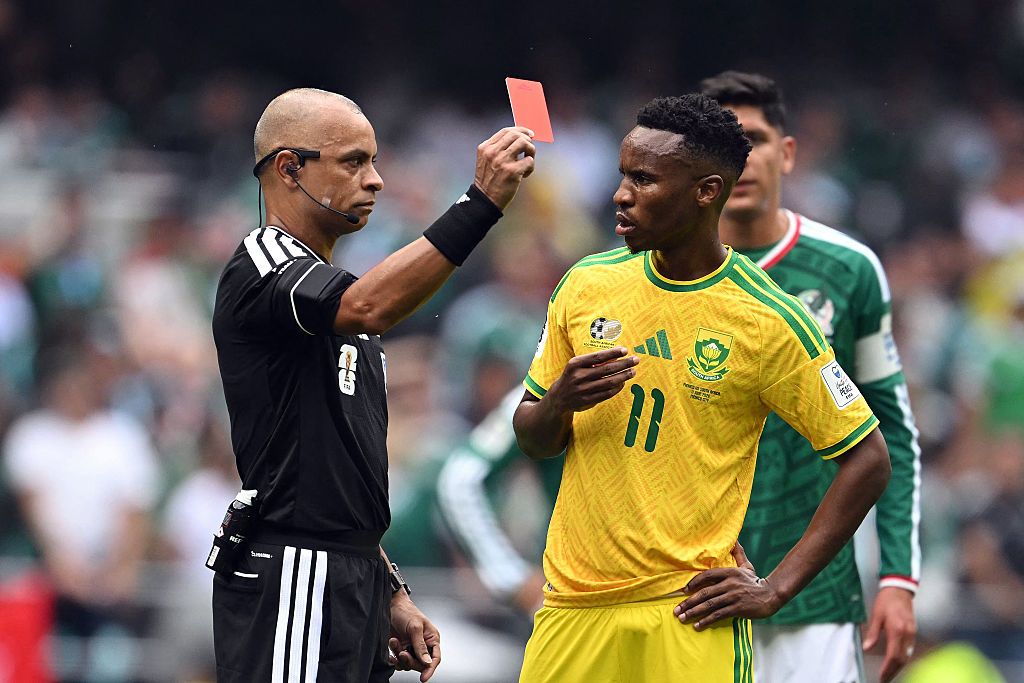
Copy linkFacebookXPinterestEmailShare this article 0Join the conversationFollow usAdd us as a preferred source on GoogleNewsletterSubscribe to our newsletterWorld Cup 2026 is now into its knock-out matches. The stakes are high in every single game and referees will be under pressure just as much as the players charged with carrying their nations through from one round to the next.There were a handful of suspensions in the group stage, all of them for players who received red cards in the previous fixtures.World Cup rules mean that red cards carry a mandatory and immediate suspension of one match regardless of whether the player in question received a straight red card or committed two bookable offences.Play our free match predictor and win �1kIs there a yellow card amnesty at the World Cup?Very serious incidents can be further punished with extended bans. Assim Madibo of Qatar, since eliminated, had his suspension extended to five matches after the challenge that injured Ismael Kone of Canada in their second match of the group stage.That ended his tournament and would have had the same outcome unless Qatar had reached the final. Typically, changes in suspension rules at major tournaments are designed to avoid excessive punishment when it comes to the biggest games. You may like Why there could be more cards than ever before at World Cup 2026 Most Red Cards in a Single World Cup Tournament How to watch World Cup 2026: FREE live streams, groups, next matches The third way to attract a one-match suspension is by collecting two yellow cards in two different matches. Again, this results in a one-match ban.Theres no mechanical change in how red card or yellow card suspensions are handled during the knock-out rounds. Like the group stage, a red card or the accumulation of two yellow cards will earn a player a one-match suspension for the next round.Get FourFourTwo NewsletterThe best features, fun and footballing quizzes, straight to your inbox every week.Contact me with news and offers from other Future brandsReceive email from us on behalf of our trusted partners or sponsorsBy submitting your information you agree to the Terms & Conditions and Privacy Policy and are aged 16 or over.However, over the years, measures have been taken to stop players missing important and career-defining matches because of two yellow cards across a tournament that now amounts to seven matches before the final.The most infamous example of how this used to work occurred in 1990, when England midfielder Paul Gascoigne was yellow-carded in the semi-final against West Germany. He knew at that moment that he would be suspended for the final if England progressed. They didnt, but the image of Gazzas tears became a football icon in its own right.That can no longer happen. Yellow cards are wiped between the quarter-finals and semi-finals; the only way to miss the final through suspension is to get sent off in the semi-final.Because the World Cup has been expanded to 48 teams and an extra round has been brought in to accommodate the additional 16, there are now two amnesties during the competition.Yellow cards were wiped for the first time at the end of the group stage.Brazil midfielder Casemiro, booked in the opening Group C fixture against Morocco, would therefore not be subject to a last-16 suspension as a result of his yellow card against Japan in the first half of their round of 32 match.TOPICSWorld CupWorld Cup 2026Chris NeeChris is a Warwickshire-based freelance football writer specialising in West Midlands football, the Premier League, the EFL and the J.League. He is the author of the High Protein Beef Paste football newsletter and owner of Aston Villa Review. He supports Coventry Sphinx.