
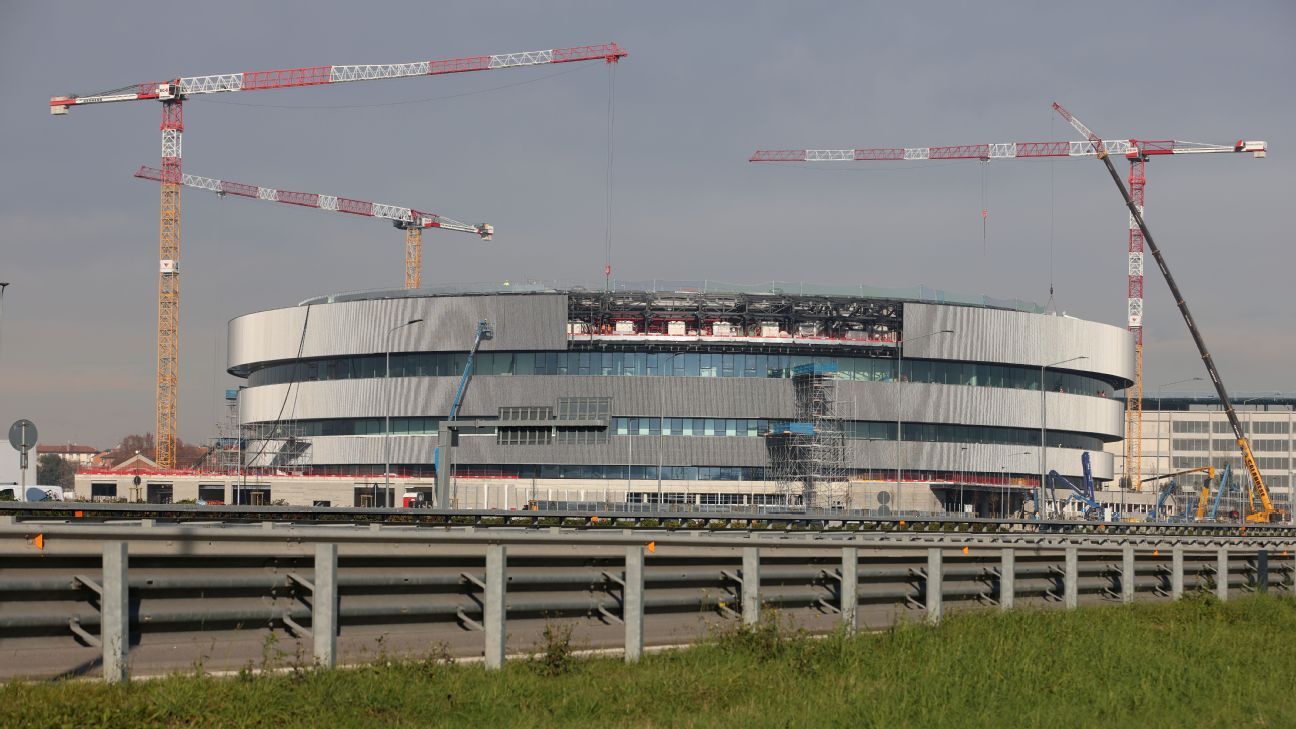
As the NHL's Board of Governors convened in Colorado Springs, Colorado, for their annual December meetings, the league was tracking construction updates for the Olympic ice hockey arena in Milan. One issue? Organizers had apparently signed off on a rink that didn't have the correct dimensions. Even more concerning: less than two months away from the tournament, the arena wasn't close to being finished.
That led to deputy commissioner Bill Daly's headline-grabbing statement: "If the players believe that ice isn't safe, then we're not going to play. It's as simple as that."
The NHL hasn't sent players to the Olympics in 12 years due to a myriad of issues. Many of those issues -- insurance, travel costs, commercial licensing rights -- were addressed in an agreement the NHL and NHLPA signed with the IIHF and IOC in July. It should have been smooth sailing from there. Instead, things felt uncomfortably fragile just two months out.
It's the IOC's event, and the NHL is just a guest. But while the NHL doesn't have control over any aspect of the Olympics, the league is shutting down its nearly $7 billion corporation for three weeks -- in a prime window, right after football ends -- meaning stakes are high.
Around the time of Daly's comments, the NHL sent increased resources, including their top ice technicians, to Milan and were promised ongoing access to the arena to help consult. Daly said he didn't believe any of the construction issues were "insurmountable." While the league and players association were disappointed to hear the rink was built three feet shorter than NHL regulation -- violating the agreement they signed with the IOC and IIHF -- both agreed that wouldn't materially affect the quality or safety of the games.
The next updates on the ice are expected soon as Santagiulia Arena, known as Hockey 1, hosts a series of test events, beginning on Friday, Jan. 9. Those events typically (and were scheduled to) happen months, if not years, before the Olympics begin. It's not just about building a proper ice surface but ensuring it has the resiliency to withstand up to three games a day for three weeks. A player pulling a groin on too soft Olympic ice is an NHL team's nightmare.
While next week should bring more clarity, there's also an overwhelming sentiment shared by all stakeholders: The men's Olympic hockey tournament is not going to be perfect, but it will go on.
DESPITE THE ALARM bells, sources across the NHL, NHLPA and hockey federations have told ESPN over the past two weeks that they don't anticipate any issues over the next month that would prevent NHL players from participating in Milan.
"We're pot committed at this point," one NHL owner told ESPN this week.
"I don't give a s---, I'm going over there," Team USA and Panthers star Matthew Tkachuk said on his "Wingmen" podcast last month. "Even if it's not safe, I still want to play."
League sources have stressed there is no Plan B or shadow planning for an alternative tournament. No locations have been secured in Switzerland or North America, contrary to rumors. Federations like Hockey Canada and USA Hockey have not prepared backup rosters of non-NHL players.
IIHF president Luc Tardif said in a news conference at the world junior championship on Monday that while Hockey 1 in Milan is not "exactly" what he expected, he was confident in the infrastructure and that the tournament would go on.
"We can be confident on that," Tardif said. "You're not going to go to Milano for nothing."
The updates since the Board of Governors meeting on arena construction have been positive. When NHL executives toured the arena in August, it was still a hard-hat construction zone, with no roads leading to the arena. Local crews have picked up the pace, especially in the last month. Photos taken weeks apart now show drywall in areas like the mixed zone, where players will conduct postgame interviews. "The rink now looks like a rink," says one league source who has been briefed. A test event late last month at the secondary ice arena, Hockey 2, which will host men's and women's games, was a success.
"Ironically [at Hockey 1] the only thing that might be ready is the ice and player areas," one NHL governor said. "It's the fan experience now that they're worried about." League executives have said there are concerns about concessions and plumbing in the concourse bathrooms. Tardif noted that Hockey 1 isn't what they expected in terms of capacity. While it was supposed to be a 14,012-seat venue, it is now projected for 11,800 seats.
There are other logistics to sort out at the test event. Where do the team doctors sit at the arena? How long will it take for players to get to medical areas, or for the ambulance to get to the local hospital? NHLPA and NHL sources briefed on plans didn't anticipate issues, other than saying it wasn't ideal to hammer out such important details this close to the tournament.
The scramble before opening ceremonies is a common Olympic experience. At the 2014 Games in Sochi, the last Olympics that NHL players participated in, the rink was up and running nearly a year in advance. But when players showed up, the rooms in the Olympic Village were still getting work done. A common refrain heard in NHL circles when discussing Olympic logistics: "It is what it is."
PLAYERS HAVE ALREADY been told that the accommodations aren't what they're used to in the NHL. The locker rooms are mobile trailers, and players must walk across a mat to get to the ice -- similar to the temporary setup the Arizona Coyotes had while playing at Mullett Arena.
While NHL players are used to having police escorts on the team bus to morning skates or games, they have been told to expect less efficiency in their Milan travel. Federations are doing their best to plan ahead but know they'll have to be adaptable. For example, if it's deemed that the ice isn't good enough to host eight teams practicing in one day, they may have to make shifts to their schedule.
All teams have also committed to staying in the athletes village. This has always been the tradition in hockey, whereas NBA players have stayed at off-site hotels at the Olympics since the 1992 Dream Team. The USA Basketball hotel in Paris was so guarded, one needed to be on a guest list to enter the lobby.
While hockey players insist immersing with other athletes at the village is part of the Olympic spirit, those accommodations are certainly lesser than the luxury hotels NHL teams stay in.
Some federations are already looking into sourcing their own supplementary meals in case the food options in the Olympic Village don't meet their athletes' nutritional standards. (The NHL is often nicknamed by players as the No Hungry League; players have gourmet spreads available multiple times a day.) NHL players are participating for free, with a reasonable expectation that their families will be taken care of, including some travel expenses. While the NHL and NHLPA are working to offset whatever isn't covered in their agreement with the IIHF and IOC, federations are also making accommodations for family meeting areas, meals, etc. The well-resourced Hockey Canada has long been the gold standard in terms of hospitality, though USA Hockey has caught up in recent years.
Much of the frustration around NHL participation at this point is that the agreement all parties signed in July hasn't been honored exactly. NHL owners were promised a hospitality suite adjacent to the arena; organizers say that's no longer happening. The ice dimensions are another example of the agreement not being followed.
The NHL views a return to the Olympics as an opportunity to grow the game -- showcasing how far the sport has grown on a global level while inspiring a new generation of fans and players. All the while the NHL and NHLPA have been working on resurrecting the World Cup of Hockey beginning in 2028, an event they'll have much more control over.
What nobody has expressed concern over regarding these Olympics: the hockey itself (as long as the ice holds up).
Last February's 4 Nations Face-Off was a teaser for how exciting best-on-best hockey can be: incredible skill and speed, no time and space, total intensity. While the Olympics will be played by international rules -- most notably, no fighting -- NHL executives have predicted a similar style to the best Stanley Cup playoff games. There will be a combination of officials from the NHL and international hockey, but there's an expectation NHL refs will be assigned to games featuring mostly NHL players.
One month out, with rosters now announced, the excitement is tangible. As Brady Tkachuk said: "We are going no matter what."