
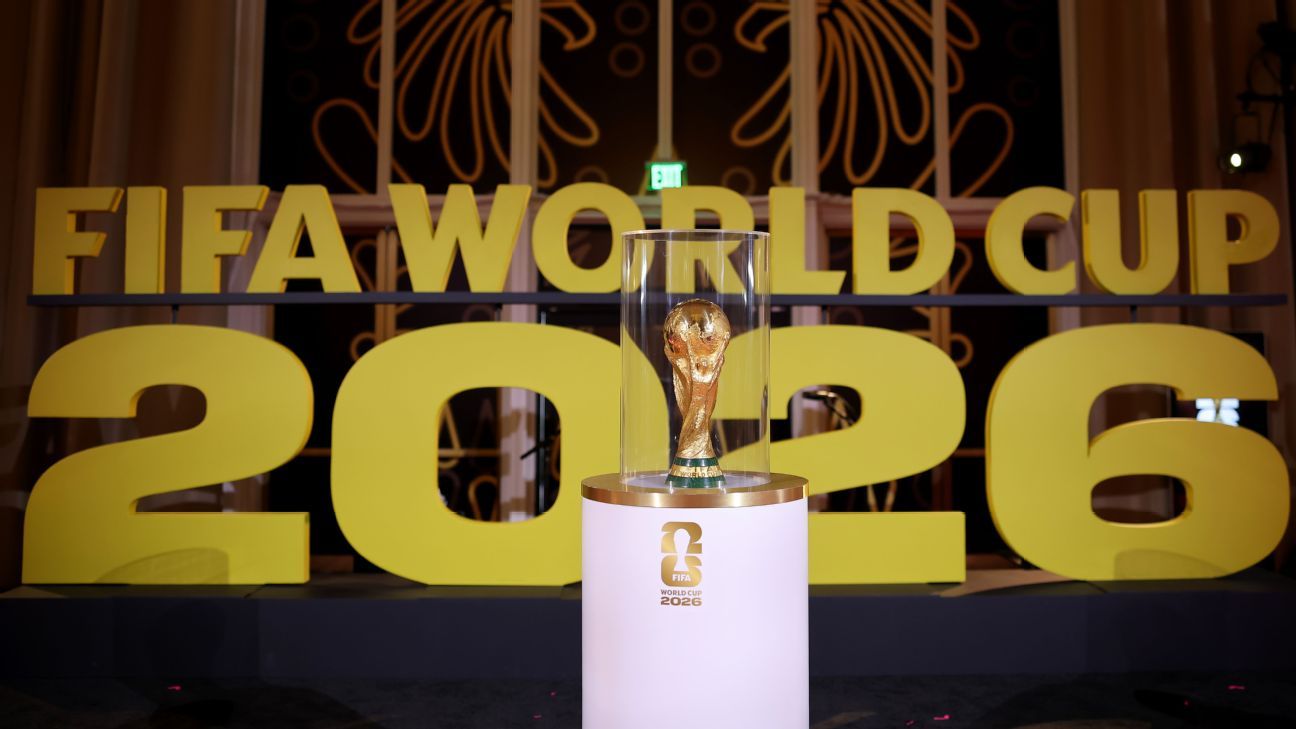
FIFA did something earlier this month that's not just foolish, greedy and morally dubious (been there, done that), but also hugely counterproductive to its own interests -- milking the cash cow otherwise known as the Men's FIFA World Cup. So much so that it frantically tried to remedy things earlier this week with the sort of baby step that makes minimal impact and goes nowhere near far enough.
The good news though is that it might empower fans to get off their backsides, realize they have leverage and dial up the resistance.
I'm talking about the prices of tickets sold via the federations of the qualified teams -- or, as FIFA calls them, Participant Member Associations (PMAs). They account for about 16% of the total tickets (8% per team, per game), and prices for these tickets were set absurdly high: from $180 to $700 for the group stage, according to data released by the German federation. So high, in fact, that on Tuesday, after significant backlash from fan groups, FIFA announced a new "entry tier" of tickets priced at $60.
Is this a victory for fans raising their voices at not being fleeced? Hardly. More like FIFA realizing, in its desire to squeeze dollars out of fans, that it was doing something profoundly damaging ... to itself, above all.
Let me explain.
Those 16% of fans who get their tickets from PMAs aren't just random supporters. They are an integral backdrop to the giant, monthlong-plus reality TV show otherwise known as the World Cup. They're the ones who bring the noise and the color. They're the ones who sing and gyrate. They're the ones who get interviewed outside grounds. They're the ones cameras linger on when there's a break in play.
To get tickets via the PMA means that, in most cases, you're a member of whatever organization that country's association runs to support the national team. In many nations, it means you regularly go watch the team, often away from home. You're passionate, you're loyal, and you will put on a show for the cameras.
These are the last people who ought to be squeezed, especially when -- thanks to dynamic pricing, by which companies set flexible prices that change due to market demand -- the costs associated with a North American World Cup and the incessant hype machine, it's highly likely that a majority of the other folks you'll find in stadiums will be corporate guests, one-percenters or curious civilians who just want to be part of the show -- or some combination of the three.
Of course, there's nothing wrong with any of them, and I'm not suggesting you can't be a passionate, die-hard fan, and also very rich, and/or a guest of some corporation -- just that it's a different feel. It's a bit like the difference between going to an NFL conference championship game versus the Super Bowl. If you've had the privilege of going to both at some point, you'll know what I mean. If you're a neutral, the Super Bowl is bigger, but the conference championship game is better because there is a majority of real, live fans there making a racket.
Counting those I attended as a fan, this will be my ninth World Cup. And, increasingly, starting with Russia 2018 and continuing through Qatar 2022, they've felt like celebrity blowouts aimed at some amorphous global elite of rich folks. Pricing out fans with PMA tickets would be an act of absurd self-harm because it would cheapen and damage the main product FIFA is selling here: the global broadcast rights.
Most football clubs realized this a long time ago. The cheapest full-price adult season ticket at Bayern Munich is less than $200 a season. Why? Not because Bayern don't care about maximizing profits, but because they understand that the "cheap seats" behind the goal are highly visible on TV, contribute overwhelmingly to the atmosphere in the ground, house the loudest fans and -- marketing speak alert -- add value both to the brand and to the "game-day experience."
FIFA obviously didn't seem to realize this when it set the prices. Does this new "supporter entry tier" move the needle? Well, we're talking about 10% of PMA tickets, or 1.6% of the total tickets sold. In my view, it doesn't go anywhere near far enough, but, yes, it will help. Especially when you consider that another 40% will be priced at the "supporter value tier," which is three times as high, and the rest of the PMA tickets will go for between $450 and $700.
Those of us who are a little more pragmatic (or cynical) understand the system. The Men's World Cup is still the only competition that actually makes money for FIFA. It bankrolls all the other competitions, from women's and youth tournaments to futsal. FIFA also heavily subsidizes -- directly and indirectly -- the majority of its 211 member nations, and these nations are the ones who get to vote on who becomes president of FIFA (or whether the current president sticks around when his term is up in 2027).
So, yes, it's in FIFA's interest to milk 2026 for all it's worth. FIFA's argument that lower ticket prices -- instead of "dynamic pricing" -- would simply lead to bots vacuuming up tickets and then reselling them for a profit on StubHub or SeatGeek also has merit. As does the fact that fans in North America, especially in the U.S., are accustomed to paying very high prices for sporting events.
I get that, and I view it as a necessary evil. But don't mess with the actual fans who have shown their loyalty by following their national team on far-flung away trips for European qualifiers or meaningless CONMEBOL ties. Don't mistake their loyalty for stupidity.
If there is a silver lining here, it's that these passionate fans -- encouraged by FIFA's mini climbdown -- surely realize they have leverage, if not directly over FIFA, then indirectly via the national federations who rely on them for support, ticket sales and organized travel. These same federations are the ones that supply the superstars who power the World Cup, drawing in the casual audience, titillating the sponsors and making the headlines. They caved on 1.6% of the tickets; who's to say it can't be more?
FIFA has turned the World Cup into a television-first event, with the stadiums as glitzy studios. Fine. But it still needs enough of the hard-core fans "on set" for it to work. Otherwise, the corporate floaters will go back to floating and the wealthy day-trippers will move on to the next "experience," taking sponsors and viewing audiences with them.